Spain probes backup failure in 69-death crash
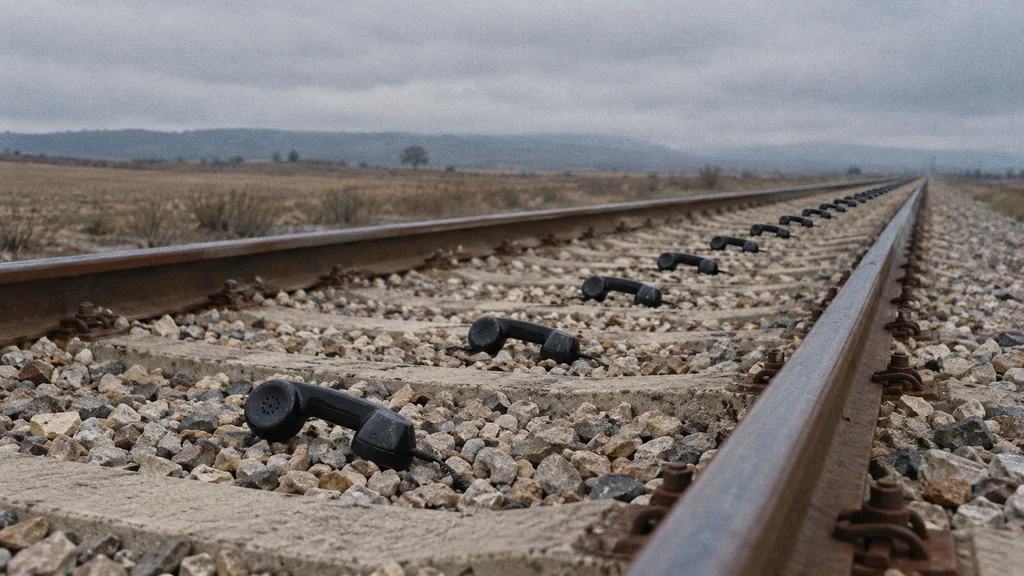
After automatic protection failed, safety depended on instructions passed by phone.
Image composition · tobriefNear Urda, in Toledo province, the automatic system that protects Spain's high-speed trains failed. The arrangements meant to replace it did not stop an AVE from running into a stopped Iryo train, and the provisional toll stands at 69 dead (AITAT). Investigators must now establish which instructions and safeguards failed. Their answer matters to any European network where rival companies share one set of tracks.
What the control room told the driver
LZB tells high-speed trains how much track ahead is clear and brakes them automatically if a driver exceeds it. According to AITAT, Spain's independent rail accident investigator, it failed at about 08:31 (AITAT). After that, trains depended on trackside signals and on phone instructions from the control centre at Madrid's Atocha station, run by Adif, the state company that manages the tracks. In practice, the controller decided which train could move, and how.
In recordings published by Cadena SER, a controller tells the following AVE's driver around 08:36 to continue at "marcha normal," meaning normal running speed (Cadena SER). The Iryo driver had reported to the control room that her train was stopped. The published audio does not settle whether the controller had registered that report when he cleared the AVE. AITAT puts the impact at 08:53 and estimates the AVE's speed at 160–200 km/h, pending recorder data (AITAT).
Transport minister Óscar Puente called the instruction "inexplicable" and raised human error (EFE). Experts quoted by El País argue the controller may have chosen the wrong backup mode. The safer option was driving by sight, where a driver goes slowly enough to stop short of anything visible ahead (El País).
The same paper reports an earlier warning from CIAF, the commission that investigated Spanish rail accidents before AITAT. CIAF had cautioned that a safeguard resting on one controller's visual check could fail. El País counts 15 comparable incidents logged between January 2023 and March 2025, but the report does not show they match Urda in detail (El País). Whether they do is for AITAT to test.
AITAT says every hypothesis remains open. The criminal case, led by an investigating judge in Orgaz, is under secrecy. laSexta reports that one of three controllers has used his right not to testify, which implies nothing about guilt (laSexta).
The families still waiting
The toll has risen from 68 when we first reported the collision (To Brief). By 2 November the regional High Court had identified 66 victims, 53 by fingerprints and 13 by DNA, notified 60 families and released 47 bodies (Heraldo, RTVE).
Three bodies still have no name (elDiario.es). RTVE reports they are believed to be foreign nationals. Separately, missing-person reports remain open for two Australians and one Japanese citizen, and the court has not said whether these are the same people (RTVE).
Among the dead is Nelson Bernardino, 49, a Portuguese Iryo crew member from the Serpa area (Portuguese government, RTP). On Sunday, 41 injured people were still in hospital, 16 of them in intensive care (Canal Sur).
Recovery has also slowed. On Saturday 31 October the Orgaz judge ordered the crane contractor hired by Adif and Renfe to supply whatever crews were needed to keep lifting the wrecked carriages, so searchers could reach remains beneath them (El Correo). That night the contractor ran short of staff, and lifting stopped until around 08:00 on Sunday (RTVE). Guardia Civil officers and a dog unit kept searching through the pause (EFE). Nothing published explains why the company lacked crews.
What other networks can learn
Adif directs trains for competing companies on the same track. Iryo is 51% controlled by Italy's state railway group (Iryo), and France's OUIGO, which ran neither train, suspended its Madrid–Andalusia services through at least 2 November (Europa Press). EU law requires track managers and operators to coordinate risks where their work meets, and requires a public final report, normally within 12 months (EUR-Lex).
That report is where the European value lies. Any network that falls back on phone instructions when automatic protection fails can test its own procedures against AITAT's findings. For now, the decisions sit in Spain.
The record already supports a plain conclusion. Once LZB failed, the backup arrangements did not prevent the collision. AITAT must establish which link failed (the instruction, the choice of mode, the signals or another safeguard), and it may be more than one. The Orgaz court answers a separate question: whether anyone bears criminal responsibility.
Details about this article
- Model:
- claude-opus-5-5
- Generated:
- 11/2/2026, 1:37:53 AM
- Pipeline run:
- eu_pipeline_20261102_005008
- Watermark:
- SynthID (Google's invisible watermark)
- Human review:
- None before publication