Spain’s 69 rail victims identified; safeguards under scrutiny
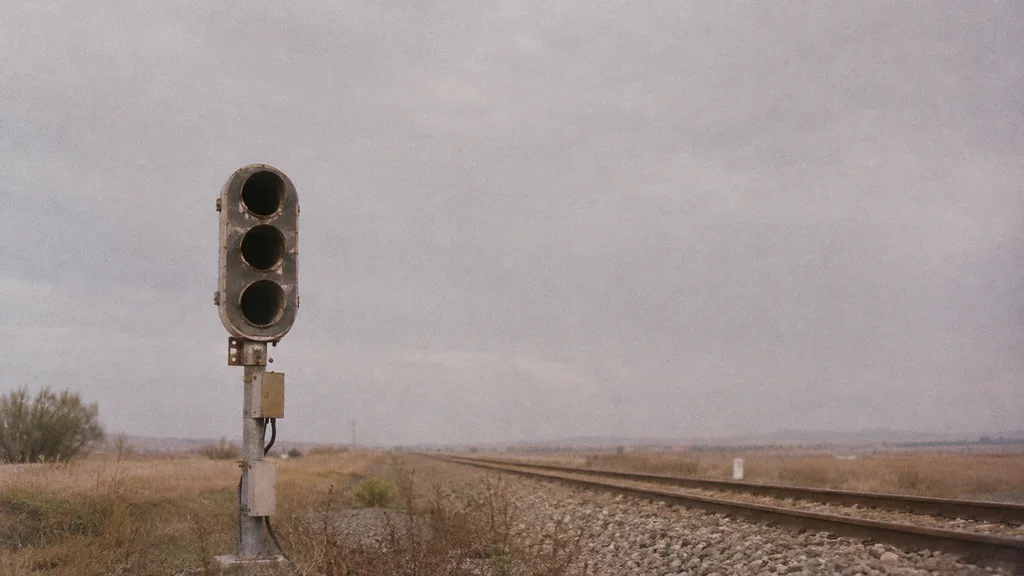
For 22 minutes, a stopped train depended on safeguards that failed.
Image composition · tobriefThe collision near Urda, in Toledo province, on 28 October killed 69 people (AITAT). Spain's Integrated Data Centre said late on 2 November that all of them have now been identified (Europa Press). Attention now moves to a window of roughly 22 minutes (AITAT note). In that window, the system that automatically supervises trains failed and controllers cleared a Renfe AVE to run normally. Investigators must establish why nothing then stopped it from hitting an Iryo train standing on the line ahead.
Families in Spain and abroad
Of the dead, 54 were Spanish and 15 were foreign citizens. They included four Americans and people from Argentina, Australia, Canada, Czechia, France, Japan, Mexico, Portugal and Tunisia (elDiario.es). Every family has been notified. The remains of 55 victims have been released to relatives, which is a step short of bringing them home (Europa Press).
Governments abroad have responded case by case. On 30 October, Czechia's foreign ministry said its Madrid embassy was helping the family of a young Czech victim (ČTK). France confirmed a French woman's death the following day (France Diplomatie). Our earlier report followed the search and the first demands for accountability (To Brief).
What happened in the 22 minutes
Iryo service 6076 left Madrid-Atocha at 07:54, running ahead of the AVE on the Madrid–Seville high-speed line (Iryo). AITAT, Spain's independent rail-accident investigator, dates a failure of LZB on that stretch to about 08:31 (AITAT note). LZB sends speed limits from the track to the driver's cab. If the driver exceeds them, it brakes the train automatically.
Once LZB was down, two older layers of protection were left. The first was trackside signals. In principle, these divide the line into sections and should show a stop signal when a train occupies the section ahead. The second was instructions from Adif, the state company that runs track and traffic for every operator. That includes Iryo, which Italy's state rail group FS controls.
Transport minister Óscar Puente said Adif's Atocha control centre cleared the AVE to continue at normal running around 08:36. He called the order inexplicable (EFE). Recordings published by Cadena SER capture a controller giving that instruction. In a separate call, the Iryo driver reports that her train is stopped and cannot restart (Cadena SER).
The published material leaves open the point that matters most for responsibility: whether Adif knew the Iryo was stuck before it cleared the AVE. It also leaves open why the signals did not hold the AVE back. The AVE struck the Iryo at about 08:53, at an estimated 160–200 km/h, pending data from the train recorders (AITAT).
Two inquiries, and pressure on the rule
Puente's verdict is a minister's judgement, not a finding. AITAT says it is examining a possible chain of faults, instructions and actions, and why the safeguards meant to break that chain did not. Under EU rail-safety law, its job is prevention. The investigation may not assign blame, and a final report normally follows within 12 months (EUR-Lex). Blame is a separate track. A judge in Orgaz has opened criminal proceedings under secrecy and can decide whether any individual is criminally liable.
The operators are not waiting for either inquiry. Iryo has asked AESF, Spain's rail-safety agency, to study a 40 km/h ceiling for trains that keep running after an LZB failure. The drivers' union Semaf has made a similar request (EFE). Renfe has drafted a comparable rule but says it is a proposal under evaluation, not in force (elDiario.es). None of these proposals binds anyone yet.
The AVE ran on after automatic supervision was gone. From then on, the stopped Iryo was protected only by signals, phone calls and human judgement. That protection failed. It may have failed through one wrong order, a rule that allowed normal running in those conditions, or several faults at once. AITAT owes an account of which it was to the families in Spain and abroad, and to every company that runs trains on Adif's shared network.
Details about this article
- Model:
- claude-opus-5-5
- Generated:
- 11/3/2026, 1:40:48 AM
- Pipeline run:
- eu_pipeline_20261103_005009
- Watermark:
- SynthID (Google's invisible watermark)
- Human review:
- None before publication