Spain’s rail controller sent an AVE onward
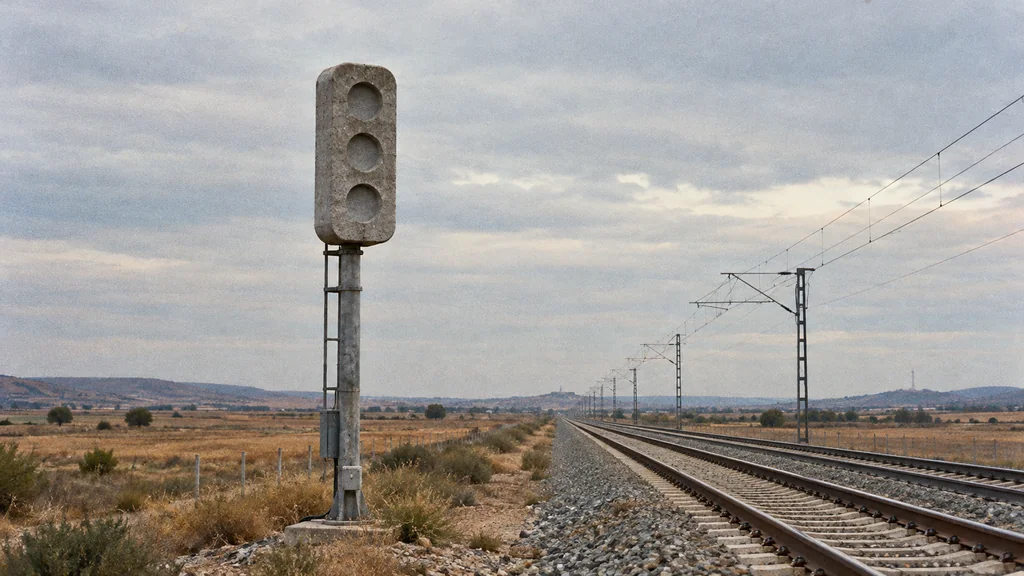
A train is sent onward while the view from control remains unknown.
Image composition · tobriefAfter a signalling failure on Spain's Madrid–Seville high-speed line on 28 October, a controller at Adif told the driver of a Renfe AVE to carry on at normal running. Adif is the state company that owns the track and directs traffic on it. The AVE later struck an Iryo train standing near Urda, in Toledo province, killing 68 people on provisional figures: 44 aboard the Iryo train and 24 aboard the AVE (Castilla-La Mancha government). Investigators have not yet established what the controller knew when giving that order.
Regional president Emiliano García-Page said on Wednesday that four bodies were still trapped in the wreckage. He warned the toll could rise as carriages are moved (Europa Press). The regional government says it has committed every emergency resource it has to the rescue and to treating the injured.
What the calls show, and in what order
Iryo's service 6076 left Madrid-Atocha first, at 07:54 (Iryo). The AVE followed on the same line. Transport minister Óscar Puente says that around 08:30 the LZB system failed and six trains stopped (EFE). LZB is the onboard protection that keeps high-speed trains apart and brakes them automatically.
Cadena SER has published recordings of the calls between drivers and Adif's control centre at Atocha. In them, the AVE driver reports the fault. At a reported 08:36, the controller tells him to reset the system and continue in its backup mode, which relies on signals beside the track, "con marcha normal", meaning at normal running (Cadena SER).
In a separate call, the Iryo driver says her train is stopped before Urda's entry signal and cannot restart its system. The published reporting does not establish whether her call came before or after the instruction to the AVE. That gap is central to the case.
Puente says the AVE travelled about 25 kilometres before hitting the Iryo train at around 08:53. He called the order "inexplicable" (EFE). An instruction to resume normal running does not prove how fast the AVE was going at impact, and that speed has not been published.
Where the rulebook draws the line
Spain's railway regulation makes the distinction precise (BOE). An LZB failure on its own does not impose a blanket speed limit. Two other conditions do change what a driver must do.
The first concerns the cab display. If it shows the section ahead as occupied, the driver must stop. The second concerns passing a stop signal behind another train on the same track. That is allowed only when driving by sight, at no more than 40 km/h.
The SER transcript attributes the phrase "meta cero" to the AVE exchange. It translates roughly as "target zero", the cab display's indication that the train must come to a halt. If it describes what the AVE driver's own screen showed, the first condition applied. The recordings do not show what appeared on the controller's screen.
Gonzalo Julián Guillén leads AITAT, the new independent accident investigator that replaced the old CIAF commission. He said it was too early for any hypothesis about the cause (Infobae/EFE). A judge in Orgaz has secured the trains' recorders and opened criminal proceedings under secrecy (elDiario.es).
One dispatcher, rival operators
Spain has opened high-speed rail to competition. As a result, Adif's control rooms now direct trains run by competing companies: Renfe's AVE, Iryo, and OUIGO, which belongs to France's SNCF. An order given in one of those rooms can affect any of them. OUIGO ran neither train, yet it has suspended its Madrid–Andalusia services until at least 2 November (Europa Press).
EU law shapes this arrangement without making Brussels the dispatcher. Directive 2016/798, the EU's rail safety law, makes the track manager and each operator responsible for the risks in their own part of the work. It also requires an independent investigation of serious accidents (EUR-Lex). In practice, rival operators run their trains on instructions from a dispatcher they do not control.
On 28 October, the Commission said it and the EU rail agency were following events and that drawing conclusions was premature. It announced no inspection (European Commission).
The recordings show that Adif's control room sent the AVE onward at normal running on a line where a stopped train stood ahead, and the AVE then ran into it. One question decides whether that order was a fatal error or a decision made blind: could the controller see the Iryo train stopped near Urda when telling the AVE to proceed? AITAT and the Orgaz court now owe the answer.
Details about this article
- Model:
- claude-opus-5-5
- Generated:
- 10/29/2026, 1:55:48 AM
- Pipeline run:
- eu_pipeline_20261029_005007
- Watermark:
- SynthID (Google's invisible watermark)
- Human review:
- None before publication