Starlink fires share suspects, but Poland’s link is unclear
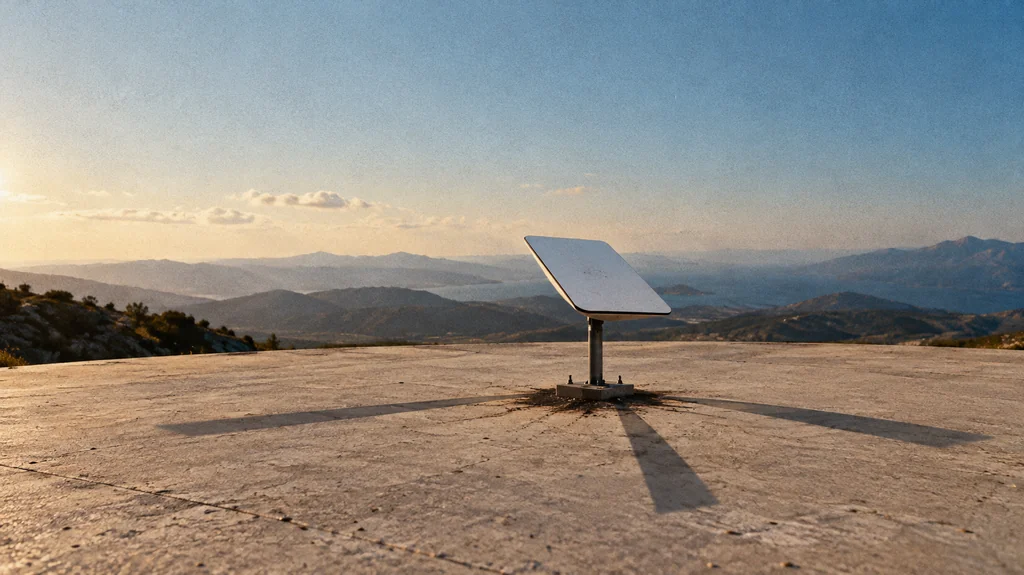
Three Starlink fires raise a connection investigators have yet to show.
Image composition · tobriefLithuanian police suspect the same two Germany-based men of trying to burn Starlink equipment in Vilnius and of setting fire to Starlink antennas outside Sofia. On 29 October, Saulius Briginas, deputy chief of Lithuania's criminal police, also said the pair are connected to September's fire at a Starlink station in Poland (LRT). Neither he nor any prosecutor has publicly explained what that connection is.
The gap matters because Poland's government suspects Moscow of running a campaign against Starlink across the region. A demonstrated link would turn three national arson cases into evidence for or against that theory.
A shared pair, and a separate Polish case
Briginas did not claim the pair set the Polish fire. He said Poland holds other suspects for that (Verslo žinios). Whatever ties the cases together, it is not the same people holding the matches.
Poland's suspects come from its own investigation. Its internal security agency, ABW, says an alleged scout photographed the station and sent the images over Telegram, and was detained on 30 September (ABW). ABW says it then traced the two men it accuses of the fire to Germany, where they were arrested on 12 October. That account describes a planned attack. We covered those arrests when they happened (To Brief).
Lithuania's own written statement is narrower than its deputy police chief. It lists terrorism-related suspicions against the pair, says the motive is still being established, and never mentions Poland (Lithuanian police).
What the fires actually did
The Polish fire hit a burning power-equipment housing at Wola Krobowska, in Mazovia, on 23 September (PAP). The site is a gateway, a ground station where satellite traffic meets the ordinary internet. Back in 2022, Poland's digital ministry explained that satellites over Ukraine could connect through it (Polish Digital Ministry).
Digital minister Krzysztof Gawkowski said the attacker wanted to cut traffic, including for Ukraine's military, but that the systems kept working (Reuters).
Bulgaria took the heaviest physical damage, with several antennas burned at Teleport Plana outside Sofia (Bulgarian National Radio). The public record does not say whether that site serves Ukrainian users.
Vilnius came off lightest. A guard put out the fire and the company kept operating. Lithuania's prime minister said the firm maintains links for nine Starlink antennas used by Ukraine (LRT). No public account in any of the three countries includes Starlink's records of an outage. Those records could show whether a single Ukrainian user lost service.
Who decides what
The pair sit in German custody, but German judges will not decide whether the attacks are linked. They hold the men on Bulgarian European Arrest Warrants, which let one EU country ask another to arrest and hand over a suspect without diplomatic extradition. On 28 October, the Düsseldorf Higher Regional Court ordered them held while it weighs Bulgaria's request, since they refused a quick handover (Recht und Politik).
The court's only question is whether to send them to Sofia. According to German reporting, it has not confirmed that these are the men Lithuania names (dpa/T-Online). The Bulgarian prosecutor's public charge lists arson (Sofia City Prosecutor's Office).
Poland makes the largest claim. Its National Prosecutor's Office suspects Russian services ordered an attempt to disrupt Starlink across Poland and parts of Central and Eastern Europe (Polish National Prosecutor's Office). Polish authorities have not published an order, a payment trail or a handler's name. German broadcaster ARD reported that any Russian commission remains unconfirmed (ARD).
Lithuanian police have identified a common pair of suspects in the Sofia and Vilnius cases. They have yet to show publicly how that pair connects to the separate Polish fire, and that explanation is owed by Lithuanian and Polish investigators. Whether any of the three attacks cut Ukraine off is a question only Starlink's own records can answer.
Details about this article
- Model:
- claude-opus-5-5
- Generated:
- 10/31/2026, 1:37:58 AM
- Pipeline run:
- eu_pipeline_20261031_005007
- Watermark:
- SynthID (Google's invisible watermark)
- Human review:
- None before publication