Netanyahu’s camp loses the Knesset speakership
AI Daily Synthesis
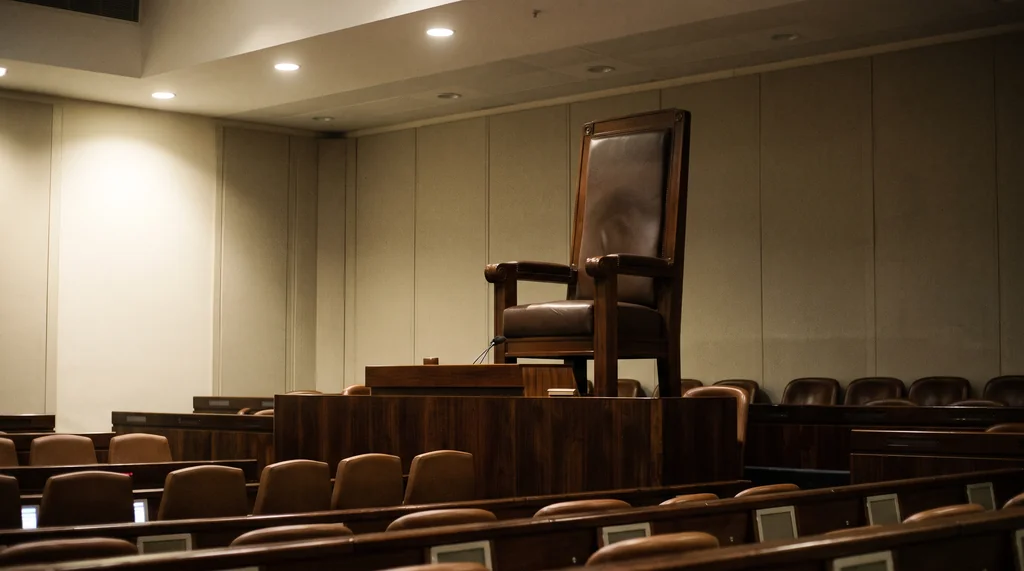
Image composition · tobriefThe Knesset, Israel’s parliament, elected Matan Kahana of Yashar, a party in Gadi Eisenkot’s bloc, as its speaker on the evening of 17 November. He won 66 votes to 52 against Ofir Katz of Likud, the party of outgoing Prime Minister Benjamin Netanyahu. Kahana’s votes included those of the Arab parties Ra’am and the Joint List (Times of Israel, AP). Netanyahu’s camp has thus lost control of the parliamentary agenda, but no new government has been formed. And just hours after denouncing the Arab votes, Likud joined Ra’am and Joint List lawmakers on the Knesset’s presiding body.
The 27 October election gave Netanyahu’s bloc 53 seats, Eisenkot’s bloc 48 and the two Arab parties 19. Neither camp has a majority on its own in the 120-seat Knesset (To Brief). Ra’am and the Joint List recommended Eisenkot to President Isaac Herzog, who tasked him with forming a government on 8 November (Presidency, Ra’am, Presidency, mandate).
Sixty-seven lawmakers had called for the replacement of outgoing speaker Amir Ohana, who belongs to Netanyahu’s camp. The vote, expected at 20:00, took place shortly after 23:00 (N12). The delay ended with an agreement between Yashar’s Roy Polakman and Katz, who leads Likud’s parliamentary group. Eisenkot’s bloc secured a vote that evening without further obstacles. In exchange, it froze proposals to repeal laws passed by the outgoing government until Monday 23 November (Calcalist). Kahana received the gavel from Ohana and promised to be “everyone’s speaker”, with a Knesset that would obey the courts “without reservation” (N12).
One of the 67 potential votes was missing. Davar attributes it to the absence of Ra’am’s Yasser Hujirat. On the other side, Likud’s Nir Barkat did not vote for Katz (Globes, Davar). An official roll-call tally has not been published, and other reports count two absentees.
What did Eisenkot’s bloc gain? The speaker sets the Knesset’s weekly agenda. The presiding body, made up of the speaker and deputy speakers, approves the submission of bills proposed by individual lawmakers (Knesset TV). That gives the bloc control over the pace of proceedings, not the power to pass laws: every repeal must go through a preliminary vote, a committee and the full Knesset, and the bloc must find 66 votes each time. First in line are proposals concerning the selection of judges, the government’s legal adviser, broadcasting law and the body that investigates police officers (Calcalist).
Forming a government is a separate matter. The law gives the person tasked with doing so 28 days, with a possible extension of up to 14 days, to present a government to the Knesset and explicitly seek a vote of confidence. Eisenkot’s initial deadline expires on 6 December (Basic Law: The Government, Israeli Presidency). He defended the Arab votes, saying there were no “first- and second-class” citizens. In the same speech, however, he distinguished parliamentary cooperation from forming a government (13TV).
The disagreement over Ra’am
Likud had offered to back Kahana on one condition: no Arab lawmaker could serve as deputy speaker. When the condition was rejected, it put forward its own candidate (Ynet). After the vote, Likud called it a “low point” in the Knesset’s history. It attributed Kahana’s election to parties it calls “supporters of terrorism” (Kore).
A few hours later, the Knesset approved nine temporary deputy speakers by 38 votes to 15. They include Ra’am’s Walid Taha and the Joint List’s Ahmad Tibi, as well as a Likud lawmaker and representatives of other right-wing parties (Maariv). Likud’s condition fell away in practice, and the party now serves on the same presiding body as lawmakers from the parties it had called supporters of terrorism earlier that evening.
One obstacle for Eisenkot lies within his own camp. Two partners in the bloc disagree: Yair Golan wants Ra’am in the government, while Avigdor Lieberman opposes it (Ynet News). On 16 November, Maariv reported other possible routes: talks with Likud that had made no progress, conditions set by the ultra-Orthodox United Torah party, and a minority government with outside support from Arab parties (Maariv). No agreement by the Arab parties to support a government has been made public.
The freeze ends on Monday 23 November, and the new special committees are expected to begin legislative work (C14). No official agenda for that day has been published. Meanwhile, Likud is preparing an election challenge over alleged irregularities in voting in Arab areas. It cites about 1,150 reports, which are the party’s claims rather than established findings, and a Jerusalem court suspended the 18 November filing deadline (Times of Israel). Those same Arab votes thus provide the numerical basis for the new majority and are also the target of the challenge.
In 2020, Benny Gantz also won the Knesset speakership before a government was formed, with 74 votes (Ynet, IDI). According to Globes, disagreement over whether his bloc could rely on the Arab parties contributed to his failure to form a government. He ended up in a unity government with Netanyahu (Globes). Eisenkot now has what Gantz had then, the Knesset speakership, and faces the question left unresolved at the time: whether a bloc without Netanyahu can govern with the support of Arab seats. Golan, Lieberman and Ra’am itself owe an answer by 6 December.
Details about this article
- Model:
- claude-opus-5-5
- Generated:
- 11/18/2026, 4:39:17 AM
- Pipeline run:
- incremental_20261118_033011
- Watermark:
- SynthID (Google's invisible watermark)
- Human review:
- None before publication