Sweden replaces Dutch Patriots, coverage unverified
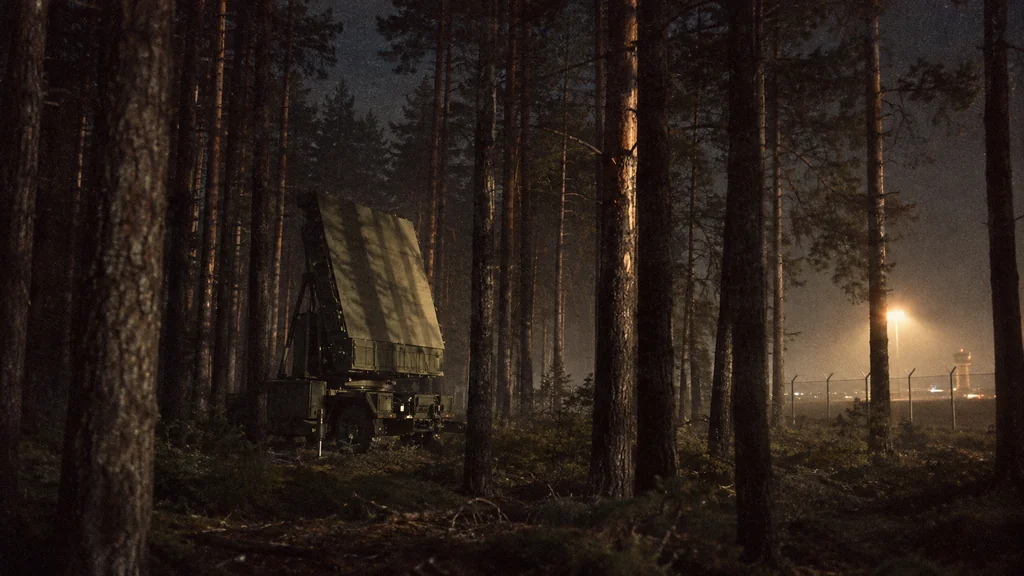
Sweden takes over the watch above an aid hub; its coverage remains undisclosed.
Image composition · tobriefSweden will send a Patriot air-defence unit to Poland in early December to take over from a Dutch unit (Swedish government, Reuters). The site is Rzeszów-Jasionka, the Polish airport hub that funnels allied aid into Ukraine. Estonia, Germany and Finland have each taken their own steps against Russian pressure. Of the four moves, the Polish one is the most visible, and it keeps an existing shield in place rather than adding a second one.
A handover in Poland
Patriot is the US-built system that shoots down aircraft and missiles, and it is the top layer of protection at the hub. We covered the deployment when Stockholm announced it (To Brief). The Swedish system is going in because the Dutch one is coming out.
The Dutch Patriots are due to leave no later than early December. The Netherlands had already brought its short-range and counter-drone systems home in June (Dutch government). Poland has since fielded its own short-range layer to fill that lower tier.
What nobody has published is a comparison. No public inventory shows whether the protection at the hub after December will match what stood there before. Sweden's unit joins a NATO mission. The alliance says it is reinforcing its eastern flank because of Russian airspace violations, cyberattacks and sabotage (NATO). NATO, which runs the mission, and Warsaw, which hosts it, are best placed to say whether the replacement covers the same ground.
Three other moves, each with its own chain of command
Estonia moved command staff closer to Russia. ERR reported on 5 October that the headquarters of the 1st Infantry Brigade had relocated from Tapa to Jõhvi, about 50 kilometres from the Russian border (ERR). Brigade commander Tarmo Kundla said the decision to defend from the border was taken years ago, so the move carries out an older plan.
Security analyst Rainer Saks judged its strategic effect to be limited. In his view, air defence and attack drones matter more than where a headquarters sits (ERR News).
Germany's change is still a bill. The cabinet approved a reform of the foreign intelligence service (BND) and the domestic security service (BfV) on 12 August. The Bundestag, the federal parliament, held a first debate on 24 September and sent the bill to committee for detailed scrutiny (Bundestag). In narrow cases it would let the BND disable a foreign server that is launching an imminent cyberattack (Federal Government).
The federal data-protection commissioner pushed back in a 5 October submission. It argues that outsiders cannot judge whether all the new powers are necessary, and it asks for a sunset clause, an automatic expiry date that would force lawmakers to renew the powers (BfDI submission).
Finland asked a neighbour for help and kept control. On 28 August, Helsinki and Stockholm announced that Swedish Gripen fighters, corvettes and radar could help watch over Finnish territory (Finnish government). Defence Minister Antti Häkkänen described the arrangement as sharing a long monitoring burden, and Finland's defence minister must authorise any use of force (Yle).
The arrangement is already operating. On 24 September, Finnish Hornets and Swedish Gripens flew their first joint operational mission, identifying Russian aircraft over the Gulf of Finland (Finnish Defence Forces).
None of these steps runs through Brussels. EU treaties leave national security to each member state (EUR-Lex). The EU can help coordinate, but it cannot order a brigade forward or a missile battery into place.
The record shows four governments preparing for Russian pressure through separate decisions: a national troop move, a bill before parliament, a bilateral arrangement and a NATO rotation. There is no common commander behind them. Some of these steps add capability. Germany would widen what its spies may do, and Finland now flies joint missions with Sweden. The Polish handover does not by itself add a second shield. Whether protection over Ukraine's main aid hub holds after December depends on a comparison that has not been published, and NATO and Warsaw are the ones who should publish it.
Details about this article
- Model:
- claude-opus-5-5
- Generated:
- 10/9/2026, 1:26:53 AM
- Pipeline run:
- eu_pipeline_20261009_005006
- Watermark:
- SynthID (Google's invisible watermark)
- Human review:
- None before publication