Trump, Xi and Putin promise nuclear talks without limits
AI Daily Synthesis
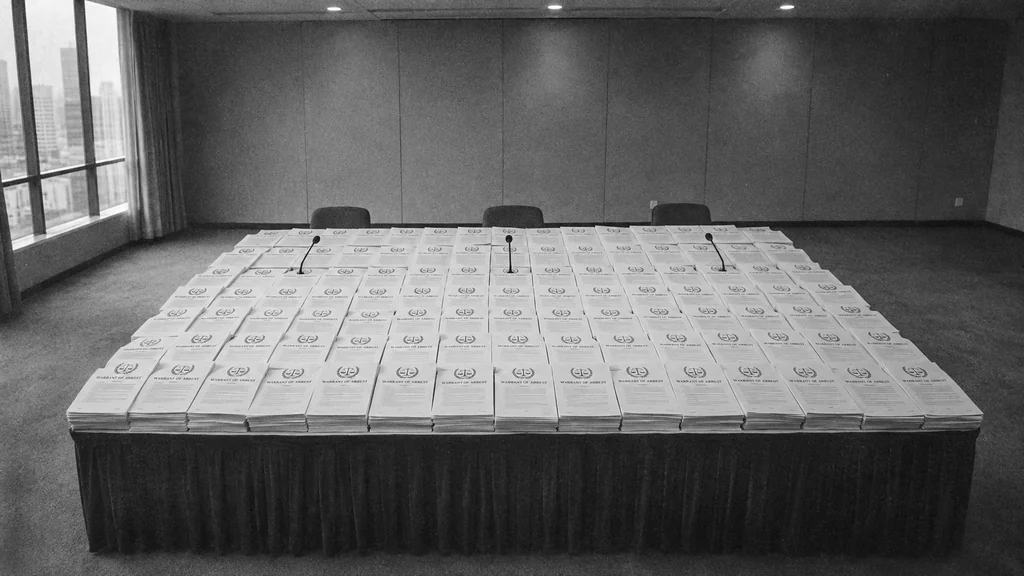
Image composition · tobriefDonald Trump, Xi Jinping and Vladimir Putin met on 19 November in Shenzhen, China. It was the first trilateral summit between the United States, China and Russia (Qazinform, Korea Herald / AFP-Yonhap). In a joint declaration, the US president, the Chinese president and the Russian president committed to talks on reducing nuclear risks, but set no date, limits or means of putting that commitment into effect (White House). The promise comes nine months after New START, the last treaty to impose binding limits on US and Russian strategic nuclear weapons, expired on 5 February (State Department). The declaration also calls on the International Criminal Court (ICC) not to abuse its jurisdiction. The court has issued an arrest warrant for Putin (ICC).
The meeting took place on the sidelines of the Asia-Pacific Economic Cooperation (APEC) forum. Trump had met separately with Xi and Putin beforehand (To Brief). The trilateral meeting lasted about an hour and a half (TASS, Interfax). According to the official Chinese account, Xi opened and closed the discussion, which covered Ukraine, nuclear proliferation, the Middle East and the Korean Peninsula (Chinese Foreign Ministry).
They discussed Ukraine, but did not mention it in the declaration. After the summit, Putin referred to proposals to halt strikes at sea and on energy infrastructure, and said he had reviewed them with Russia’s Security Council. He concluded, however, that after the strikes on the Crimean Bridge, Russia “will not negotiate” (Radio Svoboda). Before the summit, Ukrainian President Volodymyr Zelenskyy had warned that decisions about Ukraine made without Ukraine would be “mere rhetoric” (Interfax-Ukraine).
Talks and two promises without numbers
The nuclear section has two parts. The first reaffirms that “a nuclear war cannot be won and must never be fought”. The second says the three “will hold talks” on risks and non-proliferation. New START set a limit of 1,550 deployed strategic warheads for each side and provided for inspections (New START). The new declaration provides neither a limit nor inspections. Trump had spoken before the summit about reducing the number of weapons, but left without making a statement (AP).
China’s participation is new. Until October, it had rejected trilateral disarmament talks “at this stage” (Chinese embassy). It has now put its name to a process. No negotiator, mandate or next meeting has been announced, and Putin said only that he hoped the trilateral talks would continue (RBC).
The three also say that, as permanent members of the UN Security Council, they will promote reform of the United Nations. They specify no new seats, change to the veto or deadline. Amending the UN Charter requires ratification by two-thirds of member states, including all five permanent members (UN Charter). The three therefore already have the power to approve or block a change, and the lack of detail lets them support reform without agreeing on who would gain power.
On fuel, they “plan” to increase supplies of refined products such as petrol and diesel, without specifying volumes or deadlines (TatCenter). The substantive US step came six weeks earlier. On 9 October, the Office of Foreign Assets Control (OFAC), the US Treasury’s sanctions agency, issued a licence for certain transactions involving Russian diesel (OFAC). The licence is valid until 7 April 2027 (Baker McKenzie). The declaration gives political backing to something already under way. As an indication of the current market, Turkey bought 26% of Russian petroleum product exports in October and China bought 13% (CREA).
The proposal concerning The Hague
The section on the court is the declaration’s most specific. The three describe state consent and the immunities of officials as being “of paramount importance”. They name no case, but the most obvious target is the warrant for Putin (Politico). The warrant was issued in March 2023 over the alleged unlawful transfer of children from Ukraine. It rests on Ukraine’s acceptance of the court’s jurisdiction over its territory (ICC).
Moscow invokes the immunity of serving heads of state. The International Court of Justice, the UN’s principal judicial body, has recognised that immunity before national courts, while adding that immunity does not mean impunity (ICJ, Arrest Warrant). The opposing interpretation holds that the court’s jurisdiction comes from Ukrainian territory and does not require Russian consent. Only the Security Council can suspend a prosecution, for 12 months at a time (Rome Statute). A single veto can block such a decision, and Britain, a permanent member of the Council, officially supports the court’s independence (gov.uk). Three of the five permanent members are not enough.
US opposition to the court is longstanding. In October, the United States announced sanctions against it, and the EU responded with a statement from its High Representative for Foreign Affairs and Security Policy (Council of the EU). What is new is Trump’s adoption, in a joint declaration with Putin and Xi, of language on immunities aimed above all at Putin’s warrant. In Brussels, European Commission spokesperson Christian Wigand said the Commission was following developments. He also reiterated that the EU considers the ICC a fundamental part of the rules-based international order (European Commission). Greece shares that common European position; no new Greek statement has been made public.
Nine months after the limit on nuclear warheads ceased to apply, the three largest nuclear powers agreed only to talk. The only part of the Shenzhen declaration with a specific target is directed at a court that is already operating and is seeking one of the three leaders.
Details about this article
- Model:
- claude-opus-5-5
- Generated:
- 11/19/2026, 5:28:01 PM
- Pipeline run:
- incremental_20261119_163016
- Watermark:
- SynthID (Google's invisible watermark)
- Human review:
- None before publication