Treasury clears Russian diesel; Congress bans it
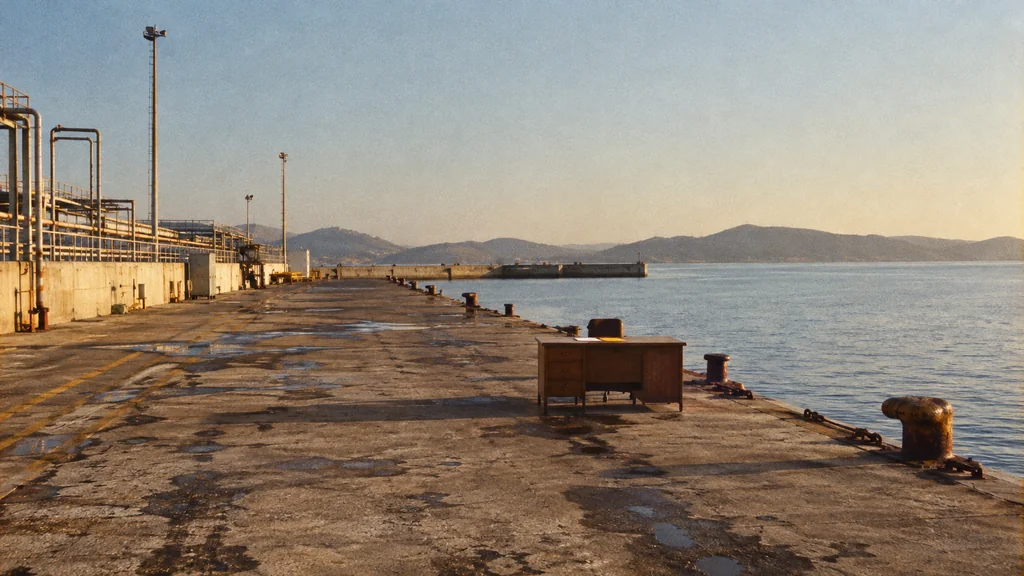
Treasury has cleared a route for Russian diesel; no cargo has been verified.
Image composition · tobriefThe US Treasury has cleared the sale, shipping and import of Russian diesel into the United States until 7 April 2027 (General License 135). A law Congress passed in 2022 still bans those imports (2022 Act), and no shipment under the arrangement has been verified. In Europe the legal position has not changed. The EU's own ban on Russian diesel stays in force.
A licence without a cargo
On 9 October, Trump announced that Russia would supply more than 300,000 tonnes of diesel immediately, with more to follow (Trump's announcement). The Treasury licence behind the deal suspends specific sanctions rules. It names no seller, buyer, vessel, price or volume, and it sets no condition tied to the war (General License 135).
Russia's side of the deal is a separate decision. Moscow had restricted diesel exports after damage to its refineries. It then allowed an initial batch of up to 500,000 tonnes onto world markets (Russian government). To Brief's searches have found no verified contract, loading or delivery under the arrangement.
The White House has also changed how it describes the deal. It was first presented as a way to make fuel cheaper, including for Americans (AP). On 13 October, Trump said the diesel was for world markets and "not for us" (Reuters). The licence still allows imports into the United States.
The ban Congress wrote
The 2022 law matters because it contains its own exit, and Congress controls that exit. A Treasury permission cannot simply override it. To lift the ban, the president must certify, among other conditions, that Russia has agreed to a withdrawal Ukraine accepts. Congress then has 90 days to block the change (2022 Act). No such certification has been made public.
Treasury Secretary Scott Bessent said the administration would proceed under its "existing authority," and a prominent Republican senator has warned that the deal may be illegal (Reuters). Bessent has not publicly named the provision he is relying on. He also has not explained how a licence can permit imports that a statute still forbids.
Pressure from the Senate now comes from both parties. On 13 October, Democrat Jeanne Shaheen led a letter from 12 senators, six of them Republicans, asking Trump to rescind the licence. They argued that Russian sales would bring negligible price relief while funding Moscow's war (Senate release). The letter cannot revoke anything on its own. What it shows is that objections to the licence are not coming only from Trump's opponents.
Europe's rules stay put
A US licence cannot amend EU law. Article 3m of the EU's Russia sanctions regulation (the legal act that holds the bloc's economic measures against Moscow) bans buying or importing Russian petroleum products, including diesel (EU regulation).
Europe's remaining reach is over shipping. EU carriers, insurers and banks may handle Russian diesel bound for other countries only if it sells at or below a $100-a-barrel price cap (Commission guidance). A cargo that uses no EU firm falls outside that rule.
European governments have reacted with criticism, though not all of it points the same way (To Brief). Finland's prime minister, Petteri Orpo, called the deal a severe disappointment that weakens sanctions pressure and could help finance Putin's war (Yle). Slovakia's prime minister, Robert Fico, read it as proof of EU naivety: in his view, America gets cheaper diesel while Europeans keep paying high prices (SITA). Orpo wants more pressure on Moscow, and Fico wants Europe to stop paying more. Neither government has moved to change the EU rule.
The public record shows the following. Treasury has removed specified sanctions barriers to Russian diesel entering the United States. It has not publicly explained how such imports could comply with a congressional ban that remains in force. Because no cargo under the arrangement has been verified, the legal conflict has so far played out only on paper. If a tanker heads for an American port, the question becomes practical, and Bessent's Treasury owes Congress the legal basis before that happens.
Details about this article
- Model:
- claude-opus-5-5
- Generated:
- 10/14/2026, 1:37:31 AM
- Pipeline run:
- eu_pipeline_20261014_005006
- Watermark:
- SynthID (Google's invisible watermark)
- Human review:
- None before publication