Three days in Gennimatas hospital’s A&E for a bed
AI Daily Synthesis
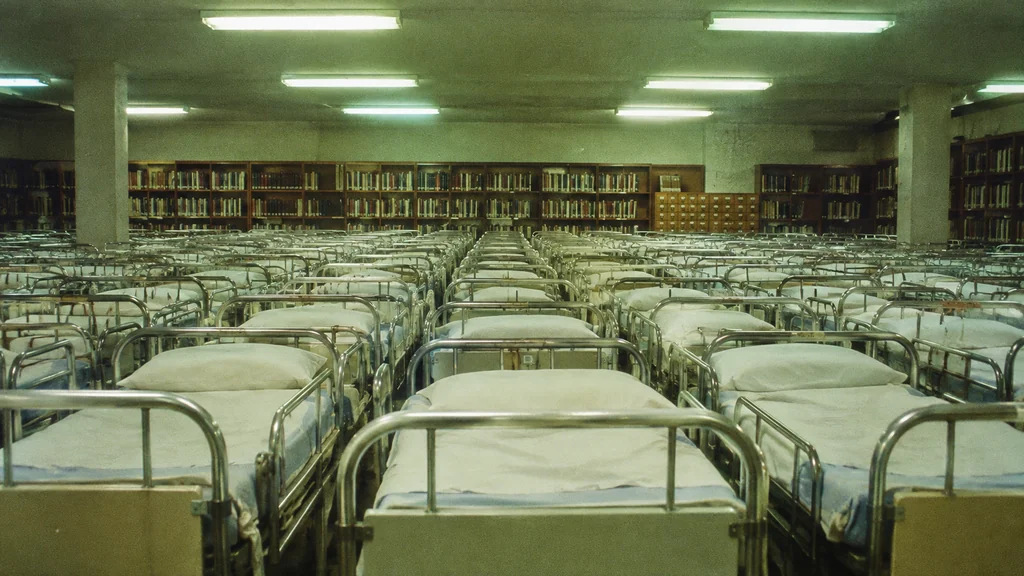
Image composition · tobriefAt Gennimatas Hospital’s emergency department in Athens, patients who have already been admitted wait up to three days for a bed, while the hospital’s former library is now used to care for patients (Kathimerini, 902.gr). Eleni Bagia, an emergency department physician, describes the situation. She recalls that the library became a COVID ward during the pandemic and never returned to its original use. For someone arriving at an Athens hospital on emergency duty, this means that “we’re admitting you” does not guarantee a bed.
Why admission does not mean a bed
Emergency departments work in stages. First, triage orders patients by how urgent their cases are. Then a doctor examines them, orders tests and stabilises them. If the doctor decides a patient needs hospital care, staff request a bed. The decision can come long before the patient is moved. Medical research calls the time in between boarding: remaining in the emergency department until a patient can move to a suitable ward (study on bed allocation).
Imagine a hotel where your reservation has been approved, but a suitable room has not become available. You wait at reception and the staff look after you, but reception was not built for anyone to spend three nights there. “Suitable” matters. A patient who has had a stroke needs a neurology team and close monitoring, while someone with a fracture requiring surgery needs an orthopaedic bed. An empty bed in another ward does not automatically solve either patient’s problem. The queue can therefore grow even when a bed is vacant somewhere in the building.
The longer a patient waits for a bed, the more risks they face. A systematic review of 21 studies links boarding to delays in care, missed or late medication doses and errors. It also links boarding to a higher risk of delirium among older patients (review). Others are affected too: every occupied trolley leaves one fewer for the next person through the door.
If you are accompanying someone who is waiting, you can ask two questions: which team is responsible for their treatment, and when will they be reassessed? Clearly assigning responsibility for care during the wait is one measure that has been tested internationally (PLOS ONE).
Demand for beds is high. During a typical general emergency shift at Gennimatas, Bagia tells Kathimerini, 800 to 1,000 people arrive and doctors decide to admit 180 to 240. In other words, nearly one in four needs a bed during a single shift (Kathimerini). Published ministry figures for emergency shifts count how many people were seen, but not how many waited for a bed or for how long.
The Athens-Piraeus Hospital Doctors’ Union (EINAP) says there is one doctor for more than 50 patients during an emergency shift. It also says the wait for a bed can exceed 48 hours, a figure on the same scale as the three days Bagia describes (EINAP). The union describes patients spread across wards and buildings and attributes the pressure to staff shortages (Iatropedia).
What the ministry plans
At a meeting with the Panhellenic Medical Association (PIS) on 16 November, Health Minister Adonis Georgiadis acknowledged “particularly severe pressure” at Gennimatas, Tzaneio Hospital and Nikaia General Hospital. He said emergency duty schedules would change once Evangelismos Hospital’s emergency department reopens, which is expected on 1 December. PIS president Matina Pagoni proposed a general emergency shift every four days, but no final schedule has been published (Health Ministry).
Two days earlier, the minister had cited data from the digital “wristband” system showing an average wait of about four hours in emergency departments (HealthReport). That, however, measures a different period from the one that begins when a decision to admit a patient is made. In the hotel analogy, the average time spent at reception does not show how long someone with an approved reservation waited.
Redistributing emergency shifts changes where and when patients arrive in large numbers, but it adds neither a bed nor a doctor. To see whether a change solves the problem, researchers measure the time from the decision to admit a patient until they reach a bed (scientific review). Until that measure is published, three days in the emergency department will remain one doctor’s account rather than a figure the ministry must bring down.
Details about this article
- Model:
- claude-opus-5-5
- Generated:
- 11/19/2026, 4:26:41 AM
- Pipeline run:
- incremental_20261119_033012
- Watermark:
- SynthID (Google's invisible watermark)
- Human review:
- None before publication