Trump pauses strikes, Hormuz stays restricted
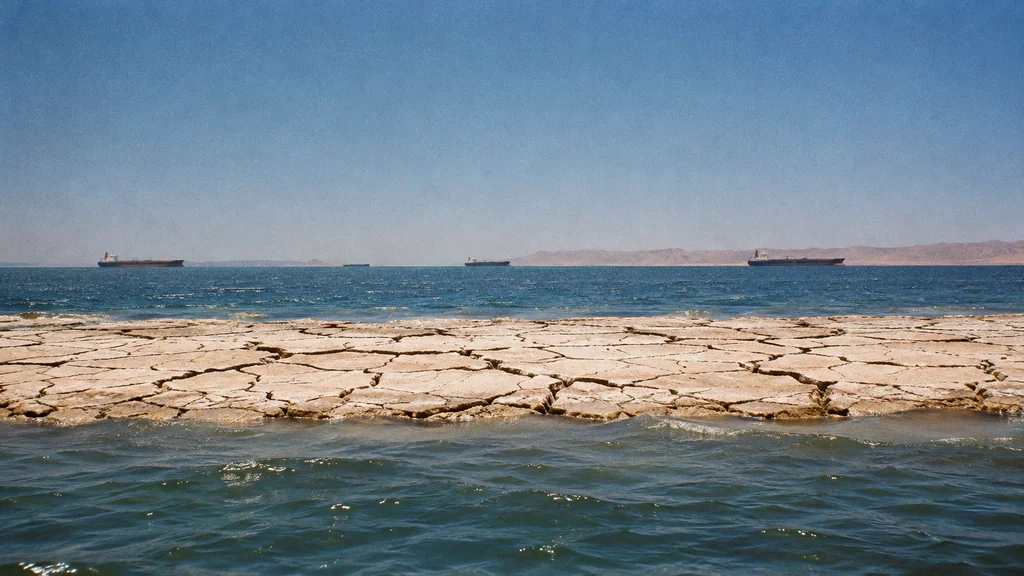
Washington pauses its strikes while ships still wait to cross Hormuz.
Image composition · tobriefDonald Trump said on 9 November that Iran was "militarily effectively over" and that more strikes did not seem necessary "at this point" (AP, Reuters). He paused further bombing but kept the US naval blockade of Iranian ports in place. Iran, for its part, still restricts passage through the strait, so Trump's words alone have not reopened a route that European shipping and gas buyers depend on.
The pause is conditional. Trump said US forces remained "locked and loaded" if circumstances changed (AP).
He spoke after meeting Qatar's prime minister, who has been carrying proposals between Washington and Tehran. Secretary of State Marco Rubio cooled expectations the same day, saying no breakthrough was imminent and calling Iran's conditions "outrageous and ridiculous" (Reuters).
Two locks, two keyholders
The first lock is American. The US blockade covers ships of any flag entering or leaving Iranian ports, but not vessels passing through Hormuz to other countries (CENTCOM).
The second lock is Iranian. Tehran claims the right to decide which vessels may cross the strait itself, and it has warned ships on routes it has not approved. Lifting one lock does not open the other.
Washington is still enforcing its lock by force. On 7 November, US Central Command said an American aircraft disabled the St Kitts-flagged cargo ship Huda in the Gulf of Oman after it allegedly tried to breach the blockade (Reuters).
That structure explains the stalemate. Each side holds one restriction as leverage, and Rubio's dismissal of Iran's terms suggests neither is ready to release its own first. Qatar can draft bridging terms, but it cannot deliver either side's half.
What the ships show
The most recent traffic count came before Trump spoke. On 8 November, the Joint Maritime Information Centre, a naval monitoring cell, counted 208 commercial ships waiting at anchor east of the strait, with independently tracked traffic in the single digits to low double digits per day (JMIC).
That figure is a baseline, not a measure of any rebound. Nothing in the reporting so far shows passage restored after Trump's remarks.
Shipping lines put a price on the danger. Maersk's 6 November notice set a $1,000 per container charge for a Hormuz passage to cover insurance and crew risk. The same notice listed emergency surcharges of $1,800 to $3,800 on affected routes (Maersk).
Where Europe pays
The clearest European cost comes through liquefied natural gas from Qatar. Italy's Edison said QatarEnergy's force majeure notice (a contractual suspension of deliveries) covered 38 cargoes from April to December, of which it had replaced 27 by late October (Edison).
Poland got a rare exception. Orlen confirmed by 4 November that the Qatari carrier Al Kharsaah was heading its way, but chief executive Ireneusz Fąfara called the shipment exceptional and said he had no word on further cargoes (WNP). The ship sailed before Trump spoke, so it tells us nothing about his pause.
European governments can press for open passage. According to the US State Department, Rubio and French Foreign Minister Jean-Noël Barrot reaffirmed freedom of navigation through the strait on 9 November. The two restrictions that matter, however, belong to Washington and Tehran, and no EU institution or European navy can lift either one.
Trump has lowered the odds of another major bombing round. He has also kept the means to resume it and left the blockade untouched. Even if the two sides settle who moves first, a deal would still have to produce what the data does not yet show: ships crossing regularly, with insurers willing to cover them. On the evidence so far, Monday's remarks changed what Washington says it intends to do. They did not change whether ships can get through.
Details about this article
- Model:
- claude-opus-5-5
- Generated:
- 11/10/2026, 1:56:25 AM
- Pipeline run:
- eu_pipeline_20261110_005009
- Watermark:
- SynthID (Google's invisible watermark)
- Human review:
- None before publication