Trump’s energy ceasefire lacks Moscow’s yes
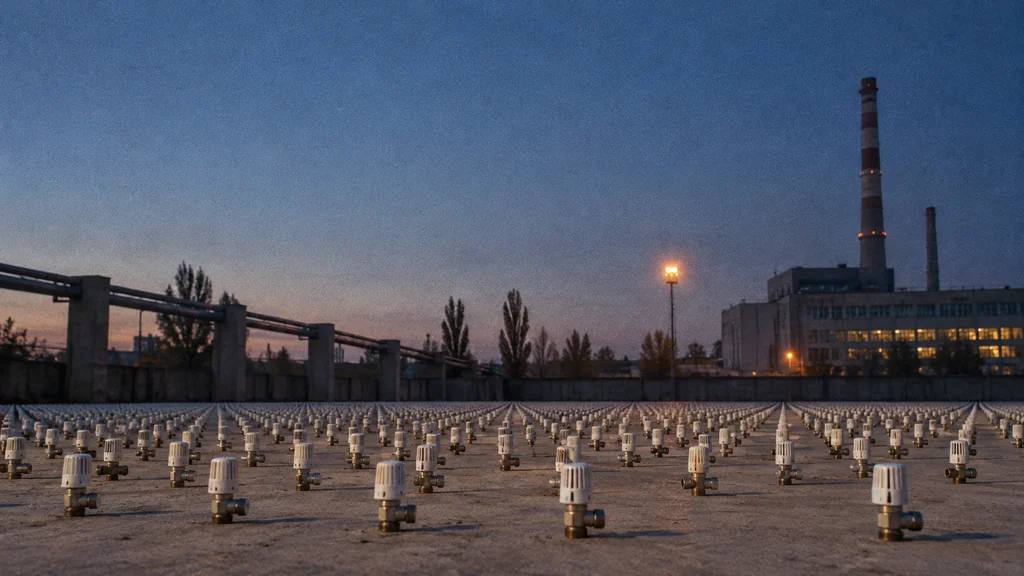
Kharkiv’s homes await a truce that no one has jointly confirmed.
Image composition · tobriefDonald Trump announced on Sunday that Russia and Ukraine had agreed an "ENERGY CEASEFIRE" effective immediately, and warned both sides: "Do not break it!" (Truth Social). By the end of the day the Kremlin had confirmed no deal and had not answered press questions (Wall Street Journal). Hours after the post, an unnamed White House official said Russia was still considering a narrower proposal (Axios).
Kyiv's yes came with conditions
Kyiv had stated its position before Trump posted. In an interview broadcast that morning, Zelensky offered to stop hitting Russian refineries and diesel facilities if Russia stopped attacking Ukraine's energy infrastructure (ABC News). Trump's post went up at 14:16 UTC, around 17:16 in Kyiv, with no agreement text attached (post archive).
Zelensky said the announcement "was news for me" (Axios). He answered with a conditional yes. Ukraine would hold fire if Russia did, but Kyiv needed to know when the pause began.
In his evening address he said Ukraine was ready to stop striking Russian energy and that the armed forces had received orders (Ukrainian presidency). Those orders have not been published. Without a shared start time and a shared list of protected sites, neither army can know exactly what it has been told to stop.
Two versions of the same deal
The White House official's account changes the picture. The proposal the official described would cover only refinery strikes on both sides at first, with power plants and grids possibly addressed later.
The status matters more than the scope. The official said Russia was still considering the proposal, which means Moscow had not accepted it. Trump's "both parties have agreed" and his own administration's "Russia is still considering" cannot both be true.
If the official's description is accurate, the trade is lopsided. Ukraine's main lever is its strikes on Russian refineries, the step Zelensky offered to halt. Russia's strikes on power stations and substations (the hubs that feed electricity into neighbourhoods) leave Ukrainian families without light or heat as winter approaches. A refinery-only first stage would bank Kyiv's concession before anything protected its grid.
The question of who gives up refinery strikes was already contested. The Financial Times, citing European officials, reported that Washington had threatened to curb intelligence sharing and a NATO-run channel for buying US weapons for Ukraine unless Kyiv stopped hitting refineries, though Reuters could not verify the report (Reuters). No cutoff has been established since a Polish outlet first described the threat (To Brief). Nothing in the record connects that report to Sunday's post.
What hit after the announcement
Around 20:00 Kyiv time, Zelensky said a strike had "just" hit Kharkiv's CHP-5, a plant supplying the city with both electricity and the hot water that heats apartment blocks (Kyiv Independent). His office said a Shahed drone had also hit a Kyiv power plant after the US statement, cutting electricity across many areas (Ukrainian presidency).
These reports show the attacks continued. They cannot show a breach. Nobody has published the terms, and Russia has not said it accepted any.
Europe is paying to repair the infrastructure a truce would protect. On 4 October, Friedrich Merz pledged roughly €350 million for generators, substation equipment and repairs in Ukraine (German government). On Sunday, Emmanuel Macron backed "a real energy truce" and said Russia kept refusing one (Le Monde). Nothing published so far gives any European government a role in setting or monitoring the pause.
By Sunday evening, no one had shown a jointly confirmed energy ceasefire. The White House official's own account described Russia as still considering a narrower proposal. Kyiv says its orders have gone out. Until Moscow confirms a deal and someone publishes the terms, a strike on a Ukrainian power plant shows only that the war continues.
Details about this article
- Model:
- claude-opus-5-5
- Generated:
- 10/12/2026, 1:36:20 AM
- Pipeline run:
- eu_pipeline_20261012_005007
- Watermark:
- SynthID (Google's invisible watermark)
- Human review:
- None before publication