Trypilska hit as Kyiv faces power cuts
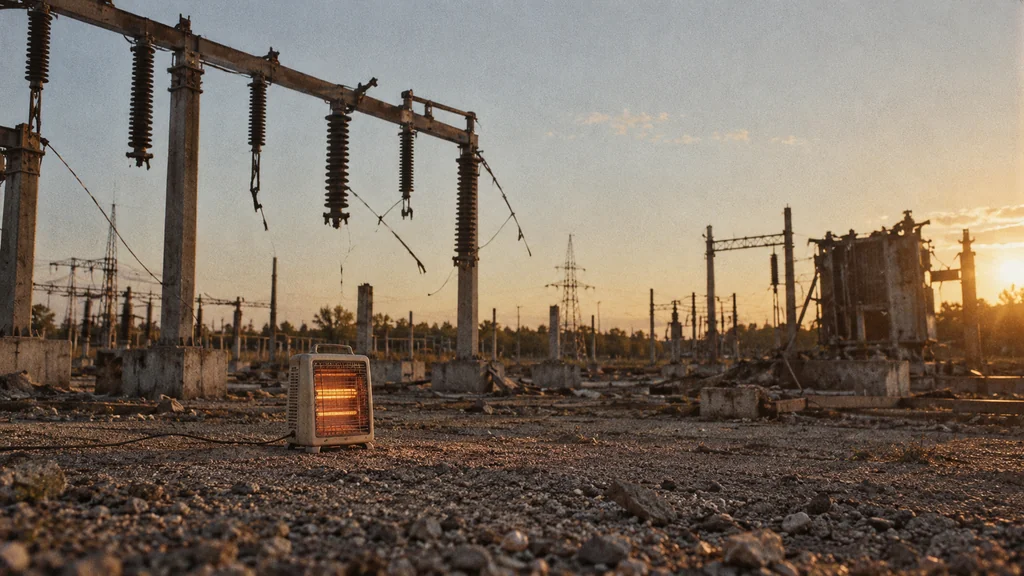
After another strike at Trypilska, Kyiv cannot yet measure the power lost.
Image composition · tobriefRussian missiles and drones struck 11 Ukrainian regions overnight into 30 September and damaged generating equipment at the Trypilska thermal power plant outside Kyiv (Hromadske). Centrenergo, the state-owned company that runs the plant, has confirmed the damage but has not said how much generating capacity was lost (Interfax Ukraine). With the heating season starting, the public cannot tell how much of that gap repairs or European imports can fill.
A plant rebuilt, then hit again
Trypilska was largely destroyed in April 2024. According to the Ukrainian outlet Komersant, it returned to partial operation during 2025 (Komersant). No one has published which units were running before this strike, so any figure for newly lost capacity would be a guess.
The attack was broad. Prime Minister Serhii Koretskyi called it the first combined attack on the energy system of this scale since last heating season (Hromadske). Russia's defence ministry named Trypilska among its targets and claimed the plant supplied Ukrainian defence facilities (BBC).
Centrenergo's chief executive, Serhii Isachenko, said engineers first had to inspect the equipment and define the work. He said repairs would begin once security allowed, and the company held back further detail for security reasons (Interfax Ukraine). The likeliest motive is straightforward. A published damage list would tell Russian planners how well the strike worked, and the price of that caution is that the public cannot measure the loss.
From emergency cuts to scheduled ones
Kyiv felt the damage in stages. By morning, DTEK, the company that distributes the city's electricity, said crews had restored power to about 8,000 customers on the left bank of the Dnipro (AFP). That number counts reconnections at a single point in time. It does not say how many people lost power.
In the evening, DTEK said Ukrenergo, the national grid operator, ordered emergency cuts in Kyiv at about 17:40. By 18:15, restrictions covered parts of the capital and the Kyiv, Chernihiv and Zhytomyr regions (Ukrainska Pravda, Ukrainska Pravda). Ukrenergo said repeated attacks had overloaded equipment, which forces operators to disconnect customers so the wider grid stays up. Nobody has said how much of that overload came from Trypilska and how much from other damaged sites.
Later that night, on Ukrenergo's instruction, Kyiv went back to scheduled "stabilisation" cuts, with timetables published address by address (UNN). For households, the change is real: emergency cuts come without warning, while schedules let people plan around them. The switch suggests operators had regained enough control to manage the shortage. It does not mean the shortage had shrunk.
What European help can and cannot answer
Europe supports Ukraine's power system in two main ways. The European Commission says it has mobilised more than €4 billion for Ukraine's energy security since the full-scale invasion, including a €920 million package for this winter announced in February (European Commission). That money pays for equipment and repairs across the grid.
The second route is imports from Ukraine's EU neighbours, and both the physical lines and the market limit it. Polish outlet Money.pl reported in September that combined import capacity from Poland, Slovakia, Hungary and Romania ranges from 1,700 to 2,600 MW, depending on system conditions (Money.pl). Those figures are ceilings, though, and spare room on a line does not mean anyone buys power to send through it.
Price is the obstacle. A Razumkov Centre expert warned in the same report that Ukraine's domestic price caps could put traders off importing when electricity in the EU costs more (Money.pl). Even at full capacity, imports depend on whether the trade pays.
Each form of help covers a different part of the problem. With Trypilska's lost output still undisclosed, the public cannot judge how far repairs or imports will cover it. Centrenergo and Ukrenergo hold the figures that would answer the question: which units failed, and how much reserve Kyiv has left at the evening peak.
Details about this article
- Model:
- claude-opus-5-5
- Generated:
- 10/1/2026, 2:49:33 AM
- Pipeline run:
- eu_pipeline_20261001_005008
- Watermark:
- SynthID (Google's invisible watermark)
- Human review:
- None before publication