Ukraine disappears from Trump’s Shenzhen declaration
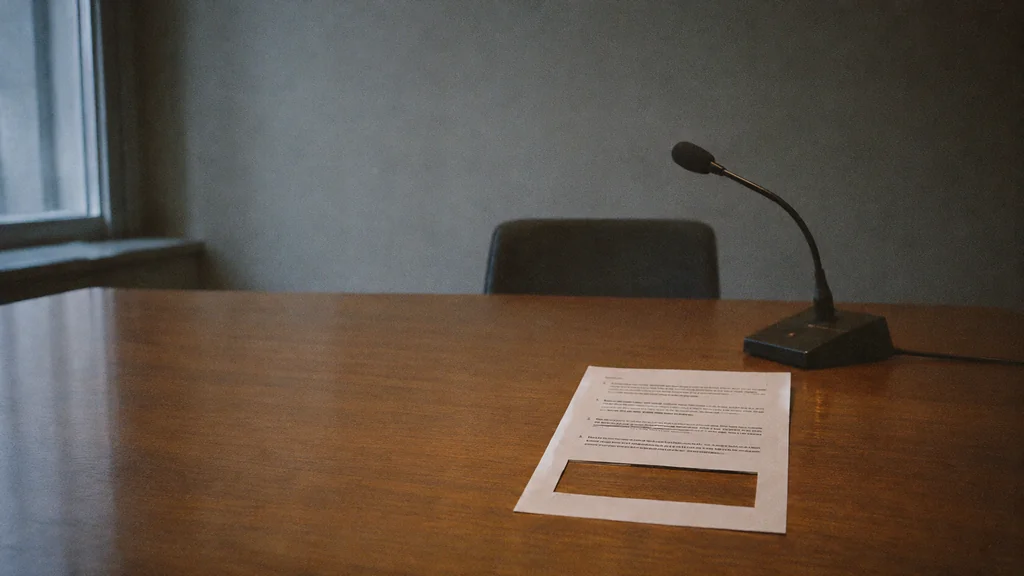
Europe waits for Ukraine terms that have yet to reach the page.
Image composition · tobriefDonald Trump, Xi Jinping and Vladimir Putin signed a four-point declaration "toward peace" in Shenzhen on 19 November, and it does not mention Ukraine (White House, Chinese government). In Berlin, European leaders preparing to negotiate over the war heard from US envoys but saw no written proposal. Their own negotiating team has no agreed mandate, and it cannot offer EU sanctions relief on its own.
The declaration's commitments are broad. The three leaders, whose countries hold vetoes on the UN Security Council, promise UN reform without a proposal or deadline, more diesel and gasoline without volumes or buyers, and a dialogue on nuclear risk without a forum or date. Nothing in the fuel clause lifts any EU or US sanction (Chinese government).
A court Europe defends
The clause on international justice matters most to Europe. It calls state consent and officials' immunity "paramount" and says the International Criminal Court must not "abuse" its jurisdiction (White House). It names no case, but the court's most prominent one involves a signatory. In March 2023, its judges issued an arrest warrant for Putin over the deportation of Ukrainian children (ICC).
The wording puts Washington beside Moscow against a court EU governments have defended. When the US sanctioned the court itself in October 2026, the EU's foreign-policy chief, speaking for member governments, asked Washington to reverse course (Council of the EU). The clause changes no law. It does show the US and Europe pulling apart on war-crimes accountability, an issue likely to surface in any Ukraine settlement.
The Ukraine point that disappeared
Finnish President Alexander Stubb told reporters in Berlin that the declaration was meant to include a fifth point, on Ukraine. Helsingin Sanomat ran his remark as its headline: "That language was not good" (Helsingin Sanomat).
A separate editorial in Iltalehti goes further. It says Stubb's account was that the United States removed the clause (Iltalehti). That claim rests on a newspaper's retelling. Stubb was not in Shenzhen, no draft has surfaced, and no one has said who wrote the text.
What is on record is thinner. US envoy Steve Witkoff said Trump told Ukraine's backers that the war had been central to his talks with Xi and Putin (AP). That describes a conversation and commits no one to anything.
Who can say yes for Europe
Those backers met in Berlin as the Coalition of the Willing, the countries preparing security guarantees for Ukraine after any ceasefire. Witkoff and Jared Kushner briefed Chancellor Friedrich Merz, and the German government published no terms (German chancellery). Poland's Donald Tusk said afterwards that Russia had sent European negotiators no formal invitation (Polskie Radio 24).
Europe has at least decided who would sit at the table. After EU leaders met informally on 13 November, António Costa, who chairs their summits, said the team would pair the EU's own institutions with five national governments: France, Germany, Italy, Poland and the United Kingdom, known as the E5 (European Council).
What that team may say is another matter. Italy's Giorgia Meloni told the Berlin meeting the E5 needs a clear mandate setting out what Europe asks for, what it offers and what it refuses (ANSA). Her demand signals that no such document exists yet.
Sanctions are the sharpest limit. EU sanctions on Russia are set by the Council, where ministers from every member government sit, and lifting them requires all of those governments to agree. Britain is not an EU member at all, and the E5's four EU countries cannot speak for the others. Washington, by contrast, can move alone, and has already suspended new sanctions on Russian energy revenue (To Brief).
Whatever was said in private, the published declaration gives Europe no Ukraine terms to negotiate. Europe's team cannot promise sanctions relief unless every other EU government signs on. Until Washington or Moscow puts a Ukraine proposal on paper, Europe has nothing to accept, amend or refuse.
Details about this article
- Model:
- claude-opus-5-5
- Generated:
- 11/20/2026, 1:52:33 AM
- Pipeline run:
- eu_pipeline_20261120_005008
- Watermark:
- SynthID (Google's invisible watermark)
- Human review:
- None before publication