Ukraine’s 19.6 GW goal faces fresh strikes
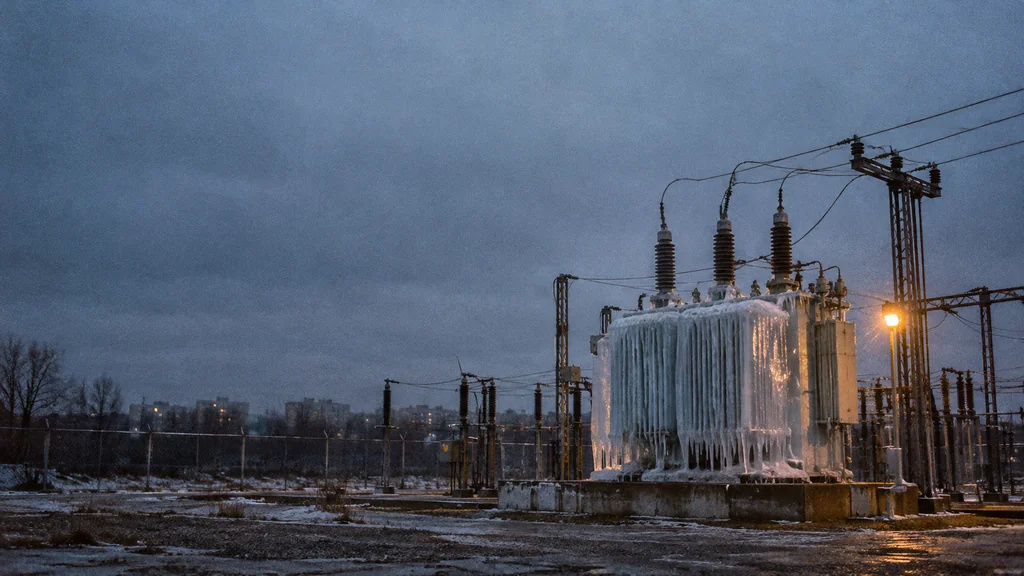
Ukraine’s winter power plan awaits a measure of what the strikes destroyed.
Image composition · tobriefA Russian drone and missile attack overnight into 17 October struck energy sites in ten regions, according to Ukraine's Energy Ministry (Energy Ministry). European donors are funding part of the repairs meant to carry Ukraine's grid through winter. Kyiv has not yet said how much generating or transmission capacity the attack destroyed, and that figure decides whether its winter plan still holds.
Two cities, one substation
Vinnytsia woke up without electricity. Essential services ran on backup power, and the city's electric transport stopped. The regional operator, Vinnytsiaoblenergo, traced the blackout to a single damaged substation serving tens of thousands of customer connections, then restored them in stages (Ukrinform).
A substation steps high-voltage electricity down so homes and businesses can use it. When one fails, a city can go dark even while the power plants feeding it keep running. That makes it the most concrete damage on the record.
In Zhytomyr, homes lost both power and water while pumping stations switched to generators. Governor Vitalii Bunechko reported several damaged energy facilities in the region but did not name them or say how much capacity they carried (Suspilne).
A national count with gaps
President Volodymyr Zelenskyy said Russia attacked more than 15 important generation and transmission facilities overnight, using over 320 Shahed drones plus cruise and ballistic missiles (Zelenskyy). "Attacked" is his word. His statement includes no list of sites actually damaged.
The Air Force recorded impacts at 22 locations (Ukrainian Air Force). That count covers strikes on targets of every kind, so it cannot confirm how many energy sites were hit.
By morning, the Energy Ministry said, power had returned to more than 500,000 consumers, a count of connections rather than people (Energy Ministry). It gave no figure for those still without power. It also blamed that day's rolling household cuts on earlier attacks, so the new damage landed on a grid already working around old damage.
Why the missing figure matters for Europe
In August, Energy Minister Denys Shmyhal said Ukraine had about 15 GW available for the evening peak, imports included. He aimed for 19.6 GW by 1 November, provided repaired plants were not hit again (Ukrainian government). A gigawatt figure measures how much power the system can deliver at the same moment. The evening peak, when households switch everything on, is when a shortfall turns into blackouts.
Kyiv has not said whether this attack hit any of those repaired plants. It has not published a revised capacity figure either. Without both, nobody outside the ministry can judge whether the November target survives.
Imports from the EU can soften a shortfall. In January, the ceiling on imports across the combined EU–Ukraine–Moldova border stood at 2,450 MW (DiXi Group). That ceiling is smaller than the gap between Shmyhal's August figure and his November goal. It caps what can cross the border without guaranteeing delivery, and imported power still travels along Ukrainian lines that keep getting hit.
The equipment pipeline runs through donors. The Energy Community, a treaty body that extends EU energy rules to neighbours, runs a fund that pools donor money for transformers and generators. In an October update, it said suppliers had delivered €102.5 million of equipment from June through September, with €154.2 million more due by year's end (Energy Community).
On 4 October, Chancellor Friedrich Merz pledged about €350 million for generators, substation equipment and repairs (German government). A pledge is not a transformer installed in a substation. Nothing in the record yet links either the fund's deliveries or Berlin's money to this week's repairs.
Whether rebuilt sites stay standing also depends on air defence. CNN reported, citing an unnamed source, that Ukraine had run out of Patriot interceptors, though no Ukrainian, US or NATO official has confirmed it (To Brief). If accurate, the report would mean repaired facilities face greater risk. Nothing shows a shortage caused these outages.
The attack cut power to cities and damaged energy sites in several regions, and the record supports that much firmly. It does not yet support any verdict on Ukraine's winter supply. That verdict depends on a list of damaged assets and a lost-capacity figure, and Shmyhal's ministry is the only body that can publish them. Until it does, European governments are funding a repair programme whose November target no one outside Kyiv can check.
Details about this article
- Model:
- claude-opus-5-5
- Generated:
- 10/18/2026, 1:33:55 AM
- Pipeline run:
- eu_pipeline_20261018_005006
- Watermark:
- SynthID (Google's invisible watermark)
- Human review:
- None before publication