Ukraine stopped zero ballistic missiles
Europe’s promised shield remains paper-thin as winter approaches.
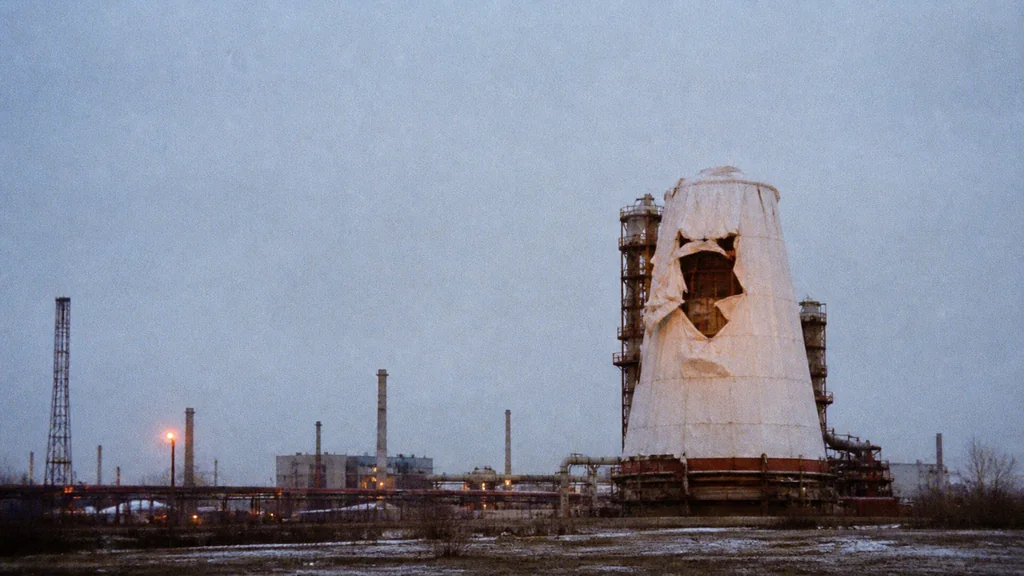
Image composition · tobriefA Russian missile struck the ArcelorMittal steel complex in Kryvyi Rih on 16 August, killing two workers and injuring 14 (Kyiv Independent, Euronews). Blast furnaces shut down, turning a military strike into visible industrial damage. Fires broke out in two Kyiv districts, and one person died in Sumy. Across 13 locations, Russia fired a mixed salvo of Iskander-M ballistic missiles, cruise missiles and over a hundred Shahed-type drones (Ukrainian Air Force). Ukraine's air force shot down 85 drones and three cruise missiles overnight. It intercepted zero ballistic missiles (RBC Ukraine).
That zero is the number that matters for Europe. Headline drone counts suggest effective defence. Ballistic missiles tell a different story. European governments have declared Ukraine's air defence essential but cannot supply the interceptors that stop ballistic warheads. Winter is three months away.
Why the drone counts mislead
Russia's attack design is deliberate. Cheap drones force Ukrainian crews to track dozens of targets and spend scarce missiles. The ballistic warheads then arrive faster and harder to stop (Reuters). Shorter-range air-defence systems like IRIS-T and NASAMS can handle drones and cruise missiles. They cannot reach ballistic warheads arriving on steep, fast descents. Only systems built for that job, such as Patriot PAC-3 or the Franco-Italian SAMP/T, can intercept them (Politico). Ukraine does not have enough of either.
The same night, Ukraine sent hundreds of drones toward Moscow and struck a plant producing solid rocket propellant in Rostov, according to Ukraine's General Staff (UNN). Russian officials reported at least seven civilians killed across several regions (CNN). The evidence runs one way: Russia offers a large interception claim with no independent verification; Ukraine shows dead workers, fires and shuttered blast furnaces.
Donors face a pre-winter deadline
The shortage is familiar. As To Brief reported earlier this month, Ukraine intercepted just one of 27 ballistic missiles during a 1 August barrage, and Zelenskyy has said air-defence missile deliveries fell to a third of 2025 levels. The 16 August salvo underlined the same gap.
Germany shows why production cannot close it. Berlin is financing Patriot and IRIS-T production lines, but the first European-assembled Patriot missiles will not leave COMLOG, Germany's dedicated Patriot assembly site, until early 2027 (IO+). Annual output may then reach only 120 to 170 interceptors, according to Frankfurter Rundschau. The alternative is transferring from existing Bundeswehr stocks, but that requires a cabinet-level decision, and the government has signalled those reserves are limited (Bundesregierung).
Poland faces the sharpest version of the tradeoff. Warsaw has a reason to help: stopping Russian missiles over Ukraine also protects Poland. But every Patriot missile sent east leaves Poland with less margin against the sabotage, GPS jamming and airspace breaches it already faces (ISW). Deputy defence minister Magdalena Sobkowiak-Czarnecka spoke of a possible transfer decision "in the coming days," while insisting Polish citizens' security came first (Rzeczpospolita). Warsaw has not approved it.
Romania showed what living next to the war already means. A Spanish F-18 on NATO patrol shot down a drone that crossed from Moldova into Romanian airspace. NATO said it "appears to be Russian," though the investigation continues (Libertatea, HotNews). Interim defence minister Radu Miruță said Romanian radars had tracked more than 100 drones near the border in 96 hours.
The arithmetic does not improve before winter. Patriot interceptors take roughly 42 months to produce (Defense News). Europe's new assembly lines start output in 2027. Transfers from national stocks cut into each donor's own defence. Every ballistic missile Russia fires now reaches a shield that Europe has called essential but cannot supply.
Details about this article
- Model:
- claude-opus-4-6
- Generated:
- 8/17/2026, 1:57:34 AM
- Pipeline run:
- eu_pipeline_20260817_005006
- Watermark:
- SynthID (Google's invisible watermark)
- Human review:
- None before publication