UN’s best path peaks near 1.8°C
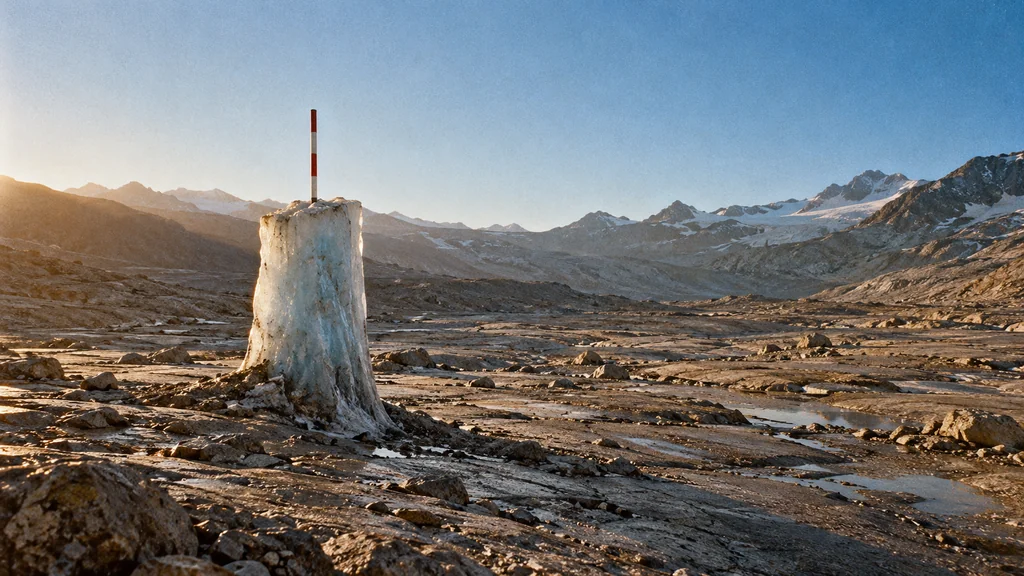
Temperatures may fall again; some losses will remain.
Image composition · tobriefThe world can no longer hold warming to 1.5°C without overshooting it, the UN Environment Programme concluded in its Emissions Gap Report, launched on 21 October (Carbon Brief). Overshooting means temperatures pass the limit and only later come back down. Even if deep cuts started immediately, warming would likely peak at 1.7–1.8°C around mid-century, with roughly even odds of falling back to 1.5°C by 2100 (UNEP).
Where today's promises lead
Start with what governments are already doing. If the policies now in force continue unchanged, the world warms about 2.8°C by 2100 and keeps warming after that (UNEP full report).
Promises look better on paper. Under the Paris Agreement, each country files a climate plan, called a nationally determined contribution. If every plan were delivered, including the parts that depend on foreign money or technology, warming would reach about 2.6°C (Eco-Business).
Adding countries' long-term net-zero targets brings that to roughly 2.1°C (UNEP executive summary). Net zero is the point where anything still emitted is balanced by what is taken back out of the air. Both projections assume governments keep their word.
The newest plans barely moved these numbers. By 1 September, 124 parties covering about 76% of global emissions had filed updates, yet UNEP judges their effect on projected warming to be close to zero (UNEP launch release). For Europe, the report's review of G20 members rated the EU's chances of meeting the 2030 target it pledged without conditions as inconclusive: the evidence did not clearly show whether the bloc is on track (UNEP full report).
How steep the best route is
Emissions are counted here in CO₂ equivalent, a common yardstick that converts methane and other gases into the amount of CO₂ that would cause the same warming. On current policies, the world would emit about 55 billion tonnes of it in 2035 (UNEP full report). UNEP's best case needs about 33 billion that year instead. That amounts to a 45% cut from 2025 levels, within a decade (UNEP full report).
One technology has beaten the forecasts. Solar power has been built out about seven times faster than scenarios drawn up in 2015 expected (UNEP launch release). Oil and gas use, by contrast, is still expected to grow this decade (UNEP executive summary). According to the Potsdam Institute's summary, the best case needs renewable capacity to triple from 2025 levels by 2035 while coal power falls at least 75% (Potsdam Institute).
Coming back down means pulling carbon out
Why worry about a peak if temperatures later fall? People live through the hotter decades. The IPCC, the UN's climate science panel, finds with high confidence that overshoot brings extra risks and some irreversible impacts, which grow the higher and longer the peak runs (IPCC). A later cooling cannot restore everything lost along the way.
Getting back down also follows a simple rule. Forests and oceans already absorb part of what we emit, yet atmospheric CO₂ only falls for good when deliberate removals exceed the CO₂ still being released. In UNEP's route the world reaches net zero around 2050, and removals must then keep outpacing emissions for decades (UNEP full report). Across the century, the pathway assumes about 320 billion tonnes of CO₂ taken out of the air (UNEP report page).
Today's removal is mostly biological. The world removes roughly 2.2 billion tonnes a year, almost all through forests and soils, whose stored carbon can be lost again to fire or drought, while newer methods with more durable storage add about two million tonnes (State of Carbon Dioxide Removal 2026). UNEP itself calls scaling removals to its assumed level uncertain (UNEP full report).
That makes timing decisive. Warming tracks the total CO₂ ever released, and UNEP calculates that five more years of emissions at today's rate, about 200 billion tonnes of CO₂, would lift the peak by roughly 0.1°C (UNEP full report). Each year of delay raises the peak and enlarges a cleanup nobody has yet shown can work at this scale. Even on the best route the return to 1.5°C is a coin toss, so cuts made this decade are the part of the plan that lowers the peak without waiting for that cleanup.
Details about this article
- Model:
- claude-opus-5-5
- Generated:
- 10/22/2026, 7:39:16 PM
- Pipeline run:
- eu_pipeline_20261022_184701
- Watermark:
- SynthID (Google's invisible watermark)
- Human review:
- None before publication