UniCredit gets clearance without lending pledges
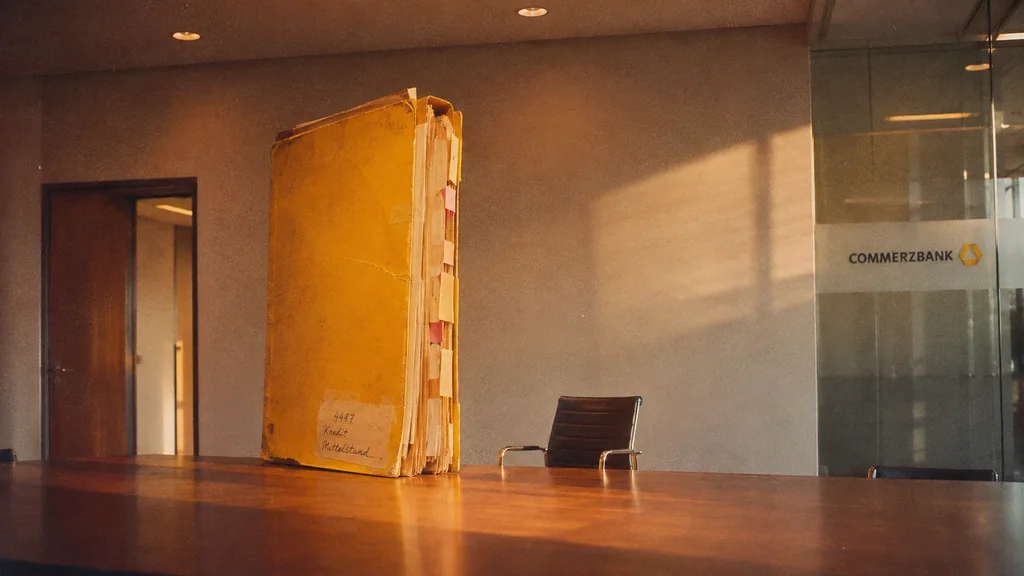
Brussels approves the takeover; borrowers may have to rebuild years of trust.
Image composition · tobriefThe European Commission approved UniCredit's takeover of Commerzbank on 16 November and asked for nothing in return: no branch sales and no lending pledges (European Commission). Brussels concluded that German companies will still have enough banks to choose from. It did not promise that they keep the bank, or the banker, they rely on today.
Why Brussels looked hard at this deal
UniCredit already owns a German bank, HypoVereinsbank. Adding Commerzbank puts two lenders chasing the same German customers under one roof.
The overlap is heaviest in two places. The first is lending to the Mittelstand, the mid-sized, often family-owned firms that both banks court. The second is trade finance: letters of credit and guarantees that protect an exporter if a foreign buyer fails to pay. Both banks are strong there.
The Commission's press release says private, public and cooperative banks, along with foreign lenders, would still give German firms enough options even if the combined group pulled back (European Commission). It publishes no market shares and no estimate of what it costs a company to switch banks.
What still stands between UniCredit and control
Last month the European Central Bank, which supervises the eurozone's largest banks, cleared UniCredit as a suitable owner (To Brief). UniCredit says one last regulatory approval is outstanding and expects it by the end of November, without naming the authority (UniCredit).
After that, the deal has to settle. Settling means the shares investors agreed to exchange actually change hands. Only then can UniCredit vote them, and its stake would reach about 49.65% of Commerzbank's voting rights (Reuters via Euronext).
UniCredit's chief executive, Andrea Orcel, wants a special shareholder meeting in the first quarter of 2027 (n-tv). Its purpose would be to elect new members of Commerzbank's supervisory board, the body that appoints and oversees the bank's management.
The German government still owns roughly 13% of Commerzbank, enough to vote and bargain but not to block (Reuters via Euronext). Finance Minister Lars Klingbeil wants Mittelstand lending kept, the headquarters left in Frankfurt and no compulsory redundancies (Tagesschau). None of those demands appears in the Brussels decision.
What borrowers could gain or lose
UniCredit's case rests on costs that barely grow with each new customer, such as payment systems, cybersecurity and compliance. Spread across a bigger bank, they cost less per loan. Borrowers benefit only if the group passes those savings on as cheaper credit instead of keeping them as profit. That usually happens when rival banks compete hard enough to force it.
The closest evidence comes from Spain. An ECB study of Spanish bank mergers found that firms which kept their lending relationship paid lower rates on average (ECB working paper). Smaller borrowers, however, more often lost that relationship and then struggled to build a new one elsewhere.
One study of another country cannot predict what happens in Germany. It does show why the relationship matters. A bank that has watched a firm for years can lend on what it knows. A new one starts from the paperwork.
That is the fear among German firms. Dirk Martin, who runs the software company Serviceware, said at the Euro Finance Week conference that he doubted service would stay the same and asked whether his familiar contacts would remain (FAZ). A new banker, he argued, starts without years of knowledge about the company.
The same worry covers Commerzbank's offices abroad. Orcel considers the foreign network too large, while Commerzbank chief executive Bettina Orlopp calls it part of the service German firms rely on (Börsen-Zeitung). For an exporter, a local office can mean a banker in the buyer's country who knows that market and handles the payment guarantees on the spot.
Brussels cleared the merger without requiring UniCredit to preserve the lending relationships German firms value. The Commission found that alternative lenders exist. It did not establish that any particular company could get the same terms elsewhere, from people who already know its business. Whether UniCredit changes those relationships is still unknown. Once the shares settle, the decision belongs to Orcel and a reshaped Commerzbank board. Berlin's stake, the votes of other shareholders and borrowers' freedom to take their business elsewhere will be the main pressure on that choice.
Details about this article
- Model:
- claude-opus-5-5
- Generated:
- 11/17/2026, 1:54:23 AM
- Pipeline run:
- eu_pipeline_20261117_005009
- Watermark:
- SynthID (Google's invisible watermark)
- Human review:
- None before publication