UniCredit’s 49.65% Awaits ECB Approval
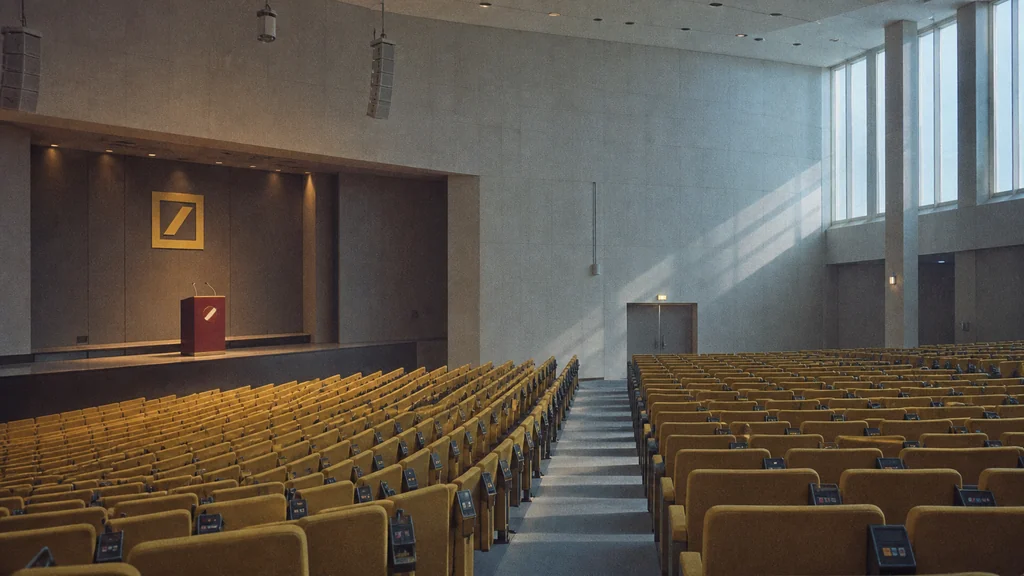
A stake below half begins to pull the whole bank inward.
Image composition · tobriefUniCredit directly owns 26.77% of Commerzbank's shares. Because Commerzbank holds treasury shares that cannot vote, that translates into roughly 27.93% of exercisable voting rights (UniCredit, AktG §71b). On top of that, UniCredit holds contracts and accepted tender commitments that entitle it to receive more shares but convey no votes yet. If regulators approve and those shares are delivered, UniCredit's voting stake would jump to 49.65% (UniCredit, Tagesschau). That conditional position is close to a majority but not one.
The German government holds roughly 12% (Commerzbank). Berlin can vote those shares, seek voluntary commitments on jobs and headquarters, and use its supervisory-board seat to shape governance. What it cannot do is unilaterally stop UniCredit from gaining de facto voting control if settlement goes ahead.
Three kinds of control, three different bars
German takeover law treats 30% of voting rights as the threshold that triggers a mandatory offer to all remaining shareholders (WpÜG). UniCredit's current 27.93% sits just below that line. The ECB, not Germany's BaFin, decides whether UniCredit may cross it. An internal ECB assessment reportedly found no safety-and-soundness grounds to object (Bloomberg), but no final decision has been published.
At 49.65%, UniCredit would not hold a legal majority. But shareholder meetings rarely attract full attendance. When turnout is low, 49.65% would dominate ordinary votes in practice.
A third, stronger form of power exists under German corporate law: a domination agreement, which lets a parent company issue binding instructions to the subsidiary's management. That requires approval by 75% of the share capital represented at the meeting, not 75% of all shares (German Stock Corporation Act). Berlin's 12% cannot block such a resolution alone. It would need to rally other shareholders so that opponents exceed 25% of the votes actually cast.
Who gains, who worries
The debate in Germany has focused on what could be lost. Commerzbank serves roughly 25,000 corporate clients, many of them mid-sized manufacturers that rely on long-standing lending relationships. Ver.di, Germany's services union, has warned that more than 10,000 jobs could be at risk, though that is a union estimate, not a disclosed UniCredit plan (Die Zeit). One study of post-merger banking found that acquiring banks tend to shed small-business relationships, at least temporarily (Degryse, Masschelein and Mitchell).
Those risks are real but only half the picture. UniCredit's rationale runs through cost savings and scale. A combined bank would hold a larger deposit base, spread technology and compliance spending across more revenue, and diversify geographic risk. UniCredit shareholders gain access to Germany's corporate lending market. Commerzbank shareholders who tendered receive UniCredit stock at a premium to the pre-bid price. The question is how much of the efficiency gain comes from cutting the very staff and branch network that German borrowers value.
The Bank Austria precedent offers a partial answer. After UniCredit took control, it cut roughly 1,200 positions and reduced branches from about 190 to around 120 (Bank Austria). Bank Austria remained profitable, but its strategic weight inside Austria shrank. Whether Commerzbank follows a similar path depends on decisions UniCredit cannot yet legally make.
What is actually decided and what is not
On 10 September, UniCredit's board authorised new shares to pay for the tendered Commerzbank stock (UniCredit board resolution). That prepares the payment, not the transfer. The ECB's approval to cross 30% remains outstanding. Competition clearance for the full control transaction has not been granted; the Bundeskartellamt's March 2025 decision covered only the earlier minority stake (Bundeskartellamt).
Germany can make this takeover politically expensive. It can negotiate conditions on headquarters, employment floors and lending commitments. But EU banking and takeover rules were designed to allow exactly this kind of cross-border deal. Berlin's 12% buys it a voice in the room, not a hand on the lock.
Details about this article
- Model:
- claude-opus-4-6
- Generated:
- 9/12/2026, 1:47:23 AM
- Pipeline run:
- eu_pipeline_20260912_005006
- Watermark:
- SynthID (Google's invisible watermark)
- Human review:
- None before publication