US may block Europe’s Ukraine weapons
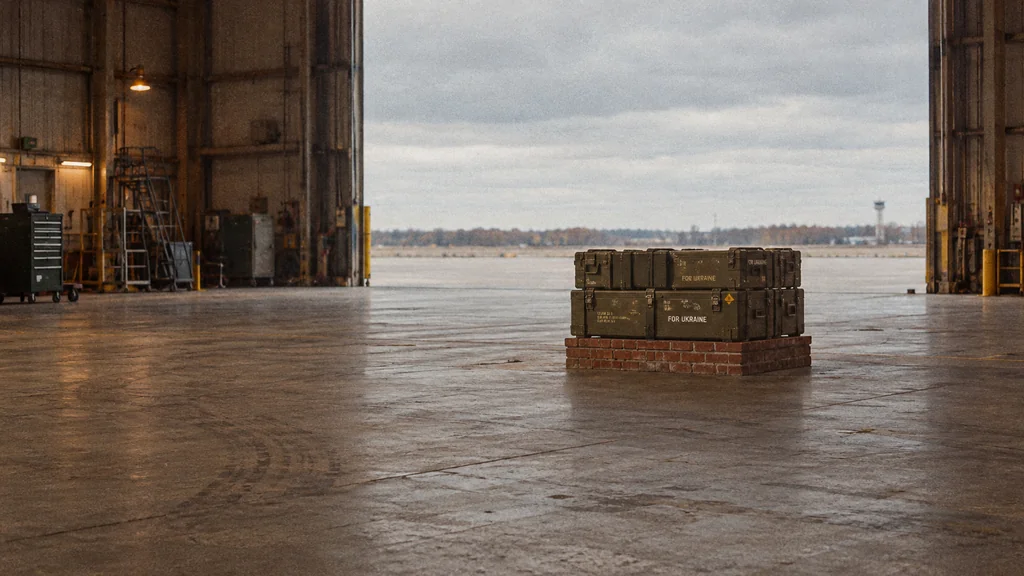
Europe funds the cargo; Washington still decides when it moves.
Image composition · tobriefThe Financial Times reports that US officials called Kyiv and European capitals on 10 and 11 October to demand an end to Ukraine's strikes on Russian oil refineries (Financial Times). According to the paper, they warned they could suspend intelligence sharing and obstruct deliveries of American weapons that allies buy for Ukraine. Europeans pay for those weapons, but the stock comes from the United States (NATO). No cutoff has been confirmed. The reported warning still shows who controls the deliveries.
The account has limits. The FT's sources are European officials, speaking anonymously, who either took the calls or were briefed on them. The paper named no American caller and cited no written instruction. Reuters said it could not verify the report, and the White House did not immediately respond (Reuters).
The calls followed a disputed meeting. On 9 October, Trump's envoys Steve Witkoff and Jared Kushner spent nearly eight hours in Miami pressing Ukrainian negotiators to stop the refinery strikes. A Ukrainian official said the envoys threatened to end intelligence sharing, and a US official denied any explicit threat (Axios). Ukraine's delegation left early (To Brief). The FT account goes further, adding the weapons channel and extending the pressure to European governments.
What Europe pays for, and what Washington controls
The weapons channel is the Prioritised Ukraine Requirements List, or PURL. NATO's top commander in Europe builds packages from Ukraine's needs and from what US stocks can spare (NATO). Allied governments decide whether to pay for them.
The money is substantial. By 8 October, more than two-thirds of NATO allies, plus Australia and New Zealand, had committed over $6 billion (NATO).
Paying does not make a donor the supplier. The equipment comes out of American stocks, so it reaches Ukraine only if Washington releases it. That would let the United States stall packages Europeans have already funded without spending any money of its own.
A threat is not a cutoff, though. NATO's statement that deliveries were underway predates the calls, so it cannot show whether they continued. By 11 October, no named US, Ukrainian or NATO official had publicly confirmed an order to halt a package or switch off an intelligence feed (Financial Times).
A precedent, a fuel market, and Kyiv's condition
Washington has paused support to Ukraine before, in a different form. It suspended intelligence sharing on 5 March 2025 (Washington Post). It resumed that sharing, along with American military aid, after talks in Jeddah on 11 March (AP). That episode involved America's own aid and intelligence. It did not involve weapons that other governments had bought.
US officials have not publicly explained why the refineries matter to them. The strikes have clearly hurt Russian fuel production. The International Energy Agency found Russian gasoline output roughly 20% below a year earlier and diesel nearly 30% lower, in an already tight fuel market (IEA). That is the market backdrop. Nothing in the reporting shows that fuel prices drove the calls.
Trump has announced an energy ceasefire but has not published its terms. Ukraine has answered with a condition.
On 11 October, Zelenskyy said Ukraine would refrain from striking Russian energy facilities if Russia did the same (Ukrainian presidency). Kyiv's case rests on reciprocity. If Ukraine stopped alone, Russian refineries could recover while Russian missiles kept hitting Ukraine's power grid.
Only the White House and NATO's military command can say whether funded packages are still moving, and neither has addressed the report publicly. The reported warning remains unconfirmed. Europe can fund American weapons for Ukraine, but Washington decides whether to release them.
Details about this article
- Model:
- claude-opus-5-5
- Generated:
- 10/12/2026, 1:35:45 AM
- Pipeline run:
- eu_pipeline_20261012_005007
- Watermark:
- SynthID (Google's invisible watermark)
- Human review:
- None before publication