Britain and EU agree to cut food checks
AI Daily Synthesis
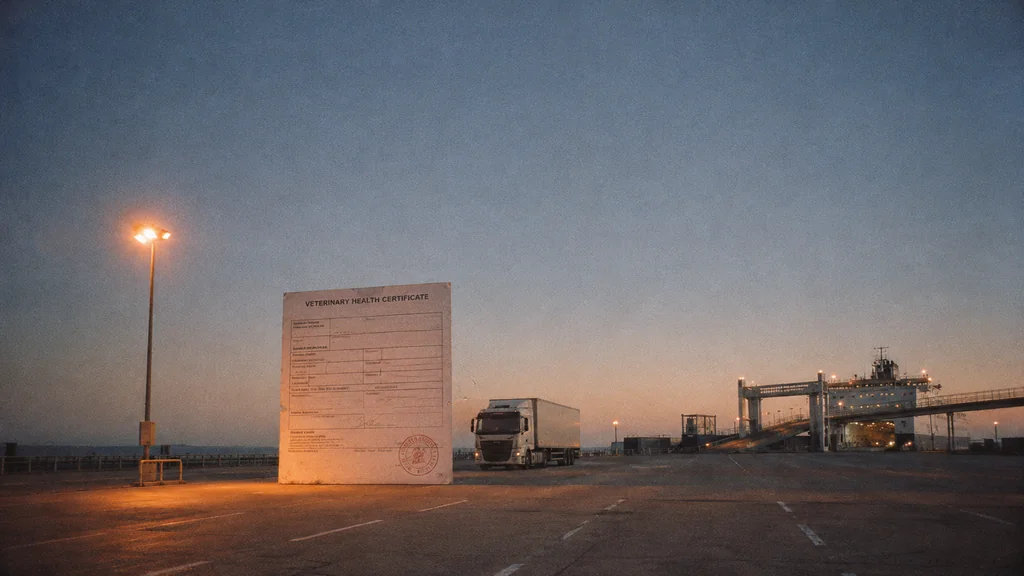
Image composition · tobriefFrom 1 March 2028, most shipments of meat, cheese, plants or seeds crossing the English Channel could travel without the health certificates and border checks introduced after Brexit (joint statement). UK Prime Minister Andy Burnham, European Commission President Ursula von der Leyen and European Council President António Costa set that target in Brussels on 20 November (European External Action Service). They also announced that negotiations had concluded on a youth scheme and a link between the UK and EU carbon markets. Under that link, businesses that pay for their emissions would be able to use allowances from either market in the other, with a target date of 1 January 2028, according to the UK government's explainer. None of the agreements has yet been signed or taken effect.
Today, a shipment of animal products to the EU may require a health certificate costing up to £200 and an inspection costing around £128 per load. A plant health certificate costs about £25, according to Just-food. These costs affect Britain's main market: the EU took 58% of British food and agricultural exports in 2025 (UK Department for Environment, Food and Rural Affairs). Customs declarations will remain (RTÉ).
The UK government estimates that the agreement will make its economy up to £5.1 billion larger by 2040, or about 0.14% of GDP (House of Lords Library). The House of Lords Library cautions that the estimate is not a full cost-benefit analysis. Supermarket chains Morrisons, Tesco and M&S backed the agreement. The British Retail Consortium, a trade association for retailers, asked for time and guidance to help businesses adapt (Business Live).
"It's a two-way street," von der Leyen said of the agreement (European Commission transcript). The checks also affect shipments going from the EU to Britain, including Greek goods. From January to August 2026, Greece sold Britain about £153 million worth of yoghurt, more than a tenth of all its exports to the country. The figures come from the UK tax authority and were reported by Euro2day. No one has yet calculated how much Greek producers will save.
The trade-off: rules without a vote
The checks are being removed because the rules will be shared. Britain will apply EU rules on food, animals and plants, including future changes to them (UK government explainer). The joint statement gives Britain no vote or veto when those rules change (European External Action Service). Shortly before the summit, the Guardian reported that France had opposed a British request for a vote. According to the same report, London backed down with the prospect of some consultation (Guardian via AOL).
Burnham called it "a good day for Britain and a good day for Europe", ten years after Brexit (prime minister's speech). Nigel Farage, leader of Reform UK, a right-wing British party, called the agreement a betrayal of Brexit. He said Britain was re-entering part of the single market and would be bound by every new EU rule (LBC, PA via Harrow Times). The texts confirm that Britain will follow rules it cannot vote on. That applies to food, animals and plants, rather than every EU rule.
People aged 18–31 and unresolved tuition fees
The youth scheme directly affects Greece too. People aged 18 to 31 will be able to live on the other side for up to three years to work, study, volunteer or travel. The limit is 100,000 participants a year from each side (UK government explainer). Places for EU participants will be divided among member states according to population, so Greece will receive a small share that has yet to be announced.
The visa has limits. Applicants must pay fees, show they have sufficient funds and health insurance, cannot claim benefits and cannot bring their families. Each country also retains the right to restrict access to its labour market. The aim is to put the scheme in place by 2028 and make places available no later than January 2030 (joint statement).
Tuition fees remain unresolved. The two sides set a six-month deadline, until 20 May 2027, for a separate agreement (European External Action Service). In England, a domestic student pays at most £9,790 a year for a standard undergraduate degree. Indicative fees for international students range from £11,400 to £38,000 (UK government, House of Lords Library). The EU wants its students to receive the same treatment as British students (UPI). According to leaks from unnamed diplomats, London favours an intermediate fee of around £12,000 (Politico, Le Monde).
For the food and carbon market agreements to become law, they need approval from the Council of the EU and consent from the European Parliament (Council of the EU). Legislation is also needed on both sides (Irish government). Politico reported that a draft Council position proposed delaying a decision on whether to sign the three agreements until the tuition fee issue was settled (Politico). The joint statement contains no such condition, and Wonkhe, a UK higher education news site, reads it as a parallel negotiation (Wonkhe). The 2028 dates are targets, not binding start dates. Until the agreements become law, the certificate costing up to £200 will accompany every shipment of meat crossing the English Channel (Just-food).
Details about this article
- Model:
- claude-opus-5-5
- Generated:
- 11/20/2026, 5:26:48 PM
- Pipeline run:
- incremental_20261120_163012
- Watermark:
- SynthID (Google's invisible watermark)
- Human review:
- None before publication