VW’s 500,000-car gap puts plants at risk
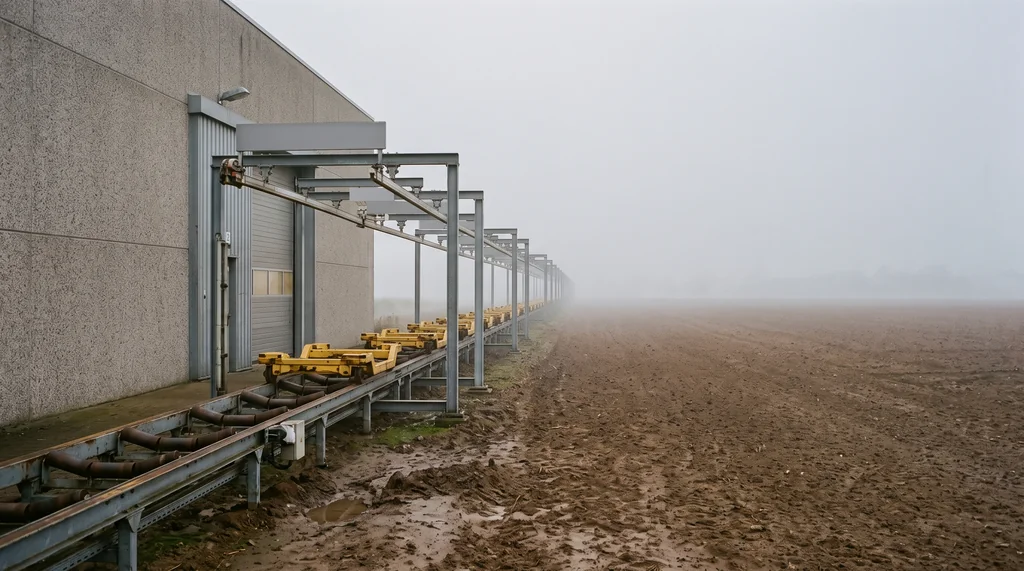
Europe’s car factories wait to learn where the next models go.
Image composition · tobriefVolkswagen's European factories can build more than 500,000 vehicles above what the market will absorb (Volkswagen Group). On 3 September, the supervisory board unanimously approved Future Plan 2030, the company's answer to that gap. The plan cuts roughly 50,000 more positions, halves the model portfolio and strips out about 75% of product complexity (Volkswagen Group, Reuters).
Those numbers describe contraction. The harder question is which parts of Europe keep building cars, and which quietly lose their future.
Factories lose work before they close
The restructuring works through model allocation: the process of deciding which factory gets the next car when the current one reaches end of life. A plant does not need to be formally shut down to die. If it simply never receives a successor model, shifts shrink, suppliers lose orders and local economies hollow out.
Four German sites now face exactly this. Volkswagen says competitive future production "cannot currently be secured" for Emden, Zwickau, Hannover and Neckarsulm, on a staggered basis from 2031 to 2034 (Volkswagen Group, Handelsblatt). Each plant must now prove its case for the next model or lose its line.
The financial pressure behind this is straightforward. VW's operating margin (profit as a share of revenue) fell to 2.8% in 2025, on sales of €321.9 billion (Volkswagen annual results 2025). China, once VW's profit engine, delivered 8% fewer cars in 2025 and 44.3% fewer battery-electric vehicles as local competitors took share (Volkswagen 2025 deliveries, Caixin). US tariffs add an estimated €5 billion a year in costs (Volkswagen Group). The board wants a 9% operating margin by 2030, roughly triple the current level.
A quiet country-by-country competition
The cuts do not fall evenly. Across Europe, a competition for surviving models is already under way.
Spain is the most politically charged case. The Spanish government has tied more than €4 billion in public funds to VW's electric transition at SEAT's plants (La Moncloa, La Vanguardia). Yet leaked reports suggest the Seat brand itself could disappear by 2029, folded into the higher-margin Cupra label (El Confidencial). Unions warn that even plants with commitments need a second electric platform to keep their lines full (Público). Billions in subsidies may have bought time, not certainty.
Portugal and Poland look safer for now. Portugal's Autoeuropa plant in Palmela produced 240,400 vehicles in 2025, accounting for 4.5% of Portuguese exports, and is expected to build the upcoming ID.EVERY1 (AFIA, ECO). Poland's Września factory has a confirmed 1.5 billion złoty investment for the electric eCrafter (Volkswagen Poznań).
But assembly plants tell only half the story. Suppliers are where volume cuts arrive first and hardest. CLEPA, the European parts-industry association, counted 104,000 supplier job losses across 2024 and 2025 against just 7,000 new positions (CLEPA). Halving VW's model range and slashing variant complexity means fewer parts contracts, less tooling work and less volume flowing to the thousands of small and mid-sized firms that supply the assembly lines. Portuguese and Polish component makers have already flagged this risk, even though their assembly plants look secure (ECO). A plant can survive while the supplier ecosystem around it thins out.
Contraction first, transformation later
VW shares rose after the vote, pricing in margin repair (NZZ, WSJ). But the confirmed mechanism today is contraction. The new battery plants, the software platforms, the value chains that would make this a genuine industrial renewal remain less visible than the cuts. Eurofound found that Europe-wide automotive restructuring announcements already covered around 106,000 jobs in 2024 and early 2025 alone (Eurofound).
Volkswagen has a real problem: too many factories for a shrinking market, a China business in retreat and an EV transition it is losing. For now, it has shown the cuts more clearly than the rebuild. The June 2027 production map, when VW finalises model assignments across its network, will reveal whether new work follows the old work out the door.
Details about this article
- Model:
- claude-opus-4-6
- Generated:
- 9/4/2026, 6:36:24 AM
- Pipeline run:
- eu_pipeline_20260904_005006
- Watermark:
- SynthID (Google's invisible watermark)
- Human review:
- None before publication