Yotova leads, but Bulgaria’s cabinet decides
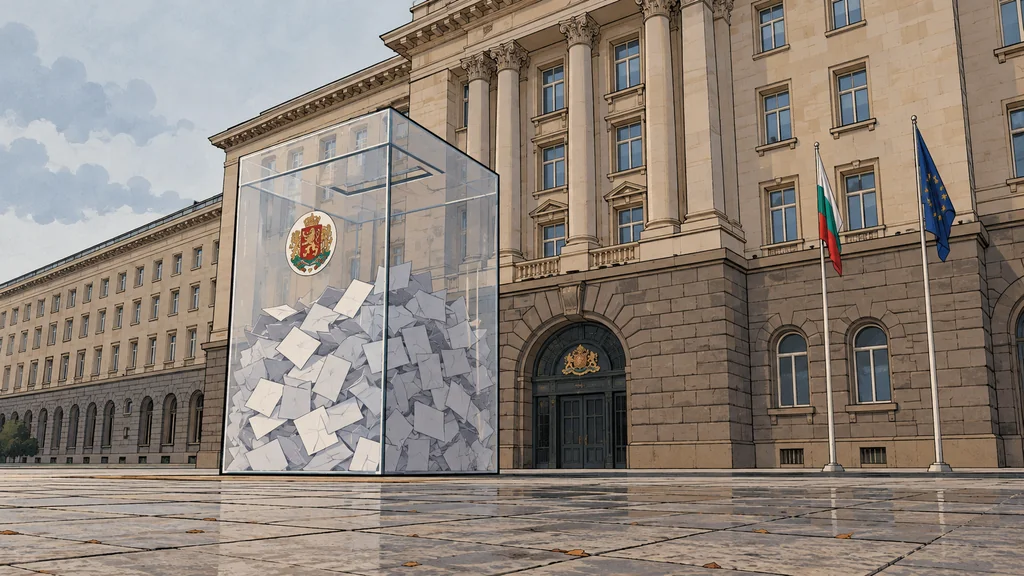
Yotova wins a mandate; Bulgaria’s cabinet still holds the policy votes.
Image composition · tobriefIliana Yotova, Bulgaria's incumbent president, was heading for a clear runoff win early on 2 November. A partial, uncertified count gave her 58.159% against 38.849% for challenger Andrey Gyurov (Central Election Commission). Yotova campaigned against arming Ukraine, but Bulgaria's decisions on weapons and sanctions belong to Prime Minister Rumen Radev's government, which made them months before this vote.
Gyurov has already conceded in substance. He told public television that his side accepts the results "as we saw them" (BNT).
Yotova's message was clear. She argued that sending Ukraine more weapons and money would only mean more casualties. She also said she would talk to Vladimir Putin, but only with a mandate from the state (BTA).
Some foreign coverage turned that into a verdict on Bulgaria's direction. Germany's Kölner Stadt-Anzeiger called her a "Putin-Freundin", a Putin friend (KStA). Her stated positions do not prove that label. More to the point, the label assumes the president steers policy, and in Bulgaria she does not.
Who actually decides
Bulgaria is a parliamentary republic, so the cabinet runs foreign and security policy. That cabinet answers to a parliament Radev controls. His Progressive Bulgaria party won 131 of the 240 seats in April (election results).
The president's reach is thinner still in Brussels. Radev and his ministers, not Yotova, represent Bulgaria when the EU decides. Radev attends the summits of EU leaders. His ministers vote where national governments write EU law and agree sanctions. The president has no vote in either room.
The line was drawn before the runoff
The government's choices, in date order, show a shift that predates the election. On 10 June it stopped giving Ukraine free weapons from army stocks. Radev later said those donations ended after 13 packages (BTA).
The halt mattered less than it sounded. The Polish Institute of International Affairs estimated that 98% of Bulgaria's past arms deliveries to Ukraine were commercial (PISM). Licensed sales by Bulgarian industry continue, which is why the institute judged the move largely symbolic.
Sanctions came next. EU sanctions need every government's agreement, so any one country can hold out for changes. Sofia used that leverage on the 21st package against Russia, objecting to proposed listings including Patriarch Kirill. On 13 July the foreign ministry said three people it opposed had been dropped and its arguments accepted (Foreign Ministry).
Bulgaria then let the package through. The EU adopted it on 23 July (Council of the EU). Sofia extracted concessions and did not block.
In October the cabinet turned to the European Peace Facility, the EU fund that pays for military aid to Ukraine. Its 21 October meeting took up Bulgaria's position on the fund, according to the government's published agenda (Council of Ministers). The reported approach lets Bulgaria opt out of paying for new lethal weapons without stopping other countries from doing so, and sends its share to non-lethal help instead.
The same cabinet kept regional defence work going. On 28 October, four days before the runoff, the defence ministers of Bulgaria, Romania and Türkiye discussed early warning and information sharing against attacks on commercial shipping in the Black Sea (Romanian Defence Ministry). Pulling back on free weapons has not meant pulling out of security cooperation with neighbours.
What the vote changes
The count is still interim, and that is the one caveat. If it holds, Yotova gains a strong personal mandate and no new powers. Every decision that has worried Bulgaria's partners came from Radev's government, before a single runoff ballot was cast.
The election may make it easier for that government to defend its course at home and among EU partners. That is an inference, and nothing in the result commits Sofia to a different vote. Any future change in how Bulgaria votes on sanctions or military aid would have to come from Radev's ministers, since only they hold Bulgaria's votes.
Details about this article
- Model:
- claude-opus-5-5
- Generated:
- 11/2/2026, 1:37:35 AM
- Pipeline run:
- eu_pipeline_20261102_005008
- Watermark:
- SynthID (Google's invisible watermark)
- Human review:
- None before publication