Riemann Hypothesis: AI-assisted proof awaits a human explanation
AI Daily Synthesis
Image composition · tobriefPrograms that check mathematical proofs step by step have accepted a proof of the Riemann Hypothesis written by Anthropic mathematician Levent Alpoge with Claude, the company’s AI model (Lean and Mathlib). A mathematician who checked the code again is now trying to write the proof in language people can read. At the central step, however, he still has to refer back to the code (Rubinstein). No one has yet explained why it works.
The hypothesis is one of the seven Millennium Prize Problems, with a $1 million prize (Clay). Imagine a map where every point has a horizontal and a vertical position. The zeta function equals zero at certain points on it, and the hypothesis says that all its “interesting” zeros lie on the same vertical line, at horizontal position 1/2. Only certain known, trivial zeros are excluded.
Why does their position matter? Because it determines how far the actual count of prime numbers deviates from a smooth estimate (Clay). Primes seem to appear irregularly, and the hypothesis places strict limits on that irregularity. Your bank’s encryption is not at risk: knowing how primes are distributed does not provide a way to break down the large numbers on which RSA relies (Scientific American).
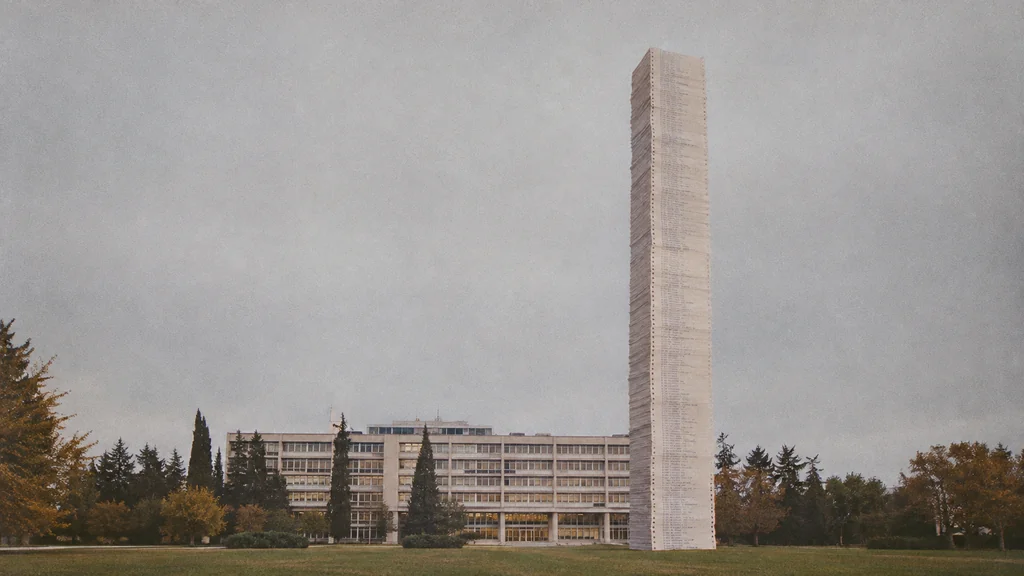
As we reported on 21 November (To Brief), the communities that maintain Lean, a proof-checking program, certified the formal proof that day. Alpoge had posted it a day earlier as a work of about 17 million lines of code (Alpoge’s note). Printed out, it would fill as many pages as more than a thousand novels. No one could read it all in a lifetime.
What exactly does the computer check?
In Lean, a proof is written in enough detail for a small program, called the kernel, to check that every step follows from the ones before it. Think of a chess referee checking every move in a game against the rules. The referee does not need to understand the strategy to tell you whether a move was illegal. That is why the program can do what no person would: go through every line.
The catch lies elsewhere. A flawless proof can prove the wrong proposition. That is why it matters that two comparison tools matched Alpoge’s theorem to the definition already in Mathlib, Lean’s shared mathematical library (Lean and Mathlib). Alpoge did not make his own lock and then open it. He tried his key in a lock others had installed beforehand.
Andrew Sutherland of MIT independently rebuilt the project. He also confirmed that its main theorems rely only on Lean’s three standard axioms (Sutherland). Axioms are the basic assumptions everyone accepts without proof. A hidden extra axiom would amount to cheating. In his latest published update, on 22 November, the substantive checks had passed, while two complete rechecks were still running (Sutherland).
What no machine checks
The referee tells you the game was legal, not how it was won. Alpoge’s four-page note sketches the idea, but not the steps (Alpoge’s note). Michael Rubinstein, a mathematician who ran his own series of checks on computers at the University of Waterloo (Rubinstein), has begun an extensive draft for human readers. At the central step, the draft still sends readers to the code (Rubinstein). Mathematician James Maynard thinks the proof is likely to hold up and says that, if fully confirmed, it will be a historic milestone (Nature).
Who did what also remains an open question. Alpoge writes that he guided the research and that Claude surpassed him near the end. But he has not published their conversations or the model version (Alpoge’s note). Anthropic did not respond to AP’s request for comment (AP).
A second, independent proof has the opposite problem. It is a 940-page manuscript by Alessandro Masullo, posted by Stanford mathematician Ravi Vakil: it was written for people, but no checker has certified it. In his 22 November update, Vakil calls it a draft under revision and says he cannot guarantee it is correct (Vakil). Mathematician John Baez found gaps in the chapter where the conclusion should follow (Baez).
The Clay Mathematics Institute still lists the problem as unsolved (Clay). Its president, Martin Bridson, called the announcement historic, but warned that the path to genuine understanding would be long and difficult (AP). To award the prize, Clay’s rules require publication in a suitable outlet, a two-year wait after publication, and general acceptance (Clay rules).
Until then, the Riemann Hypothesis is both proved within Lean and unsolved on Clay’s list.
Details about this article
- Model:
- claude-opus-5-5
- Generated:
- 11/23/2026, 4:20:38 AM
- Pipeline run:
- incremental_20261123_033011
- Watermark:
- SynthID (Google's invisible watermark)
- Human review:
- None before publication