Zaporizhzhia’s power is back on one line
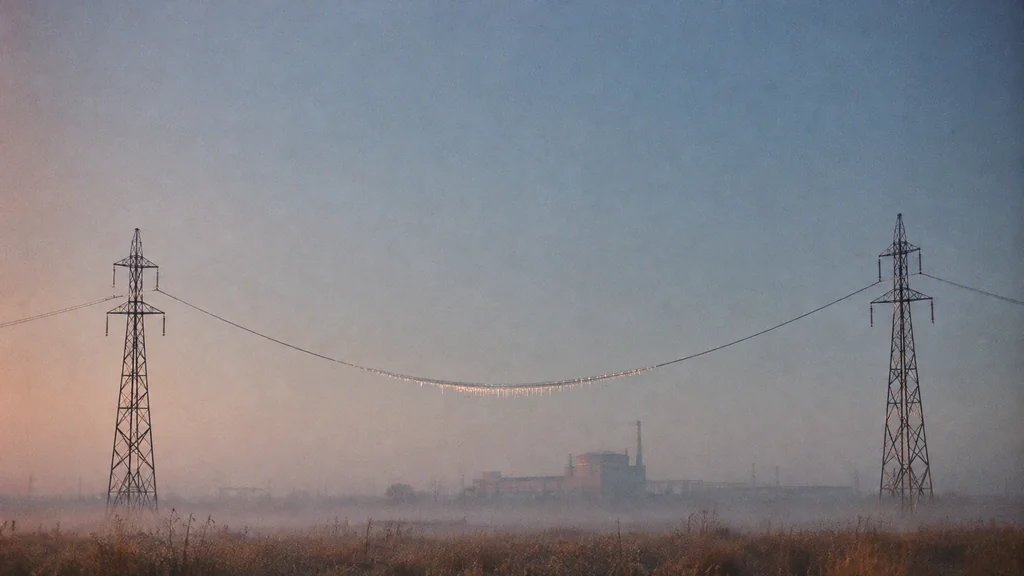
Grid power returns to Zaporizhzhia, with the plant still reliant on one line.
Image composition · tobriefEarly on Sunday morning, the Zaporizhzhia nuclear power plant lost its last working connection to Ukraine's electricity grid; the automatic attempt to reconnect failed, emergency diesel generators took over, and grid power returned only at 17:41, a 15-hour, five-minute outage (Energoatom, Energoatom). The IAEA, the UN's nuclear watchdog, says it was informed of the restoration rather than able to verify it, which is also the status of its diesel figures (IAEA, IAEA). Grid power is back, but the plant still depends on a single outside line, and another fault on it would again leave cooling to generators whose fuel nobody independent can count (IAEA).
Three actors describe this plant, and each sees only part of it. Russian-appointed managers run the occupied site and say a protection system tripped after damage, with radiation readings normal, claims relayed by Reuters but not verified on site. Energoatom, Ukraine's state nuclear operator, watches the grid connection from Ukrainian-held territory and publishes the outage chronology. The IAEA has inspectors at the plant but cannot order anything, and it says it does not know the cause or location of Sunday's fault (IAEA).
Energoatom counts this as the 16th total loss of outside power this year (Telegram). Before the war the plant had ten outside connections; by late October only one remained, and the second main line is severed where it crosses the Dnipro, while the drained reservoir behind it makes repairs on front-line terrain hard (IAEA).
The frequency matters because a shut reactor is not an inert reactor. All six units have been off since September 2022, but their fuel still produces heat, and pumps must keep water moving through the cores and spent-fuel pools (IAEA). Diesel generators covered Sunday's outage (Energoatom). The part nobody can verify is the fuel behind them.
What the inspectors are told
The IAEA says its team was told there is diesel for a limited number of generators for about two weeks (IAEA), but its late-October read of the tanks was thinner: daily tanks were full, total reserves low, and no new diesel deliveries had been reported since March 2026 (IAEA). A missing report is not proof that no fuel arrived; it is proof of how little the inspectors can see. During an earlier prolonged outage, operators cut the running generators from four to two and ran cooling pumps intermittently, then handed the schedules to the IAEA afterward (IAEA).
What sensors in Poland can and cannot show
Poland's nuclear regulator publishes continuous readings from a network of gamma monitors, and the government's civil-protection report for 7–8 November lists no alert tied to the plant (PAA, report). A clean reading in Poland shows the air there is clean. It cannot reveal whether a pump is running or a tank is full in Zaporizhzhia, and it would only catch a release after it had already crossed Polish territory.
The IAEA cannot fix the line itself. It observes, requests operating data, and brokers localized ceasefires so repair crews can work. One such arrangement allowed a backup transformer onto the surviving line in October (IAEA), and the agency is negotiating another for the severed one (IAEA). Energoatom says the durable answer is the plant returning to Ukrainian control (RFE/RL); until then, even the next repair depends on access that has not been arranged.
Grid power is back, but nothing structural changed. Another fault on the surviving line would restart the same sequence: diesel generators, then whatever fuel remains, with no independent check on the fuel.
Details about this article
- Model:
- deepseek-v4-pro
- Generated:
- 11/9/2026, 2:07:59 AM
- Pipeline run:
- eu_pipeline_20261109_005008
- Watermark:
- SynthID (Google's invisible watermark)
- Human review:
- None before publication