Romania’s fourth premier pick needs rival votes
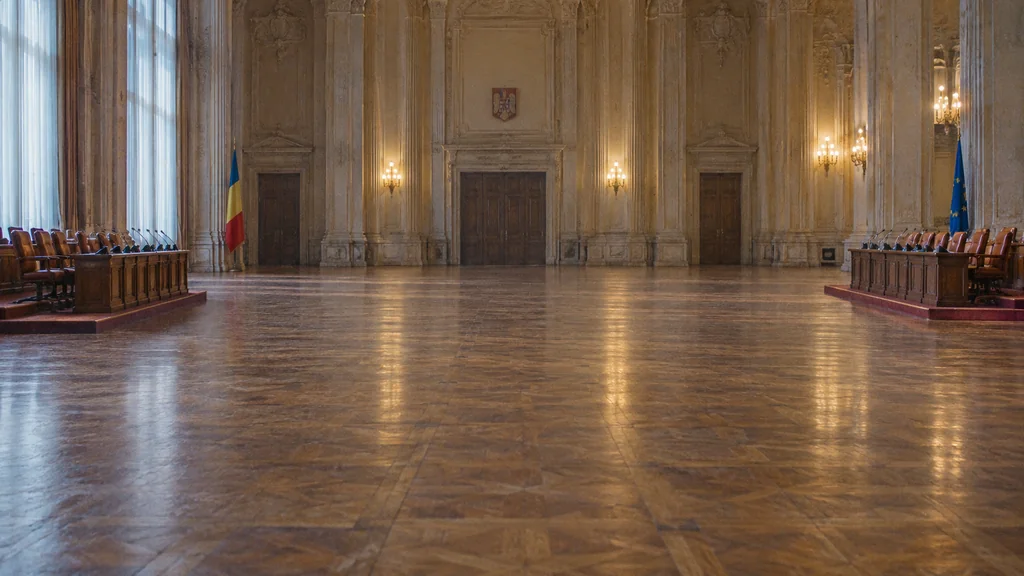
Romania’s next government needs votes from parties unwilling to govern together.
Image composition · tobriefPresident Nicușor Dan nominated Luca Niculescu, a career diplomat with no party card, for prime minister on 5 October. It is Dan's fourth attempt to replace Ilie Bolojan's government, which fell in a confidence vote on 5 May (AGERPRES). The only workable majority needs the Social Democrats and the liberals, who refuse to govern together, to vote for the same government before the 2027 budget falls due on 15 November (Public Finance Law).
Niculescu, a former ambassador to France, accepted the nomination and said building a majority was his first task (AP). Dan says he chose the person most likely to find one. He has left open whether ministers will be party politicians or technocrats.
The bet is that parties which refused a rival's prime minister might accept someone who belongs to none of them. Party-backed nominees have gone nowhere. Two fell away in June, one by handing back the mandate and one in a failed vote (DW, TVR). The latest, Siegfried Mureșan, was backed by the liberal PNL, the reformist USR and the Hungarian-minority UDMR. He won just 182 votes on 30 September (AP, To Brief).
Where the votes are
A new government needs a majority of deputies and senators sitting together, which at current membership means 233 votes (Constitution, Chamber register, Senate register). Mureșan's parties cannot reach that even with every national-minority deputy on board, so any majority runs through the Social Democrats (PSD).
PSD, PNL and UDMR together hold 238 seats across both chambers, five more than needed (Chamber register, Senate register). That margin is thin. A handful of absentees or rebels in any of the three would sink the cabinet. On the day Niculescu was named, none of these parties had promised him their votes (DW).
Voting for a cabinet without joining it
A confidence vote asks parties for votes, not for ministries. That gap is the space Niculescu has to work in, and each party has set a different condition for using it.
PSD leader Sorin Grindeanu wanted the premiership himself. He said Dan's choice defied parliamentary arithmetic and that PSD would not hand a blank cheque to another political experiment (Radio România Actualități). His words rule out unconditional support. They do not rule out support on negotiated terms.
Bolojan, now caretaker prime minister and PNL leader, has the opposite worry. He ruled out governing alongside PSD, but not voting for a Niculescu cabinet once he has seen its programme and team (Radio România Actualități). His line excludes a cabinet in which both parties hold ministries. It leaves room for one where only one of them does, or neither.
UDMR could bridge the two. Its lower-house leader Csoma Botond said members could back Niculescu if both PNL and PSD gave ground, and party chief Kelemen Hunor said UDMR could support a government without taking ministries (Transtelex). Elsewhere, doors are shut. USR's Dominic Fritz rejected any PSD ministers or PSD control, the nationalist AUR promised zero votes, and SOS România also refused.
Why the budget raises the stakes
The Constitution gives a nominee ten days to ask Parliament for confidence (Constitution). If the decree appeared in the Official Gazette on 6 October as reported, that points to 16 October (Euronews Romania).
Dan has an alternative he refuses to use. He may dissolve Parliament after consulting its leaders, but only once it has rejected at least two investiture requests and failed to back a government within 60 days. Both conditions are now met (Constitution). Dan argues an election would add months of caretaker rule (Gândul).
That is a real constraint. The Constitution limits a government whose mandate has ended to the acts needed to run public affairs (Constitution). Whether that covers tabling a full new budget is unsettled. A cabinet without a majority would also struggle to pass one. That budget must fit the EU timetable for cutting Romania's deficit below 3% of GDP by 2030 (Council). On 2 October S&P kept Romania at BBB−, one step above junk, with a negative outlook, and named political uncertainty as a risk (S&P).
Dan has found a nominee whom neither major rival owns. The parties' refusal to govern together still leaves a narrower route: a shared confidence vote. PSD would have to drop its demand for terms it controls, and PNL would have to vote for a cabinet that PSD also supports, provided the two do not sit in it together. So far neither Grindeanu nor Bolojan has offered those votes, and the budget will not wait for them.
Details about this article
- Model:
- claude-opus-5-5
- Generated:
- 10/6/2026, 2:00:07 AM
- Pipeline run:
- eu_pipeline_20261006_005006
- Watermark:
- SynthID (Google's invisible watermark)
- Human review:
- None before publication