Trump’s Russian diesel deal has no cargo
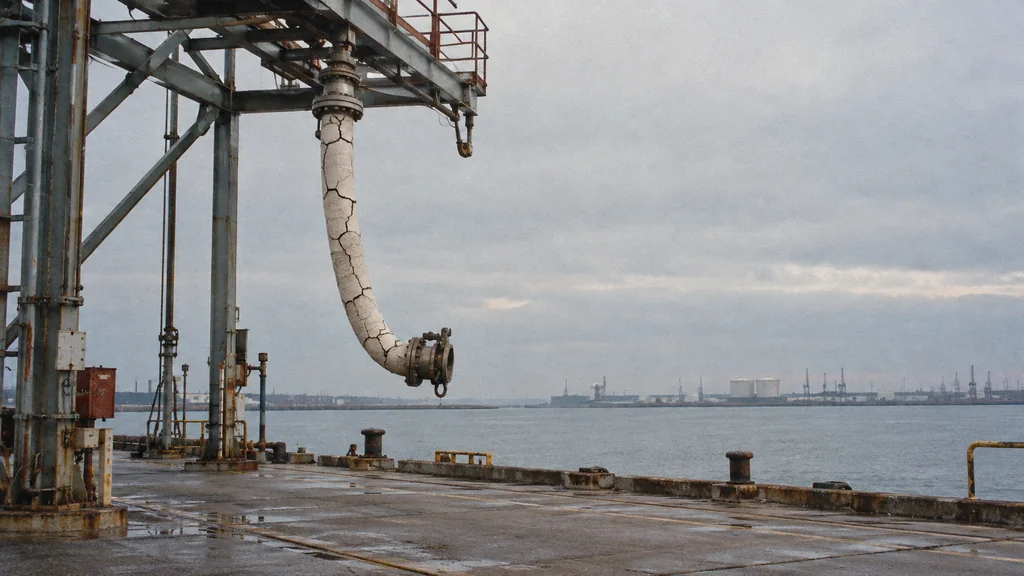
Washington permits the diesel trade; Russian port records must show it moving.
Image composition · tobriefWashington has authorised the sale, delivery and import of Russian-origin diesel until 7 April 2027, following Donald Trump's call with Vladimir Putin (OFAC). The White House had not said who would pay or when any fuel would arrive (AP). Europe cannot legally import this diesel, so it gets lasting relief only if the deal puts more fuel on the world market. Moving existing cargoes to new buyers would not do it.
A permission, not yet a shipment
The licence comes from OFAC (the Office of Foreign Assets Control, the Treasury unit that runs US sanctions). It names no supplier, vessel or volume. It still blocks payments from US accounts held by Russia's central bank, wealth fund and finance ministry (OFAC notice).
The volumes are Trump's claims. He promised more than 300,000 tonnes immediately, then further batches totalling more than 4.8 million tonnes, with the last depending on the state of Russian refineries (Interfax, Reuters). Moscow has committed to less. Deputy Prime Minister Alexander Novak said only that Russia was ready to start additional supplies in October (DW).
Russia would also have to loosen its own rules. On 30 September its government extended a ban on diesel exports by producers through 31 October, citing refinery disruption and strong domestic demand (Interfax). Novak reportedly promised to ease the ban early. A dated, published decision would be the first concrete sign that extra fuel is coming.
Why new diesel matters more than new buyers
The fuel is scarce. Global seaborne exports of diesel and gasoil (the wider family of fuels that includes diesel and heating oil) averaged 4.7 million barrels a day in January–August, 10% below a year earlier (IEA). Europe feels the shortage at the pump. France is selling 10 million barrels from its government emergency fuel reserves, and estimates this will cut pump prices by 12–18 cents a litre (French government).
Measured against European demand, Trump's full promise is modest. Converting the 4.8 million tonnes at roughly 7.5 barrels per tonne and comparing it with EU consumption data gives about nine days of EU diesel and gasoil use (Reuters, Eurostat). Even if every tonne were new, the deal would ease the shortage but not end it.
Whether the diesel is new decides who benefits. If Russia refines and exports more, total supply rises, and prices can soften across the market, including in Europe. If American buyers simply take cargoes that would have gone to other importers, the US price may dip while those importers compete harder for the cargoes that remain.
Russian diesel has been redirected before. After the EU's 2023 embargo, Brazil and Saudi Arabia replaced France and Germany among the main buyers of Russian seaborne diesel (EIA). Russia earns on every sale either way. That is why Volodymyr Zelensky condemned the deal as a gift to Putin (Axios). Hauliers, farmers and firms that run diesel machinery gain only if the fuel is extra.
Damaged refineries make redirection plausible. The IEA estimates Russian diesel output at roughly 30% below its 2025 level (IEA). Plausible is not proven, though. Three signals would tell the cases apart: Russian refinery output recovering, total seaborne diesel exports rising rather than only changing destination, and loading records at Russian ports.
Two bans the licence does not touch
A 2022 Act of Congress bans US imports of Russian petroleum products. Lifting that ban requires a presidential certification tied to peace terms Ukraine accepts, consultation with Congress and a 90-day wait (US law). The OFAC licence covers only the sanctions rules it names. The sanctions law Trump signed in September left the import ban unchanged (To Brief). Treasury or US customs owes a clear answer on which legal authority would let a Russian cargo clear a US port.
Europe's own rule has not changed. Article 3m of the EU's Russia sanctions regulation still bans imports of Russian petroleum products into the Union (EUR-Lex). No US licence lets a tanker unload in Rotterdam. Any European gain has to come indirectly, through a world market with more diesel in it.
The licence moves no fuel by itself. The deal helps European drivers and hauliers only if Russia produces diesel it is not already selling to someone else, and the first proof is Novak's to give: a published end to Russia's export ban, followed by loading records from a Russian port.
Details about this article
- Model:
- claude-opus-5-5
- Generated:
- 10/10/2026, 1:35:14 AM
- Pipeline run:
- eu_pipeline_20261010_005006
- Watermark:
- SynthID (Google's invisible watermark)
- Human review:
- None before publication