Ireland shields farms in €141bn EU cut
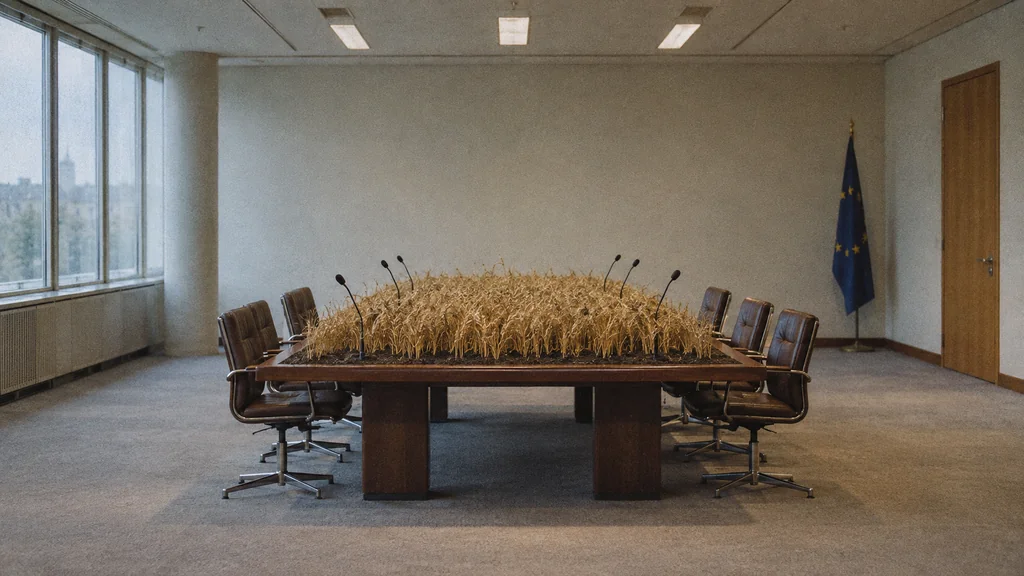
Europe protects its fields as the next budget takes shape.
Image composition · tobriefIreland has proposed cutting the European Commission's 2028-2034 spending plan by €141 billion, about 8%, while leaving farm subsidies and regional aid almost untouched (Council negotiating box). Research, defence and foreign policy absorb the cut instead. Governments that want a smaller budget get a lower total, and now have to say what else they would cut to reach the much deeper savings they have demanded.
That €141 billion is measured in 2025 prices, which leave out inflation. Reports of a €159 billion cut describe the same draft in current prices, which include projected inflation (Reuters). Ireland drafted the text because it holds the Council presidency this half-year. The presidency rotates among member states, and the country holding it chairs the governments' negotiations.
What Ireland protected, and what it cut
The draft is a "negotiating box," a compromise text from the presidency that binds no government. It keeps the guaranteed floor for farm income support at €261.013 billion, virtually unchanged. It also raises a pooled line, which combines cohesion money (EU funds for poorer regions) with other programmes, to €410.080 billion (Council box).
The savings come from elsewhere. Compared with the Commission's plan, money for research, industrial competitiveness and security falls by €66.605 billion. Foreign policy loses €33.064 billion, including support for countries hoping to join the EU and for Eastern European neighbours (New Union Post).
Thomas Byrne, Ireland's Europe minister, describes the text as a compromise meant to move the talks forward (RTÉ). The design offers each side something. Governments seeking restraint get a lower headline figure. Governments that depend on farm and regional money keep it.
That second group is large. On 2 October, 17 leaders, with Italy's Giorgia Meloni and Romania's Nicușor Dan at the front, wrote to demand that farm and cohesion funding be preserved (Slovenian government), as we reported at the time (To Brief).
Why the budget hawks are still unhappy
Six governments pay more into the EU budget than they receive: Germany, the Netherlands, Austria, Denmark, Finland and Sweden. In August they called for cuts of "several hundred billion" euros, spread across every area of spending (joint declaration). Ireland's figure falls well short of that. German Chancellor Friedrich Merz said the proposed size was no basis for agreement (Tagesschau).
Finland shows where that camp runs into trouble. Prime Minister Petteri Orpo called the savings too small. He then complained that too much of them fell on defence, research and new technology (STT/Suomenmaa). In a draft that fences off farms and regions, he is asking for a smaller budget and for protection of the very areas that absorbed the cut.
The European Parliament objects for the opposite reason. Its lead budget negotiators, Siegfried Mureșan and Carla Tavares, rejected the draft on 10 October. They argued that cutting competitiveness and foreign policy weakens Europe's ability to invest, support partners and respond to crises (European Parliament).
Who can block it
The seven-year budget needs the unanimous approval of all 27 governments. Before that, Parliament must give its consent by a majority of its members (Article 312). Any single government can therefore veto the deal. Parliament can refuse consent, but it cannot rewrite the framework. It can only accept or reject what governments agree. Leaders are due to discuss the text at their summit on 15-16 October (European Council agenda).
The evidence supports one firm conclusion. The six net payers want far deeper cuts than Ireland offers. Ireland's draft shows how hard those cuts become once farm and regional spending is protected, because the savings then land on research, security and foreign policy, the areas the six themselves say Europe needs. One caveat applies. The six have not published a detailed alternative, so nobody yet knows where they would find their extra billions. Until Berlin, The Hague and their partners produce one, Ireland's text is the only worked-out version of the trade-off on the table.
Details about this article
- Model:
- claude-opus-5-5
- Generated:
- 10/11/2026, 1:33:47 AM
- Pipeline run:
- eu_pipeline_20261011_005006
- Watermark:
- SynthID (Google's invisible watermark)
- Human review:
- None before publication