Denmark’s PET names no sabotage attack
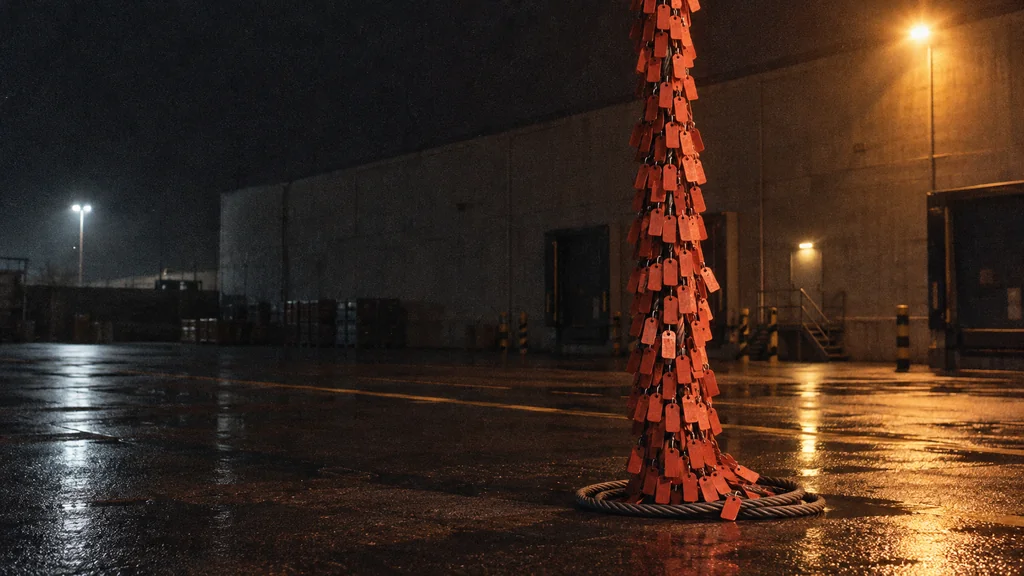
Denmark warns of more sabotage activity without identifying an attacked factory.
Image composition · tobriefDenmark's domestic security service, PET, says Russian operations against Danish defence companies have increased, but it has not named a single company, site or damaged shipment that would show an attack took place. According to Reuters, PET analyst Josefine Christensen told a Copenhagen security conference on 7 October that the activity picked up from early summer and now targets weapons production that supplies Ukraine. For now, that is an intelligence assessment, not a documented incident.
What PET has actually said
Christensen's words come from Reuters' report, and no transcript has been published. She said PET saw "a lot of planning, but very little carried out" in spring, and that from early summer Russia began doing "a lot more" and is now "trying to hit targets" (Reuters). She described recruits being approached on Telegram and other platforms, often asked first only to photograph a site.
"A lot more" does not say what happened, or where. It could mean surveillance, preparation, a foiled attempt or action against Danish-linked firms abroad. PET may also hold intelligence it cannot disclose. Those are possible readings, not established facts.
The new language goes further than PET's own statement on 5 September. Then, the service described concrete Russian planning and attempts to recruit people in Denmark to photograph companies and infrastructure, mainly firms tied to military aid for Ukraine (PET). It named no incident that had damaged any of them. To Brief has followed Denmark's intelligence warnings since then (To Brief). An English-language page on PET's own website still says the service knows of no specific Russian physical sabotage in Denmark (PET), though it is not clear whether that page predates Christensen's remarks.
Where other governments named names
Neighbouring countries show why European governments treat the threat seriously. Polish prosecutors say C4 explosive detonated beneath a freight train on the night of 15–16 November 2025, and they allege the attackers worked for Russian intelligence (Polish prosecutors). The line runs from Warsaw to Dorohusk on the Ukrainian border, a route that matters for supplies heading east. The published record describes minor damage and a short interruption, not a lost military consignment.
Estonia offers the factory case. On 29 September its domestic security service, KAPO, attributed an August arson attack on defence firm Milrem Robotics to Russian security services (KAPO). Germany's government made a similar attribution over a drone fitted with explosives, found on 4 August near Ukrainian cargo aircraft at Leipzig/Halle airport (German government).
In each case, authorities named a place, a date and an alleged sponsor. None of the statements cited here says a delivery to Ukraine was lost or delayed. PET has so far named none of those three things.
Who guards the factories
That gap matters because protection against sabotage stays national. In Denmark, PET assesses the threat, police guard sites and prosecutors bring charges. After the Polish blast, Poland launched a dedicated police operation to guard its railways (Polish police). Denmark has disclosed nothing comparable about which sites need protecting or how.
The silence has costs beyond Denmark. If PET is right that Russia is aiming at production for Ukraine's front line, the targets serve Kyiv's war effort as much as Denmark's economy. Partners that rely on that output cannot judge the risk from what PET has made public.
Poland and Estonia's cases justify taking PET's warning seriously, but they do not corroborate sabotage in Denmark. On the public evidence, PET has issued a credible threat assessment rather than a record of attacks carried out on Danish soil. PET and the Danish government owe the public an account of which operations moved from reconnaissance to attack, and whether any of them affected a delivery bound for Ukraine.
Details about this article
- Model:
- claude-opus-5-5
- Generated:
- 10/8/2026, 1:34:15 AM
- Pipeline run:
- eu_pipeline_20261008_005007
- Watermark:
- SynthID (Google's invisible watermark)
- Human review:
- None before publication