EU’s hybrid car deal hinges on unseen forecast
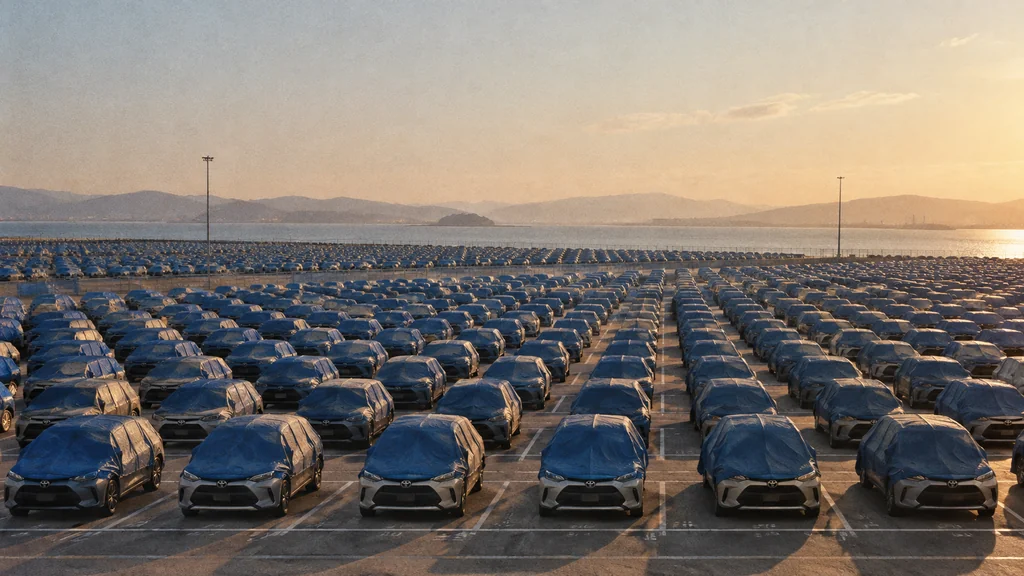
Brussels counts fewer future arrivals against a forecast the public cannot see.
Image composition · tobriefThe EU and China agreed in Beijing on 9 October to "moderate" Chinese exports of hybrid cars to Europe. Neither side published a number of cars, a start date or an enforcement method (Commission press conference, Chinese commerce ministry). The only size anyone has put on the deal comes from Brussels. Trade Commissioner Maroš Šefčovič says shipments will fall by more than half, but he measures that against a forecast of what China would have sent without a deal, not against today's sales (Commission press conference, Politico).
A cut from a forecast, not from sales
Our first report covered the announcement itself (To Brief). Šefčovič reached the understanding with Chinese Commerce Minister Wang Wentao after two days of talks and called it a first phase (Commission press conference). Beijing's joint statement describes an understanding on hybrid trade "consistent with World Trade Organization rules" and repeats no reduction figure (Chinese commerce ministry). Both sides confirm that a deal exists, but only one has put a number on it.
A reporter asked whether "more than half" meant current or past sales. Šefčovič pointed instead to the path imports would follow over four years if policy stayed unchanged, and said the deal could prevent "several million" exports against that path (Commission press conference). That reference path, the baseline, decides what the claim means. If the no-deal forecast climbs steeply, Chinese hybrid shipments could keep growing and still land far below it. Brussels has released neither the forecast nor its assumptions, so no one outside the Commission can check the figure.
Why hybrids slipped through
Since October 2024, Chinese cars driven only by electric motors have paid extra duties of up to 35.3% (EU Implementing Regulation 2024/2754). These countervailing duties, charges meant to cancel out foreign subsidies, cover no car that also carries a combustion engine. Hybrids carry one. A conventional hybrid pairs a petrol engine with a small battery that charges itself; a plug-in hybrid has a bigger battery charged from the socket.
Plug-ins show how fast Chinese carmakers moved into that gap. According to carmakers' association ACEA, Chinese brands held 2% of European plug-in hybrid sales in 2024 and 25% in the first half of 2026. That counts cars by brand, not by where they were built, and the understanding does not yet say which cars a limit would cover.
Who could gain, who might pay
European factories building rival models could win orders if a limit actually bites. Stellantis, for example, assembles the Citroën C5 Aircross in hybrid and plug-in versions at Rennes in France (Stellantis). Whether any sales would move there, and how many jobs that might mean, nobody has estimated. Hildegard Müller, president of the German carmakers' lobby VDA, called the deal a first positive signal but said its effect can be judged only once the conditions are known (Tagesschau).
Buyers lose out only if the cap sits low enough to cut real imports. In that case, fewer competing cars would ease the pressure on every brand to offer discounts. A cap set below a rising forecast but above today's volumes could let imports keep growing, and exporters or dealers might absorb some cost through thinner margins. Until a cap exists, any price estimate would be a guess.
The legal form may decide whether the arrangement lasts. WTO rules on safeguards (emergency trade protection) forbid governments from seeking voluntary export restraints, deals in which an exporter promises to ship less (WTO Agreement on Safeguards). A Chinese pledge to "moderate" exports looks, on its face, close to that, so the instrument Brussels picks matters. Šefčovič has not said which one he intends to use (Politico).
EU leaders get their first look at the parameters on 15 October (Commission press conference). Both governments acknowledge an understanding, but its terms remain unsettled. There is no published export limit, and the projected halving cannot be checked against a forecast nobody outside the Commission has seen. Once leaders have reviewed the plan, Šefčovič owes the public two numbers, the no-deal forecast and the cap itself.
Details about this article
- Model:
- claude-opus-5-5
- Generated:
- 10/11/2026, 1:34:31 AM
- Pipeline run:
- eu_pipeline_20261011_005006
- Watermark:
- SynthID (Google's invisible watermark)
- Human review:
- None before publication