FBI names North Korea in Binance theft
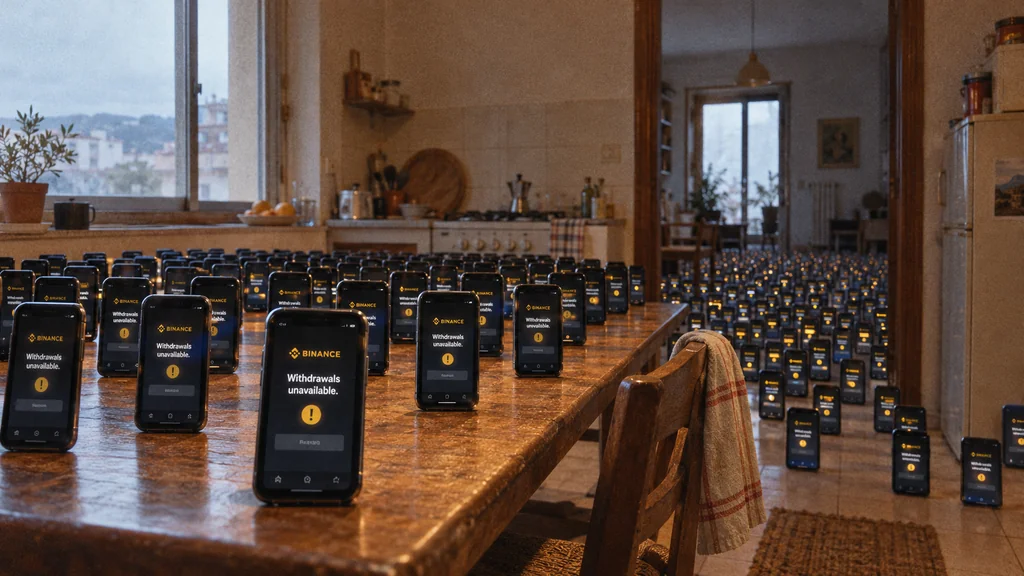
The FBI names the thief while Binance customers wait to withdraw.
Image composition · tobriefThe FBI has publicly named North Korea as the thief behind the attack on Binance, the world's best-known cryptocurrency exchange. In an alert dated 31 October, the bureau said the country stole more than $6 billion in virtual assets from the exchange on or about 29 October, through a hacking campaign it calls TraderTraitor (FBI alert, Korea Times). The finding settles who took the money. It does not tell customers when they can withdraw, or whether any of the stolen coins will come back.
From analysts' hunch to official finding
When Binance halted withdrawals, the only people pointing at Pyongyang worked for private companies (To Brief). These blockchain-analytics firms trace where cryptocurrency moves. They work like forensic accountants for a ledger that anyone can read but few can interpret.
Two of the best known had already reached a verdict. Chainalysis linked the attack to TraderTraitor with high confidence (Chainalysis), and TRM Labs reached the same conclusion (TRM Labs). Binance itself named no one.
The FBI's alert puts a government investigation behind that claim. It is an investigative conclusion rather than a court verdict. Even so, a law-enforcement agency now stands publicly behind the attribution that analysts had built from the trail on the ledger.
Twenty minutes, ten blockchains
The scale explains why so many people were watching. TRM Labs values the transfers out of Binance's wallets at about $6.36 billion, calls it the largest hack in history, and says most of the money moved within roughly 20 minutes (TRM Labs).
The money also didn't stay on one network. A blockchain is a shared public ledger, and each one is a separate network with its own coins. TRM counted ten of them in this theft. Picture a burglar splitting the loot between ten getaway cars that leave in ten directions, each one leaving its own tracks for investigators to follow.
A wanted poster for wallets
The FBI did more than name a suspect. It published Bitcoin, Ethereum and Solana addresses tied to the activity and asked the industry to block transactions involving them (Korea Times). An address works like an account number on a public ledger. Anyone can see what flows in and out of it, but it carries no name.
The list is a wanted poster for those accounts. It tells exchanges and other crypto businesses which addresses to watch for. Like any poster, it catches no one by itself. It has an effect only where a business that receives the coins checks the list and turns them away.
For Binance's customers, the name settles less than it might seem. Knowing the thief does not reopen withdrawals, and it does not return stolen coins to anyone's account. The FBI has answered the question of who did it. The question customers care about most, when their money can move again, is Binance's to answer.
Details about this article
- Model:
- claude-opus-5-5
- Generated:
- 11/1/2026, 1:26:45 AM
- Pipeline run:
- eu_pipeline_20261101_005008
- Watermark:
- SynthID (Google's invisible watermark)
- Human review:
- None before publication