Iran’s seven undisclosed terms keep Hormuz shut
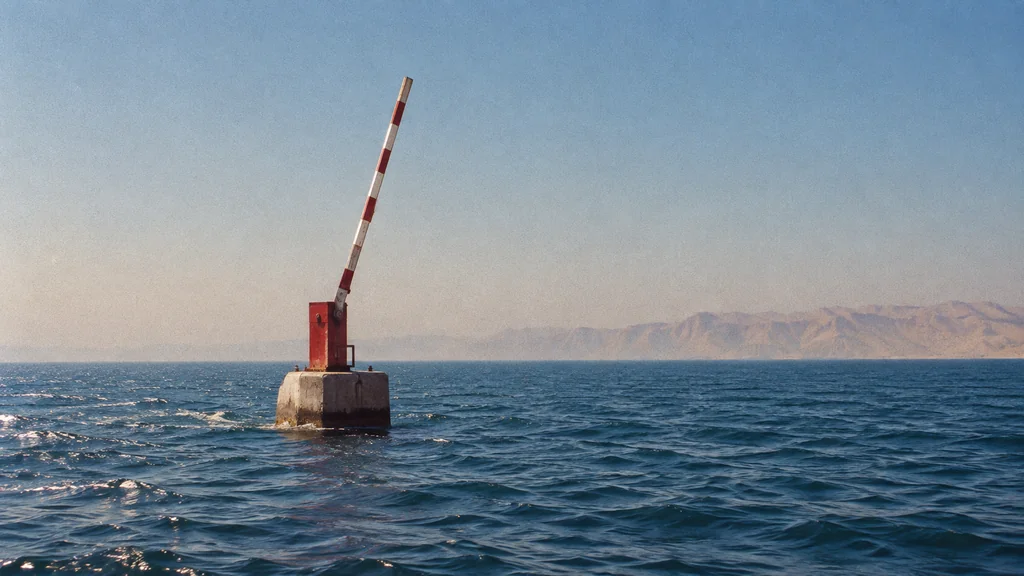
Reopening the strait leaves shippers waiting for safe, insured passage.
Image composition · tobriefTraffic through the Strait of Hormuz has fallen to a fraction of its pre-war level. Iran now says the waterway stays closed until Washington meets seven conditions it has not made public. European shipowners, insurers and gas buyers are therefore waiting on terms they cannot read, and even a deal would not bring the ships back by itself.
Mohammad Bagher Ghalibaf, speaker of Iran's parliament, said on Sunday 4 October that the strait would remain shut until the United States meets seven conditions "based on the Islamabad memorandum," according to Nournews. He did not list them. The memorandum is itself unpublished: Germany's Foreign Office describes a June 2026 US–Iran declaration that set out an intention to stop the fighting, with no released terms and strikes continuing afterwards (Auswärtiges Amt).
What Iran has asked for in public
Iranian media have described demands without publishing a list. A Nournews analysis on 29 September said the package had not been officially announced (Nournews).
It named four demands officials had discussed. Iran wants the war ended on all fronts, including Lebanon, and the US naval blockade of Iranian ports lifted. It also wants curbs on its oil sales removed and its frozen deposits released. Nothing in the reporting shows whether these four sit among Ghalibaf's seven, so nobody outside the talks can tell whether Sunday added anything new.
A fight over who moves first
The current bargaining began at the United Nations, where Foreign Minister Abbas Araghchi proposed a seven-day plan mediated by Qatar (UN). Washington would act first, over four or five days (Franceinfo). Iran would reopen the strait only after that, on day six. Donald Trump rejected the plan on 26 September without saying which part he opposed (The Hill), as we reported at the time (To Brief).
Araghchi received American feedback through Qatari mediators in Doha around 29–30 September (Reuters via Internazionale). An official briefed on the talks said the main dispute was the order of steps. On Sunday, Iran's foreign ministry said the US proposals focused on Iran's nuclear programme, while Tehran puts Hormuz first (Xinhua). Neither side has published the American text.
Iran's plan has the merit of naming actions and fixing a sequence. The reported American objection is that sequence. Lifting the blockade early would surrender real leverage: US Central Command, the American military headquarters for the Middle East, said it had redirected 115 commercial vessels heading to or from Iranian ports by 23 September (CBS). A Lebanon ceasefire also depends on Israel, which no American signature binds.
Why a signature would not bring the ships back
Vessel-tracking firm Windward counted 17 passages on 29 September, against roughly 135 a day before the war (Argus). On 1 October another tanker was struck by an unidentified projectile (gCaptain).
Insurers decide when ships return. War-risk premiums, the price of insuring a vessel against conflict damage, reached 3–8% of a ship's value in late August, against about 0.25% before the war, according to the Dutch insurers' association (Verbond van Verzekeraars). The association said cover depends on confirmed mine clearance and a record free of incidents.
Washington has tried to talk the market round. In Rotterdam on 1 October, US naval officer Matthew Kawas called the strait "open" and urged insurers to keep cover (Schuttevaer). Dutch shipowners replied that a positive signal is not enough until passage is safe and reliable (Transport Online).
Europe is already paying. Italy's Edison had missed 35 cargoes of Qatari liquefied natural gas (Staffetta Quotidiana). Governments can make the water safer, but Europe's main offer waits on a deal: Emmanuel Macron said on 18 September that France was preparing a defensive escort mission only once an agreement exists (Élysée). No government can order insurers to restore cover.
Ghalibaf has given shippers no public way to judge when Iran would reopen the strait. Any deal would then need to produce safe, insured voyages through it, and the Europeans waiting on Qatari gas depend on that second test more than on the first.
Details about this article
- Model:
- claude-opus-5-5
- Generated:
- 10/5/2026, 11:47:22 AM
- Pipeline run:
- eu_pipeline_20261005_005007
- Watermark:
- SynthID (Google's invisible watermark)
- Human review:
- None before publication