Kyiv’s power plants hit as truce stalls
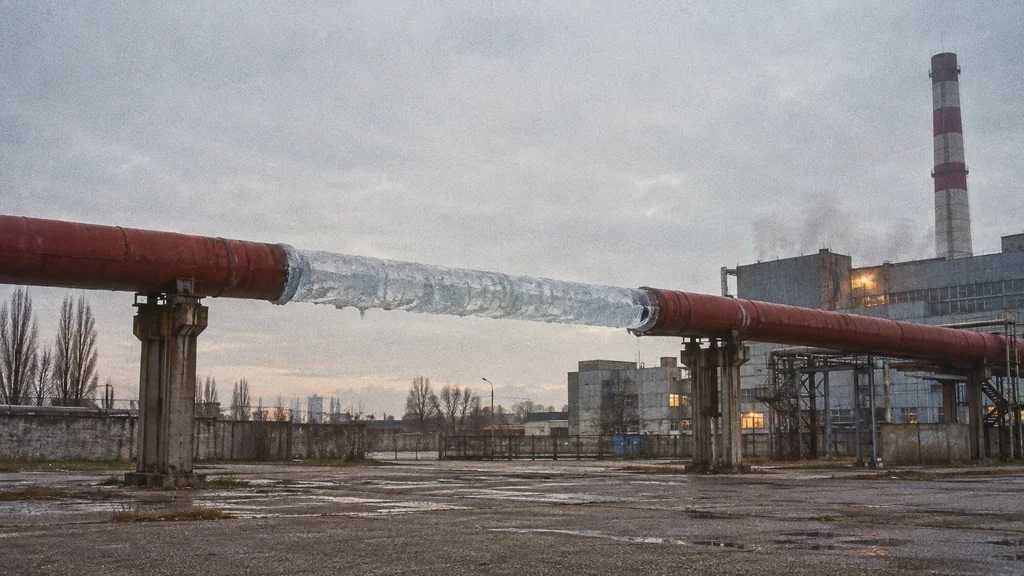
Kyiv’s heat supply remains exposed while the terms of a pause remain unsettled.
Image composition · tobriefRussian missiles and drones killed five people in Kyiv and injured 36 in an assault that began on the evening of 13 October, city police said (Kyiv police). At least 600,000 people lost electricity, according to President Volodymyr Zelenskyy (Zelenskyy). Two days earlier Donald Trump had declared an energy ceasefire in force, but a White House official described only a proposal Russia was still weighing, one that might first cover Ukraine's strikes on Russian refineries and reach power plants and grids later (Axios).
The targets included Kyiv's combined heat-and-power plants, which supply both electricity and district heating. With winter approaching, those plants keep homes warm as well as lit.
A post, not a deal
Trump wrote on 11 October that an "ENERGY CEASEFIRE" was effective immediately and that both sides had agreed (Trump). The post contained no text, no list of protected sites, no start procedure and no way to check violations.
Moscow has not accepted it. On 14 October Kremlin spokesman Dmitry Peskov said the ceasefire's scope had not been specified and that work on it continued (Kyiv Independent). Zelenskyy calls the new strikes a breach, as he did after the previous hit on a Kyiv plant (To Brief). Nobody has produced a jointly accepted text, start time or monitor, so no one can show that a ceasefire was ever in force to breach.
What the refineries are worth
Kyiv's offer is reciprocal. Ukraine would stop striking Russian refineries and diesel facilities if Russia stopped attacking Ukraine's energy system. The refinery campaign is one of the few ways Kyiv can impose economic cost inside Russia itself, which makes it a bargaining chip rather than a sideshow.
That explains why the sequencing matters so much. A first stage covering only refineries would have Kyiv give up its chip while Ukrainian power plants and substations stayed exposed. Kyiv therefore insists that any pause must cover the grid.
Washington may hold a lever of its own. European officials told the Financial Times that US officials had warned Kyiv and European capitals about a possible consequence (Financial Times). According to those officials, Washington could restrict the intelligence it shares with Ukraine and slow deliveries of American weapons that allies pay for, unless Ukraine stopped hitting refineries.
Washington has not confirmed that account. No order cutting off an intelligence feed or a weapons shipment has surfaced. If the report holds, the warning would show that Washington treats the refinery strikes as the concession it wants first.
Europe presses, but others hold the decisions
European governments have backed a pause that protects the grid. Berlin's spokesman Stefan Kornelius said Germany saw no sign Russia would accept the pause, pointing to the renewed attacks and deaths (MDR). Before the latest assault, French President Emmanuel Macron had called for a truce binding both sides (Élysée).
In Rome, Prime Minister Giorgia Meloni backed a reciprocal halt in the Senate, and her majority passed a resolution committing the government to push diplomatically for an immediate pause (Sky TG24). She also argued that Europe needs a representative in the talks with a mandate from all 27 EU governments (Italian Senate). Such an envoy could speak for the whole bloc at the table, rather than leaving capitals to lobby Washington one by one.
Her proposal reflects where the decisions sit today. Washington and Moscow are shaping the terms. Kyiv decides whether to stop its own strikes and can refuse a refinery-only deal. European governments can press, fund and object. Some of the weapons Washington reportedly threatened to slow are paid for by allies, but no European government is negotiating the text.
Trump announced a ceasefire before Washington, Moscow and Kyiv had agreed what it covered. Russia then kept striking Ukrainian energy sites, and the Kremlin still calls the scope undefined. Reports that Washington is pressing Kyiv to give up its refinery strikes remain unconfirmed. Even so, they show which concession was on the table first.
Details about this article
- Model:
- claude-opus-5-5
- Generated:
- 10/15/2026, 1:36:02 AM
- Pipeline run:
- eu_pipeline_20261015_005006
- Watermark:
- SynthID (Google's invisible watermark)
- Human review:
- None before publication