Russian diesel gets a US waiver, not entry
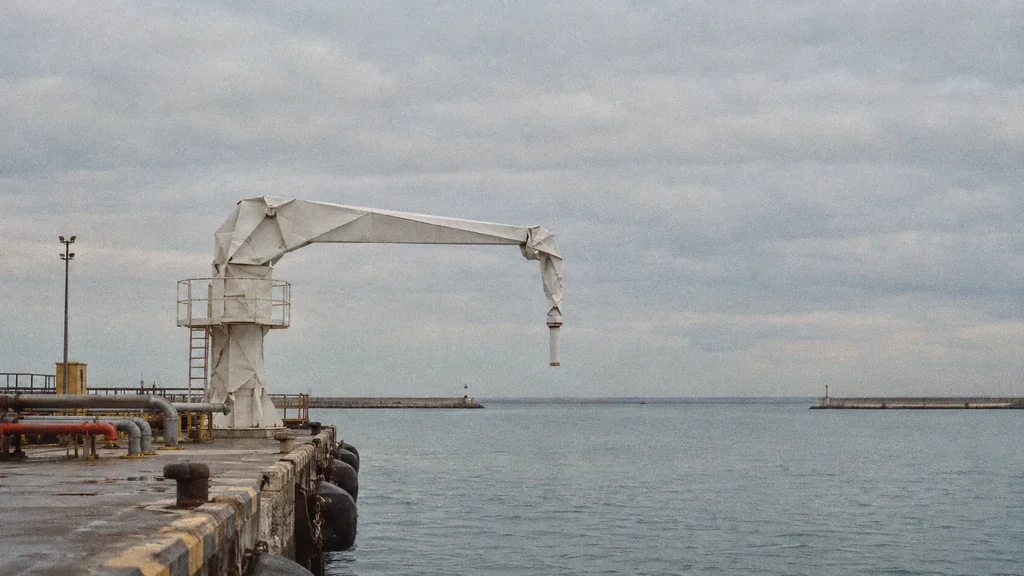
A licence opens the route; no diesel shipment has been confirmed.
Image composition · tobriefSince 9 October, a US Treasury exemption has let companies sell, ship, unload and import Russian diesel until 7 April 2027 without breaching the American sanctions it covers (OFAC licence). The licence names no seller, buyer, ship or volume. A separate US law may still block cargoes bound for American ports, and Europe's own ban on importing Russian diesel stays in force (EU regulation).
What the licence permits, and what it can't
General License 135 is a blanket exemption from specific US sanctions. It covers the steps a diesel deal normally needs, and its wording does not require the fuel to end up in America. It keeps one carve-out: no money may come from US accounts held by Russia's central bank, sovereign wealth fund or finance ministry (OFAC notice).
Donald Trump announced the move after a call with Vladimir Putin, which set off the European backlash we reported over the weekend (To Brief). In his own post, Trump promised more than 300,000 tonnes immediately (Trump's post). Moscow then partly lifted its own export ban, clearing up to 500,000 tonnes in a first stage (Russian government). Neither announcement identifies a buyer or a loading.
Treasury can waive the sanctions named in its licence. A cargo headed for a US port faces a second hurdle. A 2022 law bans imports of Russian petroleum products and sets its own procedure for lifting that ban, one that involves the president and Congress, not a Treasury exemption (Public Law 117-109).
That gap is now contested. Seven senators from both parties question whether the administration has the legal power to let Russian diesel into American ports this way (Senate Foreign Relations Committee). Treasury Secretary Scott Bessent maintains that powers the administration already holds are enough (Reuters).
Lithuania condemns the deal, not the alliance
The sharpest tension appeared in Vilnius. On 12 October, Prime Minister Mindaugas Sinkevičius said Lithuania's trust in Washington had not wavered (TV3/BNS). Later that day he called the diesel deal "a shameful, dishonourable act" (LRT). He condemned the decision while affirming trust in the government that made it.
Foreign Minister Kęstutis Budrys, arriving at a meeting of EU foreign ministers in Luxembourg, said the deal "slightly weakens" the West's position (Kauno diena/ELTA). For the EU's market, the practical rule is simple. EU law forbids imports of diesel exported from Russia, and routing a cargo through an American middleman does not change where it came from (EU regulation).
Europe's exposure runs through shipping instead. European shipowners and insurers, including Greek tanker operators, may carry Russian diesel to buyers outside the EU. They may do so only if the fuel sells at or below a price cap of $100 a barrel, the ceiling the EU attaches to those services (Commission guidance). If licensed deals send diesel to third countries, that is where European firms would meet them.
The tanker that carried fertilizer
The one cargo promoted online as an early delivery did not hold up. According to Censor.net, a Ukrainian outlet, the tanker MINERVA ZEN arrived in the US carrying fertilizer, on a voyage that began before the licence existed (Censor.net). A genuine delivery would take time in any case. Analysts quoted by the Guardian expect chartering a tanker and crossing the Atlantic to take weeks (Guardian).
The record so far supports a narrow conclusion. The licence permits transactions under specified US sanctions, but it proves neither that a shipment exists nor that a US-bound cargo can get past the 2022 import ban (Public Law 117-109). Diesel headed for other buyers raises a different question, and for Europe existing law already answers it: the import ban holds, and European shippers remain bound by the price cap (Commission guidance).
Details about this article
- Model:
- claude-opus-5-5
- Generated:
- 10/13/2026, 1:42:34 AM
- Pipeline run:
- eu_pipeline_20261013_005007
- Watermark:
- SynthID (Google's invisible watermark)
- Human review:
- None before publication