Seventeen EU countries draw a budget line
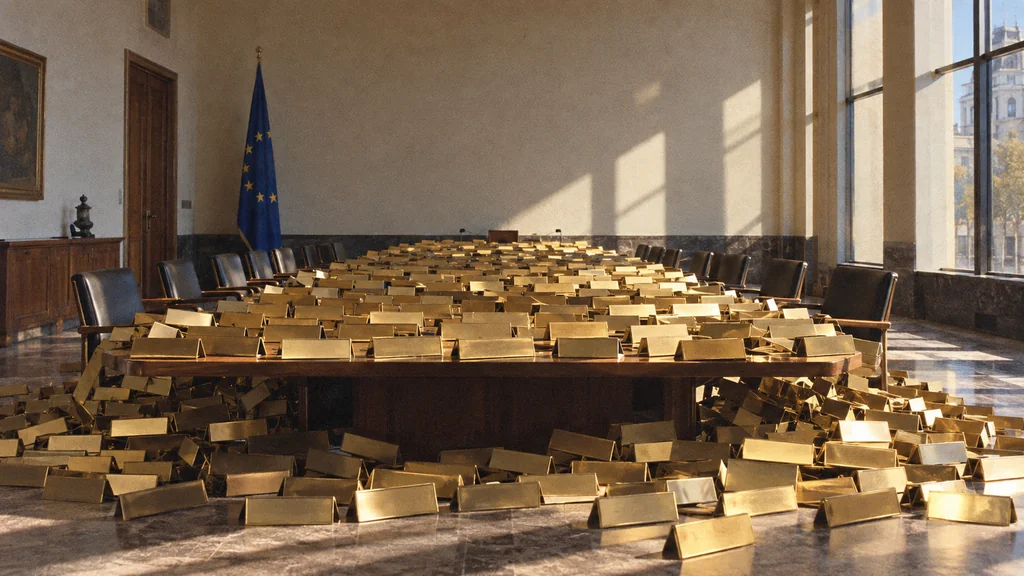
Governments defend their budget demands while the question of payment stays blank.
Image composition · tobriefSeventeen EU governments signed a letter on 2 October demanding that "the overall funding for Cohesion Policy and the CAP must be preserved" in the EU's 2028–34 budget (POLITICO, EU Today). Six richer countries want that same budget to shrink. Both demands can only hold together if someone cuts other spending or pays more, and neither camp has said who.
The CAP (Common Agricultural Policy) supports farm incomes. Cohesion policy funds investment meant to narrow the gap between poorer and richer regions. The signatories run from Spain, Italy and Greece to Poland, Romania and the Baltic states (EU Today).
The letter went to Irish Taoiseach Micheál Martin. His government chairs the talks and is redrafting the text leaders will see at their 15–16 October summit (POLITICO).
The letter names no euro figure to protect. According to ANSA, it argues that the Commission's draft already cuts farm and regional money once inflation is counted, even as the overall budget grows. It wants defence and competitiveness paid for with extra money rather than further cuts.
The case for a smaller budget
Germany, the Netherlands, Austria, Denmark, Finland and Sweden set out a joint position on 27 August (German government). By late September they were asking for the budget to shrink by "several hundred billion euros" (Euronews). They have also pressed Martin for a smaller draft (To Brief).
The Commission proposes €1,763.1 billion in constant 2025 prices (figures with assumed inflation stripped out). That total includes €149.3 billion to repay pandemic-era recovery debt (European Parliament Research Service). Money spent repaying that debt cannot also fund farms, regions or defence.
The six's August statement asks for a smaller total but does not list programmes to cut (German government). The group is not united on where cuts would fall. Finland's Prime Minister Petteri Orpo signed the letter but said Finland is not seeking cuts to farm subsidies (Yle).
Which money is safe and which must compete
The Istituto Affari Internazionali estimates that combined farm and cohesion funding would be about 14% lower in real terms than today (IAI). The Commission would fold both into a single national plan for each country (European Parliament legislative tracker).
Inside those plans, two blocks are guaranteed. Less-developed regions get €218 billion (Bruegel). Another €295.7 billion is ring-fenced, meaning reserved, for farm income support (European Parliament CAP tracker).
Everything else competes for a €235 billion flexible pool that must also cover migration and border control (Bruegel). The pressure lands on richer regions without a dedicated allocation and on rural-development schemes outside the income reserve. Large farms are also exposed. Payments above €20,000 would shrink, and no farmer could receive more than €100,000 a year (European Parliament CAP tracker).
Who can block a deal, and who would pay
Under Article 312 of the EU treaties, governments must adopt the budget unanimously, with the European Parliament's consent (EUR-Lex). Either camp can block a deal, but neither can impose its own. Ministers were asked on 22 September to name their critical programmes (Irish presidency).
If no deal arrives in time, the current framework's final-year ceilings (spending limits) carry over (EUR-Lex). Any new defence or competitiveness spending would then have to fit inside those old limits.
The 17 suggest three ways to fund a bigger budget: slower repayment of the pandemic debt, an end to the rebates that lower some richer countries' contributions, and new EU revenue that is fair and not regressive (ANSA). Each option sends the bill to a different payer. Slower repayment pushes the cost onto future EU budgets. Ending rebates raises the payments of the richer countries that now receive them.
New revenue still has to come from firms or consumers somewhere. The Commission says its proposed new sources could raise €58.5 billion a year, but each needs separate approval (European Commission).
Those are not the only routes. Governments could also pay larger national contributions, cut other programmes or borrow on a limited scale. Protecting farm and regional money within a smaller budget means cutting other spending or changing who pays and when. Neither camp has spelled out that trade-off, and the 17 have not yet said how much they want protected. Martin's revised draft will be the first text that has to put numbers on it.
Details about this article
- Model:
- claude-opus-5-5
- Generated:
- 10/3/2026, 2:06:25 AM
- Pipeline run:
- eu_pipeline_20261003_005006
- Watermark:
- SynthID (Google's invisible watermark)
- Human review:
- None before publication