Trump rejects Hormuz offer; Europe loses gas
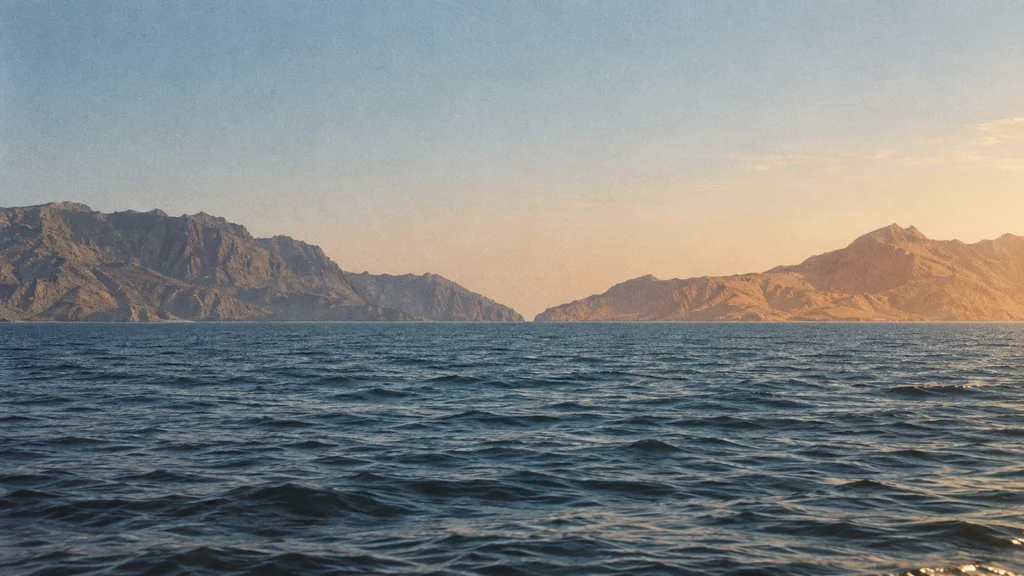
Europe waits for gas cargoes as passage through Hormuz remains unsafe.
Image composition · tobriefDonald Trump has rejected Iran's offer to reopen the Strait of Hormuz. He said so publicly on 26 September (Reuters). The offer required Washington to ease its pressure before Iran let shipping resume. While the two sides stay apart, European buyers of Qatari gas keep losing cargoes they have no way to negotiate back.
What Iran offered, and why it stalled
At the UN on 25 September, Iran's foreign minister, Abbas Araghchi, proposed that Washington act first over four or five days, that Iran reopen the strait on day six, and that settlement talks begin on day seven (UN transcript, Al Jazeera). Nuclear questions belonged to those later talks. Iran did not make them part of the price of reopening.
That price started with the US naval blockade, which stops ships that use Iranian ports (Politico). Iran also wanted its oil exports eased and its frozen funds released. It also asked for the fighting across the region to stop, including in Lebanon.
The order of moves is where the offer breaks down. The blockade and the danger in the strait are two separate problems. The blockade hits Iran's own trade. Ships from every other country face attacks in the waterway, and lifting the blockade would not stop those attacks by itself. Washington was being asked to give up its main pressure on Tehran before anyone could check whether ships were safe.
Lebanon adds a second difficulty. A ceasefire there depends partly on Israel, which Washington can lean on but cannot bind. Trump has not said which condition sank the deal. In an interview conducted on 28 September and published on 1 October, he repeated that the offer was "not good enough" (TIME).
Messages are still passing through Qatar, and by 30 September Iranian officials said Araghchi had briefed President Masoud Pezeshkian on a US reply (Politico). Neither side has published that reply. Talks continue, but nothing shows that Iran's sequence has started.
Why more warships don't bring the tankers back
The USS Theodore Roosevelt carrier group left San Diego on 27 September as part of a new US deployment to the region (AP). It will probably need two or three weeks to reach the Arabian Sea (Al-Monitor). Once there, a carrier can defend particular ships and deter some attacks. It cannot stop every projectile, make an insurer cover a voyage or order a captain to sail.
Insurers and captains are the ones deciding whether ships move, and for now most ships are staying away. Windward data counted 17 passages through the strait on 29 September, against roughly 135 a day before the war (Argus). That same day, UK Maritime Trade Operations, the British navy's shipping-security centre, warned that unidentified projectiles had hit vessels. Its warning named no attacker (gCaptain). We covered those tanker attacks earlier this week (To Brief).
Who in Europe absorbs the cost
QatarEnergy has extended force majeure, a contractual release for events beyond its control, until December (Corriere). Italy's Edison shows what that means for one buyer. It has lost 35 cargoes, about 4.6 billion cubic metres of gas, and has found replacements for only about half (Corriere). So far this is a supply loss. It does not yet show that gas will be rationed.
European governments can add their voices, but they hold none of the levers. Germany's foreign minister, Johann Wadephul, backed a call by about 80 countries for Hormuz to reopen fully (Handelsblatt). A joint statement adds pressure but cannot break the deadlock. Europe does not run the blockade Iran wants lifted, and it cannot guarantee safe passage to the ships it needs.
One caveat applies. Iran's full written proposal has not been published, so its fine print may differ from the version Araghchi described in public. On the record so far, Washington has rejected Iran's public sequence, and no accepted deal has brought back routine traffic. Edison is still looking for replacement gas as winter approaches. Until the US and Iran settle on terms that insurers and crews can trust, Europe will keep paying for a strait it has no power to open.
Details about this article
- Model:
- claude-opus-5-5
- Generated:
- 10/2/2026, 2:09:31 AM
- Pipeline run:
- eu_pipeline_20261002_005006
- Watermark:
- SynthID (Google's invisible watermark)
- Human review:
- None before publication