Trump’s refusal leaves Hormuz contested
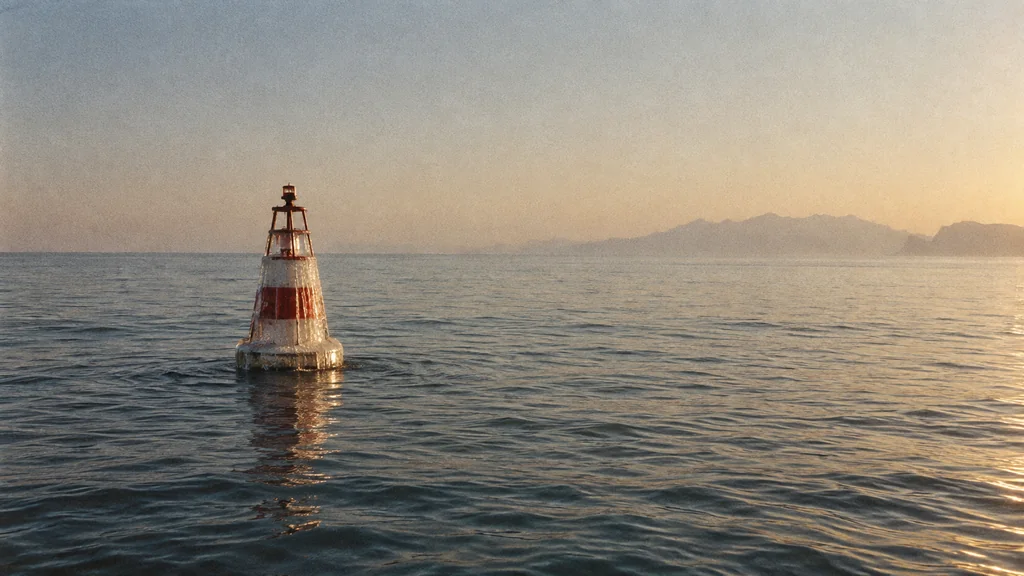
Europe waits on a passage neither Washington nor Tehran will open first.
Image composition · tobriefDonald Trump said on 26 September that he had turned down Iran's offer to end the war and reopen the Strait of Hormuz. "They made a proposal, but I rejected it," he told reporters at the White House (NBC News, Reuters). The plan asked Washington to move first. There is now no agreed path and no public US counteroffer, so a sea lane that carries oil and Gulf LNG tankers, including Qatar's, stays contested.
Before Trump spoke, the refusal had rested on unnamed US officials, and Tehran said it was still waiting for a formal answer (Reuters). Trump has now put his own name to the decision. He did not say which term he objected to. Our earlier report set out Iran's conditions (To Brief).
What Iran offered, and in what order
Iran's foreign minister, Abbas Araghchi, told the UN on 25 September that Tehran had sent Washington a seven-day plan through a Qatari mediator (UN transcript). The clock would start only when the US accepted.
From there, Araghchi described a strict order. Washington would act in the first four or five days. Iran would reopen passage on day six, and talks on a final settlement would begin on day seven (Al Jazeera).
The American steps reportedly included lifting the US naval blockade of Iranian ports and easing curbs on Iran's oil exports. They also included a halt in fighting that would extend to Lebanon (AP). The full written plan has not been published.
The offer traded two different chokeholds. Washington's blockade stops ships from reaching Iran's own ports. Tehran's threats make the wider strait dangerous for everyone else. Lifting one does nothing to remove the other, which is why the order of moves carries so much weight.
Why the sequence is the sticking point
The practical obstacle is plain. The reported sequence asks Washington to ease its pressure on Iran's economy before Iran reopens anything. That would be an initial concession, not a surrender of every lever the US holds, but it would come first and on trust.
Two further gaps sit inside the plan as described. A ceasefire in Lebanon depends on Israel, which Washington can press but cannot guarantee. The published accounts also do not explain how either side would verify the other's steps, though the unpublished full text may. Trump has not given any of this as his reason, and it should not be read as one.
Europe carries the risk without a seat
Before the conflict, roughly 20 million barrels of oil a day passed through Hormuz, about a fifth of world consumption, and the strait was essential for Gulf LNG, the liquefied gas shipped by tanker (EIA). On 25 September, nine vessels were seen crossing, against a pre-conflict norm of about 125 large ships a day (Cyprus Mail). Denmark's Maersk had already added $1,000 per container for any ship that transits, to cover insurance and crew risk (SeaNews).
Gas markets had started to price in a deal. Europe's benchmark contract, the Dutch TTF, closed Friday at €75.025 per megawatt-hour, down from above €80 a week earlier, and Argus tied the fall to Iran's offer (Argus). Markets were closed when Trump spoke on Saturday, so no reaction to his refusal has been measured yet.
European governments have pushed where they can. German foreign minister Johann Wadephul backed an 80-country call on 24 September for Hormuz to be fully reopened (Handelsblatt). The appeal shows what a large coalition wants. It cannot make Washington lift its blockade or make Tehran drop its threats, because neither chokehold is in European hands.
Friday's gas price partly reflected hope for an agreement Europe could neither sign nor block. Washington has now rejected a proposal that required it to move first, and European governments have no means to compel either side to reopen passage. One caveat holds: the full plan is unpublished, and Trump has not said which term he opposed. Until Washington names that term or tables its own offer, Europeans cannot tell whether the gap is about sequence or substance.
Details about this article
- Model:
- claude-opus-5-5
- Generated:
- 9/27/2026, 1:43:34 AM
- Pipeline run:
- eu_pipeline_20260927_005007
- Watermark:
- SynthID (Google's invisible watermark)
- Human review:
- None before publication