Trump waives Congress’s new Russia penalties
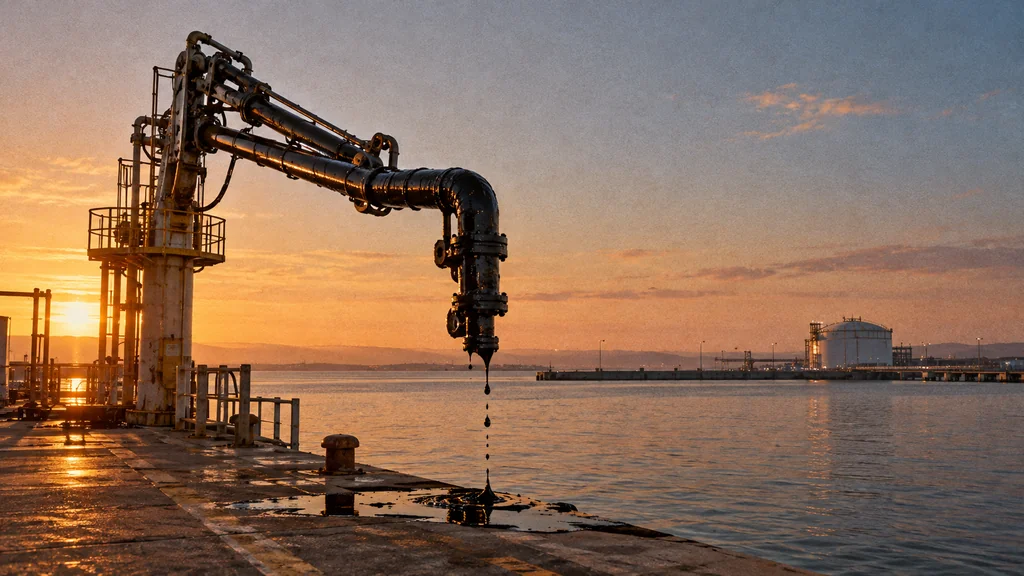
Washington pauses new penalties while Russian energy continues to reach European ports.
Image composition · tobriefDonald Trump has suspended a package of new American penalties on Russia before it took effect. An executive order dated 16 October waives measures that Congress passed and he signed into law in September (White House, enacted law). Existing US sanctions and all EU sanctions stay in force. New pressure from Washington is on hold, and Europe is left enforcing its own rules while some Russian energy still legally enters the EU.
What the order switches off
The Lindsey O. Graham Sanctioning Russia and Iran Act, signed on 18 September, gave the administration 30 days to act. It provided for duties of up to 500% on Russian goods, plus new sanctions on Russian banks and on shadow-fleet tankers, the ageing ships Russia uses to move oil outside Western controls (enacted law).
Its widest weapon was a "secondary" tariff of up to 100% on goods from the biggest buyers of Russian oil and gas. American importers would have paid it at the border on everything those countries sell to the US, whether or not the goods had anything to do with Russian energy. Trump's order lists these duties and then waives them, together with planned restrictions on Russian officials, banks, energy firms and vessels (White House).
The order keeps every sanction imposed under earlier executive orders, so claims that Trump lifted all Russia sanctions overstate the move. The waiver has no end date and lasts until the president or his secretary of state decides otherwise. The law required a written certification and a report to Congress explaining the decision (US Code). The White House says both were sent, but the published order states only that the waiver serves the US national interest.
Without published reasoning, the tariff's reach offers the strongest case for the pause. It would have punished whole economies for their energy bills. Hungary still buys most of its oil and gas from Russia, according to Commission figures reported by Portfolio. Because the order named no country, though, no European government can say it was spared a tariff that had actually been aimed at it.
What Europe can still do
An American order cannot change EU law. EU sanctions are agreed by member governments in the Council of the EU, where each government holds a veto. Once adopted, they take the form of regulations that apply directly in every member state, with no national law needed.
Those rules remain in place, including port bans on listed shadow-fleet tankers. In July the EU added 41 vessels to that list (Council of the EU).
The waiver is separate from a decision Washington took a week earlier. On 9 October the US Treasury issued General License 135, a permit allowing Russian diesel to be delivered into the US until 7 April 2027 (OFAC). EU leaders said they regretted that licence in their 16 October summit conclusions (European Council), as we reported (To Brief).
Europe's own rules also leave room for Russian energy. The EU's gas phase-out lets qualifying long-term contracts run during a transition period, so some Russian liquefied gas still arrives legally. Urgewald, a German campaign group, counted 12.18 million tonnes of Russian Arctic LNG reaching EU ports between January and September, and found France took most of September's deliveries (Urgewald).
Who objected, and what nobody has measured
Volodymyr Zelenskyy warned that easing pressure would encourage Vladimir Putin as Ukraine braces for winter strikes on its power grid. Kremlin envoy Kirill Dmitriev welcomed the suspension as historic (Guardian).
In Washington, lawmakers from both parties objected, including Democrat Chuck Schumer and Republican Thom Tillis, but no move to reverse the order has followed (AP). No one has yet measured how much extra revenue, if any, the waiver gives Moscow.
The new US penalties are waived under the current order, and only the president or his secretary of state can revive them. The older American and European sanctions keep running. Because EU rules still allow some Russian energy into the bloc, the pressure Moscow feels this winter now depends largely on how far European governments close their own remaining openings, from Hungary's oil supply to France's LNG terminals.
Details about this article
- Model:
- claude-opus-5-5
- Generated:
- 10/18/2026, 1:33:41 AM
- Pipeline run:
- eu_pipeline_20261018_005006
- Watermark:
- SynthID (Google's invisible watermark)
- Human review:
- None before publication