Turkey claims a say over Cyprus cable survey
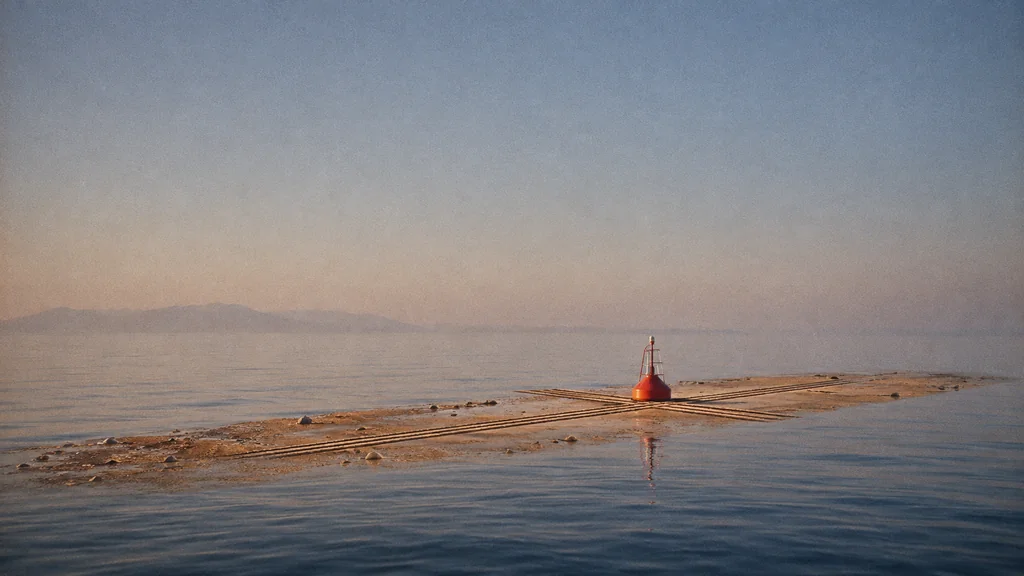
Two capitals claim the authority to approve work beneath the same sea.
Image composition · tobrief- 10/11/2026*Abeille Marengo* leaves Crete for the survey campaignThe French-flagged vessel departed Heraklion. The project operators said it would calibrate equipment befor…
- 10/11/2026Turkey claims consent for the vessel’s workAfter the vessel sailed, Turkey issued NAVTEX 1127/26 for two survey lines toward Cyprus, saying the work h…
- 11/11/2026Greece rejects Turkey’s new NAVTEXThe Heraklion station issued counter-notice 1441/26 shortly after midnight local time, calling Turkey’s not…
The French-flagged survey ship Abeille Marengo left Heraklion on 10 November to map the seabed south of Kasos and Karpathos for the Great Sea Interconnector, a power cable meant to link Cyprus to Crete (AMNA). Within hours, Turkey broadcast a notice saying the work had its consent, four days after declaring it had given none (Euro2day, Cyprus Mail). Athens and Nicosia say only they were asked to authorize the survey. A French diplomatic note that could clarify the exchange remains unpublished.
Two notices, two claims of authority
Turkey's notice places the survey area on what Ankara claims as its continental shelf, the seabed beyond a country's coast where it asserts exclusive rights to resources (To Vima). It then states that Turkey has given its consent to the work (Euro2day). Both reports reproduce the notice; neither tests its legal basis.
The notice is a NAVTEX, a safety broadcast to shipping. It warns mariners of hazards, but it issues no permits and settles no borders (IMO). What it can do is put a position on the record.
Greece answered the same night with its own navigational warning, calling the Turkish notice unauthorized and without force (Athina 9.84). The Foreign Ministry says the Turkish message has no legal consequence for work Greece has authorized (Greek Foreign Ministry).
The Greek warning cites three Greek authorization decisions, the latest dated 6 November (Athina 9.84). It places parts of both survey lines inside the exclusive economic zone (sea where a country claims sole rights to fish, drill and build) or continental shelf that Greece claims. On that basis, Athens holds that approving the work is its call, not Ankara's.
Cyprus took the same line. Government spokesman Konstantinos Letymbiotis said only Greece and Cyprus had been approached for authorization (Philenews). In Athens, Energy Minister Stavros Papastavrou told parliament that Turkey had announced a consent nobody had requested.
The French note nobody has seen
France did write to Turkey. On 9 November Greek government spokesman Pavlos Marinakis said Paris had sent Ankara a note verbale, a formal written message between states, for navigational safety, but he declined to publish it (Greek government). He said the permits were a separate matter.
By Marinakis's account, the note was a notification that recognized no Turkish rights. The Turkish notice, for its part, gives no permit number, no date and no applicant (To Vima). No disclosed document shows that anyone asked Ankara for a permit. Nothing public shows exactly what Paris wrote either.
Ankara's position has shifted. On 6 November it demanded coordination and said it had not consented (Cyprus Mail), as we reported at the time (To Brief). It now publicly describes the survey as consented to, while the disclosed notices show no request for its permission.
Turkey has not explained the change. One reading, drawn from the sequence of notices rather than any Turkish statement, is that Ankara wants a record of "coordination" on file before cable-laying begins, one Athens would have to contradict at every later stage.
Why Europe has money on this seabed
The EU lists the interconnector, which would end Cyprus's isolation from the continental grid, as a project of common interest (its label for priority cross-border infrastructure). It earlier awarded the project roughly €657 million from the Connecting Europe Facility, its infrastructure fund (European Commission). A French investor, Meridiam, holds the majority stake in the project company (GSI), so French capital sits behind the cable as well as French diplomacy.
Brussels can fund and prioritize the cable. It cannot draw the Greece–Turkey sea boundary or license the survey, so the legal dispute stays between national capitals.
The ship has left port, but no published track yet shows it measuring the contested stretch south of Kasos. Its progress will not settle the dispute either way. Greece says it authorized the work, Turkey says it consented to it, and those two claims of authority are now both on the record and incompatible. Paris could at least clarify what it told Ankara by publishing its note. That would show what France communicated, though not which capital held the legal right to approve the survey.
Details about this article
- Model:
- claude-opus-5-5
- Generated:
- 11/11/2026, 2:07:10 AM
- Pipeline run:
- eu_pipeline_20261111_005008
- Watermark:
- SynthID (Google's invisible watermark)
- Human review:
- None before publication