Austria Sends Asylum Cases To Italy
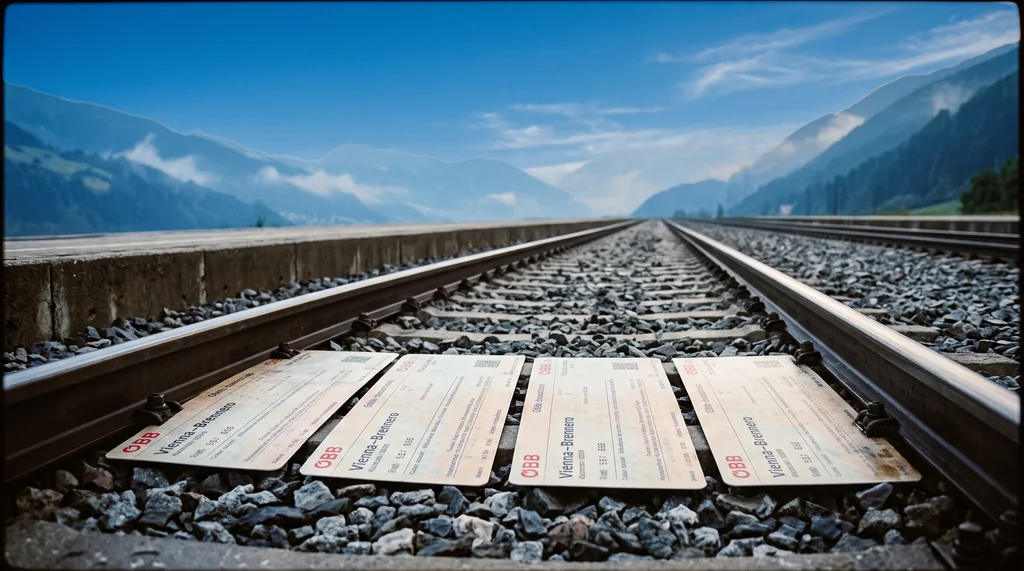
Four uncontested journeys carry the weight of Europe’s new asylum pact.
Cumadóireacht íomhá · tobriefAustria has begun testing the EU’s new migration rules in the most unshowy way imaginable: by putting four asylum seekers on trains and buses to Italy, with the tickets paid for by Austrian authorities (Kurier, la Repubblica). No police escort, no detention flight, no theatre. Just four people moved by public transport since the EU’s Migration and Asylum Pact began applying on 12 June.
That small number matters because these are the first confirmed transfers under the new rules. They show the Pact can work when the file is clean. They do not yet show that it can survive a fight.
Four journeys, not four deportations
A responsibility transfer is not an expulsion from Europe. It means an asylum applicant is moved from one EU country to another because EU rules say the second country must examine the claim, usually because that is where the person first entered or was first registered (AMMR). The person remains inside the EU asylum system. Italy, once treated as responsible, must process the application.
The Pact replaced the old Dublin III system with the Asylum and Migration Management Regulation, or AMMR. But the central bargain survived: in most cases, the country of first entry still gets the case. That is why Italy remains the pressure point. The legal name has changed; the geography has not.
Italy accepts four, blocks twelve
Austria’s four cases succeeded because they were narrow ones: recent arrivals, cooperative applicants, and files Italy did not contest. The harder picture is elsewhere.
Between 12 June and 7 July, eight member states asked Italy to accept 12 people under the new rules. Italy refused every request (European Commission, 2EU Brussels). Austria’s four transfers came after that assessment period, apparently in cases where Rome did not challenge responsibility within the Pact’s deadlines. Silence, in that setting, was enough to let the transfer go ahead.
Rome’s argument is about timing. Italy says cases involving people who arrived before 12 June were covered by earlier political arrangements and should not be reopened under the new system (Merkur). Germany rejects that view, saying normal procedures must resume from the Pact’s application date (Tagesschau).
Germany is trying to force the matter politically, but it has not yet shown results. Reporting from the period contains no verified successful Germany-to-Italy transfer. Austria, not Germany, is the country that actually moved people.
Whether the Pact scales depends on what happens to refusals
Switzerland is now following the Austrian route. Bern has booked first flights for late August, beginning with isolated post-12-June cases chosen so as not to overload the system (Ticinonews). The method is cautious: pick uncontested files, move small numbers, avoid the confrontation.
That is also what makes it familiar. Under Dublin, northern and Alpine states tried to send asylum seekers south. Frontline states resisted. The Pact’s solidarity mechanism was meant to change the bargain by giving Italy and Greece relief in return for accepting responsibility. The first signs suggest that bargain is not yet working.
Austria has not said how many future cases it expects to transfer. Italy has not clarified whether these four cases are a precedent or an exception (Kurier, Il Sole 24 Ore).
The chain of authority matters here. The European Commission can assess compliance, publish findings, and ultimately open infringement proceedings, the legal route used to push member states into following EU law. It cannot physically compel a transfer. If Italy keeps accepting the easy cases and rejecting the disputed ones, the Commission will have to decide whether resistance has consequences, or whether the Pact’s enforcement is as weak as Dublin’s was. Four transfers in ten weeks, set against twelve refusals, is already beginning to answer that question.
Details about this article
- Model:
- claude-opus-4-6
- Generated:
- 8/20/2026, 1:47:13 AM
- Pipeline run:
- eu_pipeline_20260820_005007
- Watermark:
- SynthID (Google's invisible watermark)
- Human review:
- None before publication