Belgium Blocks China-Linked NHV Deal
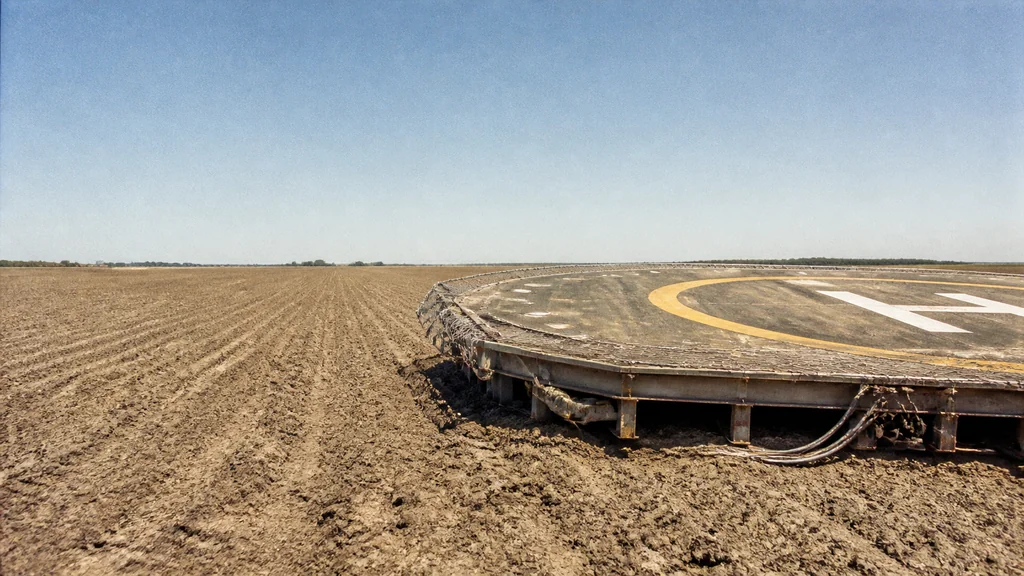
A national boundary strands the machinery of North Sea access.
Cumadóireacht íomhá · tobriefNHV Group is the kind of company most people never think about until the weather turns. From bases around the North Sea, its helicopters carry technicians, emergency crews and maritime pilots to offshore wind farms, oil and gas platforms and ships that cannot be reached safely by boat. When the sea is too rough, the helicopter is what keeps a turbine serviced, a rig staffed, or a shift change on time.
Belgium has now decided that this is not just transport. It is access to energy infrastructure, and therefore a security question. Its decision to block a Chinese-linked company from buying the Ostend-based operator exposes a familiar weakness in Europe’s investment-screening system: the service crosses borders, but the veto still belongs to one capital.
Why helicopters became security infrastructure
Belgium’s Interfederal Screening Commission, which brings together federal, regional and community authorities, reviews foreign investments for security risks and can issue binding decisions. It blocked GD Helicopter Finance, a Dublin-registered lessor tied to China’s GDAT Group, from acquiring NHV (AeroTime, Aviation Week). The seller was Ardian, the French investment firm that has owned NHV since 2013. The transaction, announced in December 2025, failed to clear screening (DH, HeliHub).
Economy Minister David Clarinval pointed to risks to national security, Belgium’s strategic interests and possible defence-sector links (DH). NHV said the deal was dead and that ownership remained unchanged (NHV statement).
The security logic is broader than old-fashioned defence. NHV does not need to own a turbine or a platform to matter. It controls dispatch schedules, maintenance windows and crew rotations for infrastructure that produces energy or keeps offshore wind operating. It flies from Den Helder in the Netherlands (Den Helder Airport), a key North Sea helicopter hub, and carries Dutch maritime pilots to ships when conditions make boat transfers unsafe (Nederlands Loodswezen).
That gives the operator practical leverage. If access is delayed, maintenance slips. If crews cannot rotate, platforms have a problem. For countries trying to build more of their energy security offshore, the humble helicopter schedule starts to look less like logistics and more like a control point.
The buyer’s structure sharpened the issue. GDHF is registered in Dublin but ultimately Chinese-controlled (Helicopter Investor). For Irish readers, the Dublin registration matters: it shows how easily an EU address can sit between a strategic asset and a non-EU owner. The European Commission’s proposed 2024 rewrite of investment-screening rules, not yet law, would require member states to scrutinise exactly this kind of arrangement, where an EU-registered entity serves a non-EU investor (COM(2024)23).
A Belgian veto over Dutch energy access
The EU’s foreign-investment screening framework (Regulation 2019/452) allows the Commission and other member states to comment on sensitive deals. The final decision, however, stays with the host country. Belgium has not publicly said whether Dutch authorities took part in the screening, even though NHV’s Den Helder operations mean the Belgian veto directly affects who controls helicopter access to Dutch offshore platforms.
European governments have been steadily widening the meaning of “strategic”. Germany blocked the sale of chipmaker Elmos to a Chinese-linked buyer on security grounds (BMWK). Italy used special powers to restrict Chinese shareholder influence at Pirelli (Reuters). Belgium’s NHV decision belongs in that line, but it pushes the logic into civilian service infrastructure that keeps energy operations running across borders.
The veto is understandable as a category of decision. The difficulty is that the detailed risk assessment remains classified. The public gets the result and a broad explanation, but not the evidence weighed by the state. The EU Court of Justice’s Xella ruling made clear that member states cannot use “national security” as an all-purpose shield: a restriction must be proportionate and based on a genuine threat to a clearly defined public interest (CJEU C-106/22). Belgium’s reasoning has not yet been tested against that standard.
There is also an awkward loose end. Industry reporting says NHV put two Airbus H160 helicopters leased from GDHF into service this year at Den Helder (AeroTime). Belgium has decided that Chinese-linked ownership of NHV is too risky. It has not publicly explained whether leasing aircraft from the same company creates similar access or dependency risks.
If the concern is Chinese leverage over North Sea helicopter operations, blocking ownership while tolerating equipment dependence leaves a question for Clarinval and the screening commission. The wider issue now sits with the Commission and the national capitals negotiating the next EU investment-screening regulation: whether cross-border energy services can be protected properly by national vetoes, or whether Europe needs joint screening for infrastructure that no longer fits neatly inside one state.
Details about this article
- Model:
- claude-opus-4-6
- Generated:
- 8/8/2026, 1:51:59 AM
- Pipeline run:
- eu_pipeline_20260808_005006
- Watermark:
- SynthID (Google's invisible watermark)
- Human review:
- None before publication