Ceuta Returns Hit Legal Locks
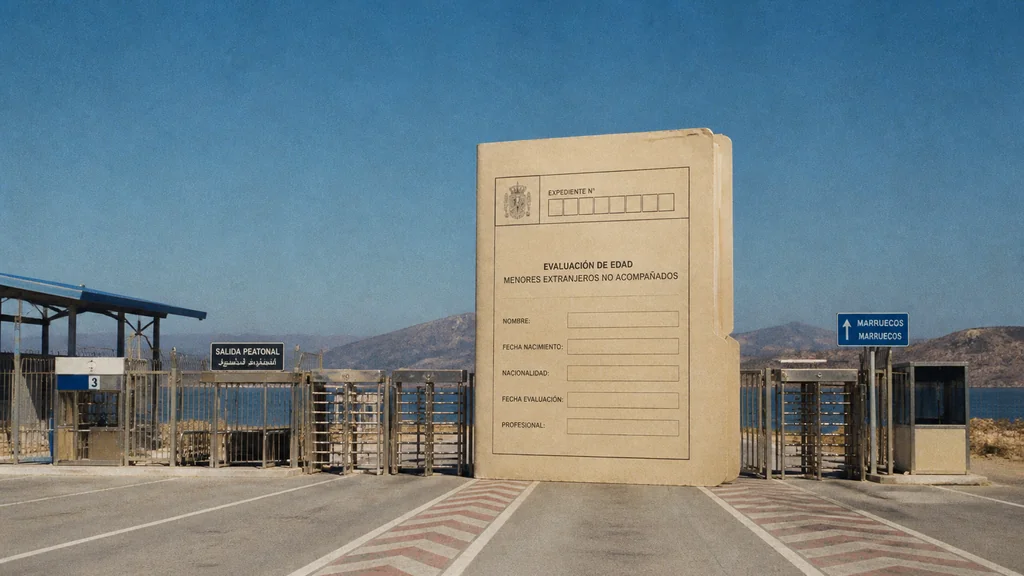
Every return still stops at the child’s individual file.
Cumadóireacht íomhá · tobriefThe European Commission said last week that EU law allows unaccompanied minors in Ceuta to be returned to Morocco. Several European outlets took that as Brussels blessing Spain's push for rapid removals (Euronews, Ceuta Ahora).
That is only half the story. The same EU law being cited by the Commission also sets out the locks Spain must open before any child can be removed: an individual file, a proper best-interests assessment and proof that the child is being sent to somewhere safe.
For Irish readers used to the EU as a system of rules rather than slogans, the distinction matters. The Commission can give a political steer. Spain carries out the returns. Courts, prosecutors and child-protection authorities decide whether each return is lawful. That chain has not been loosened.
What Lammert actually invoked
Commission home-affairs spokesperson Markus Lammert told reporters that Spain and Morocco should ensure "a swift return of all people illegally remaining in Ceuta." He pointed to the EU Return Directive, the 2008 law that sets the rules for how member states remove irregular migrants, including unaccompanied children (Brussels Signal).
The line sounded hard-edged. It did not change the law. The Return Directive does allow unaccompanied minors to be returned, but only under conditions that cannot be waved through because a capital wants speed or a Commission spokesperson wants firmness.
Five locks on each child's file
Article 10 of the Return Directive (Directive 2008/115/EC) is the starting point. Before a return decision is issued for an unaccompanied minor, the member state must involve child-protection bodies that are independent of the authority enforcing the return. Before the child is physically removed, the state must confirm that a family member, nominated guardian or adequate reception facility will receive them in Morocco. Article 5 adds the best interests of the child, family life and non-refoulement, the rule that bars sending someone back into danger.
The Commission's own Return Handbook spells out the sequence: trace family links, hear the child, assess best interests and verify the actual reception arrangement before enforcement (Commission Return Handbook). The EU Court of Justice said the same in its TQ ruling. A member state cannot put an unaccompanied minor on a return track without first confirming that adequate reception exists in the destination country. That check has to shape the decision from the start, not appear at the end as paperwork (CJEU, C-441/19).
Spain knows this terrain. Its Supreme Court found earlier returns of unaccompanied minors from Ceuta unlawful because individual files, hearing rights and concrete assessments were missing. It described those operations as collective expulsion (Público). UNICEF Spain has taken the same line: identify the children first, and return no child without individual evaluation, legal assistance and confirmation of a safe environment (Europa Press).
Speed meets the file test
Across Europe, governments have divided along a familiar line. A joint letter signed by 22 governments, led by Italy and Denmark, pushed the EU for tougher return tools (ANSA). Germany's Tagesschau put the legal position bluntly: minors cannot be returned "without more" because special protection rules apply (Tagesschau). French lawyers made the same point on France 24: each case must be reviewed separately, grouped returns are not allowed, and Spain must prove that someone will actually receive the child (France 24). Even the new returns regulation approved by the European Parliament in June preserves these child-specific protections.
The Commission has given Spain political cover. It has not given it a legal shortcut. Each child in Ceuta still needs a file: identification, protection screening, a hearing, prosecutor involvement, family tracing in Morocco and verified proof of safe reception. Spain's own courts have already ruled that skipping those steps amounts to collective expulsion. Brussels has answered the political question. Spanish prosecutors, child-protection authorities and judges now control the legal one: whether files can be built, child by child, faster than the pressure for removals is building.
Details about this article
- Model:
- claude-opus-4-6
- Generated:
- 8/19/2026, 1:50:40 AM
- Pipeline run:
- eu_pipeline_20260819_005007
- Watermark:
- SynthID (Google's invisible watermark)
- Human review:
- None before publication