Cyprus Cable Stalls On NAVTEX
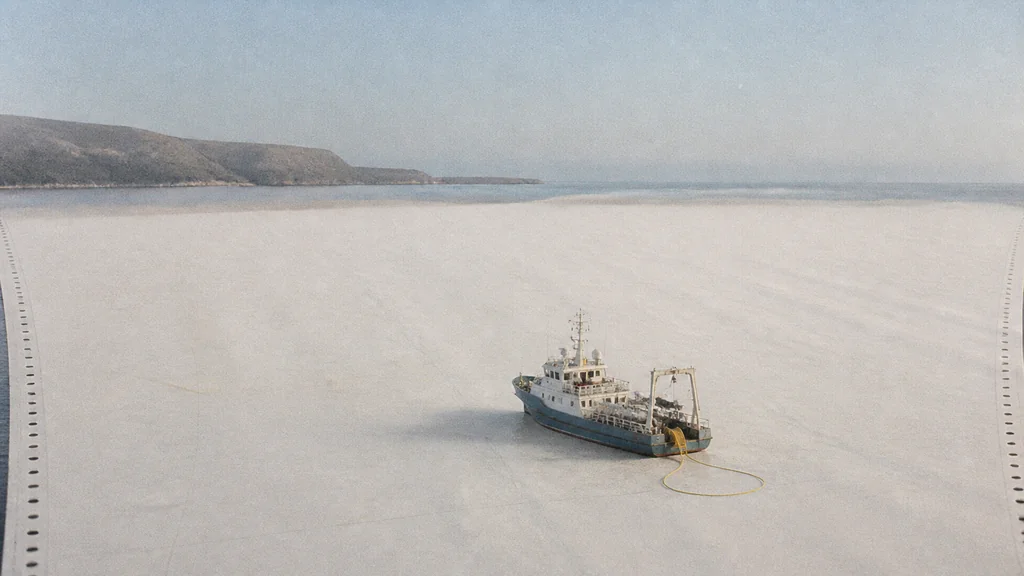
The vessel waits for coordinates that political backing cannot supply.
Cumadóireacht íomhá · tobriefThe next move in the Great Sea Interconnector is not a summit, a funding announcement or another statement of support from Brussels. It is a maritime notice.
No NAVTEX has been issued for fresh seabed surveys on the cable route between Crete and Cyprus. A NAVTEX is the broadcast that tells ships a defined area of sea will be used for survey work, giving coordinates, vessel names and dates. None has appeared. Greek and Cypriot officials contacted in early August would neither confirm nor deny that one was being prepared (Cyprus Mail). Greek briefings say Athens will coordinate with France. So far, no document has been published (Enikos).
That absent notice has become the practical test of whether the Great Sea Interconnector, an EU-backed submarine electricity cable linking Greece, Cyprus and eventually Israel, can move from political architecture to work at sea. The EU has committed nearly €658 million in grants (CINEA). France's Meridiam now owns 66% of the project company, while Greece's grid operator ADMIE holds 34% (Enerdata). The money and the shareholder register matter. They do not, by themselves, put a survey vessel on the water.
40% of the seabed is still unmapped
Before a cable can be laid, vessels have to map roughly 898 km of seabed, measuring depth, terrain and hazards. The line will use high-voltage direct current, or HVDC, the technology favoured for long submarine cables because it loses less energy than alternating current over distance (EU Global Gateway). Parts of the route run through water around 3,000 metres deep (HVDC World).
About 60% of the surveys have been completed. The remaining 40% is in waters south of Kasos and southeast of Crete, where work stopped after a 2024 incident involving Turkish pressure (Ekathimerini). Even if a vessel is chartered by September, finishing the rest could take 18 to 24 months, pushing the survey phase towards 2028 (Kathimerini). Cable-laying would come only after that.
The difficult section also overlaps with waters where Turkey recently declared marine parks. Athens says that declaration has no legal effect on Greek sovereign rights (Greek MFA). For Ireland, used to seeing infrastructure and sovereignty tangled in the detail of maps and legal regimes, the point is familiar enough: technical work at sea becomes political the moment the coordinates are disputed.
Three things that haven't happened
The project now has serious names behind it. But three pieces are still missing.
The European Commission has not received a merger notification for the Meridiam deal, so Brussels has not yet assessed whether the ownership change raises competition concerns (CNA). Cyprus is still waiting for European Investment Bank due diligence before committing state funds. And there has been no final investment decision, the point at which sponsors commit capital and construction contracts are signed. Nexans, the cable manufacturer, said in January that it remains committed, but that rescheduling will affect delivery dates (Nexans).
Who pays if costs rise
According to Phileleftheros, the Greece-Cyprus section has a reported cost of about €1.9 billion, split 63% Cyprus and 37% Greece after the EU grant. Cyprus, the EU's most electrically isolated member state, would gain a backup power link and access to cheaper generation. Nicosia has tied €25 million in annual payments, or €125 million over five years, to the NAVTEX as the trigger for visible progress (Capital).
Whether Cypriot electricity bills rise depends on a regulatory gate that rarely makes for tidy politics. The regulator decides which project costs can be passed on to consumers through tariffs and which remain with the project company or the state. Former energy regulator chief Andreas Poullikkas argues that EU rules deduct grants and market revenues first, meaning the cable does not have to raise bills (Cyprus Mail).
Cyprus is not accepting ADMIE's spending ledger at face value. Of roughly €251 million ADMIE says it has already spent, the Cypriot regulator has recognised only 32% as recoverable through bills (Politis). The unresolved question is who carries the cost of deep-water engineering, security escorts or further delays if the bill climbs. That answer has not been published.
The Great Sea Interconnector is in a stronger position than it was six months ago. It has named sponsors, EU money and a cable contractor. What it still needs is the permission-and-risk package that allows survey vessels to return to contested water.
Stocks in this story
Details about this article
- Model:
- claude-opus-4-6
- Generated:
- 8/19/2026, 1:49:18 AM
- Pipeline run:
- eu_pipeline_20260819_005007
- Watermark:
- SynthID (Google's invisible watermark)
- Human review:
- None before publication