DAX Profits Rise as Jobs Go
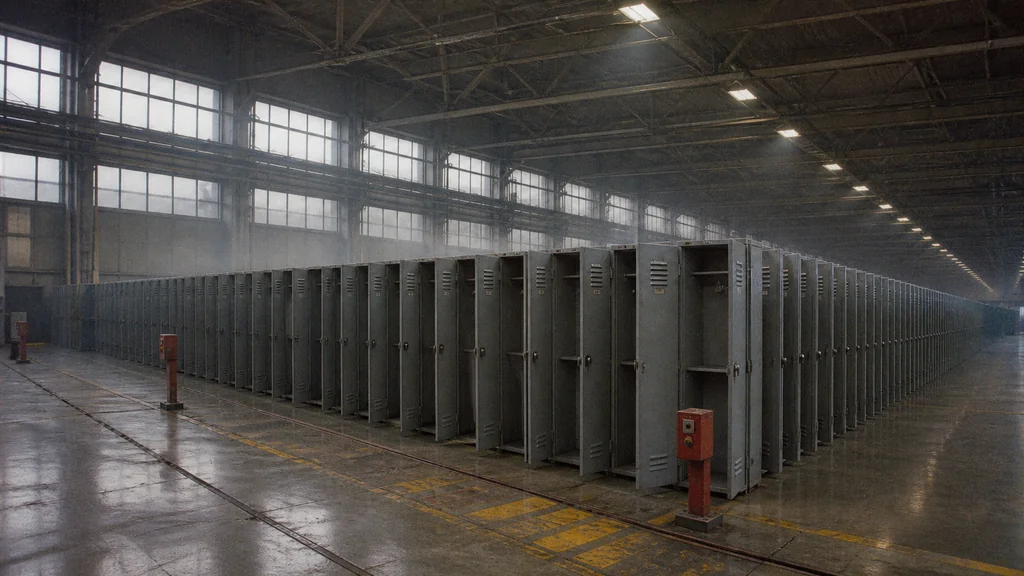
Record profits rise as Europe’s industrial workforce quietly disappears.
Cumadóireacht íomhá · tobriefGermany's largest listed companies are making more money than ever, while employing fewer people to do it. The 40 companies in the DAX earned €52.6 billion in operating profit in the second quarter, almost 16% more than a year earlier. Over the same period, their workforce fell by 41,000 (Tagesschau, Handelsblatt).
Those figures are not a contradiction. They explain the new shape of German industry: companies can earn handsomely from overseas markets, financial services, telecoms, defence or pharmaceuticals, while cutting back the industrial jobs that once made Germany the anchor of Europe's manufacturing economy.
Where the Profit Comes From
The DAX, Germany's blue-chip index, is often treated as a shorthand for German industrial strength. It is not that simple. The index includes insurers, telecoms groups, defence contractors and drugmakers, as well as manufacturers.
The biggest earner in the quarter was Deutsche Telekom, with €6.9 billion in operating profit, much of it driven by T-Mobile US. Allianz, the insurer, came next with €4.9 billion (Handelsblatt). As FAZ noted, the profit boom tells you little about the health of German factories. A good deal of the money is being made in businesses that do not depend on German production workers.
The factory numbers tell a colder story. Employment in the car industry fell 5.8% over the year to 691,500, its lowest level since 2005. Manufacturing as a whole lost 2.7% of its workforce, falling to 5.29 million (Tagesschau). Auto parts suppliers, the layer of industry that feeds the big car groups, cut 7.6% of their workers (DW). That is where the German story becomes a European one, because supplier pain rarely stops at the German border.
Germany Is Replacing Less Than It Wears Out
German companies are also investing less in the plants and machinery that would keep domestic production renewed. The Bundesbank said in May that net fixed investment, meaning spending on new machinery and equipment after allowing for what wears out, turned negative in 2024 and 2025. That had not happened since reunification (Bundesbank).
In plain terms, German business is not fully replacing the industrial kit it uses up. Price-adjusted investment in machinery has been falling since 2019.
The deeper problem is competitiveness. The Bundesbank estimates that about three-quarters of Germany's recent loss of export market share reflects weaker competitiveness rather than softer global demand. German car exports to China almost halved between 2021 and 2025 (Bundesbank). Industrial electricity prices were down 4.2% year on year by June (Destatis), which eases some of the damage from the 2022-23 energy shock. It has not, so far, made Germany an obvious place to add new capacity.
The Pressure Travels into Central Europe
Germany is not just another large economy in Europe. It is the centre of a manufacturing system that runs through Poland, Czechia, Slovakia, Hungary and Romania. Nearly 28% of Polish exports go to Germany (PAP Mediaroom). Roughly a third of Czech exports go the same way (Novinky).
That is the mechanism through which a German slowdown becomes a regional problem. The ECB, the European Central Bank that sets interest rates for the eurozone, has warned that cost pressures and weakness move quickly through these supply chains (ECB).
Romania is already showing the strain. Vehicle output fell 12.7% in the first half, while more than 18,000 auto workers lost their jobs between January 2025 and April 2026 (PSNews, ZF). There are still winners. Czech car production rose 4.5% in the first half, helped by Škoda running at full capacity (iROZHLAS). Hungarian vehicle manufacturing jumped 21% in June (HVG). But these are selective gains inside a car sector that is getting smaller overall.
For Ireland, the lesson is not that Germany has suddenly become weak. It is that the old assumption of German industrial gravity pulling the rest of Europe along is less reliable than it was. Globally diversified German groups can protect profits through foreign earnings, cost cuts and business lines far from the shop floor. Germany itself is becoming less certain as the home of the next factory, battery line or supplier contract.
That choice does not stay in Frankfurt boardrooms or Bavarian industrial parks. It travels through supply chains into Central Europe, where plants may still win work when production shifts, but workers are learning that winning an order is not the same as securing a future.
Details about this article
- Model:
- claude-opus-4-6
- Generated:
- 8/15/2026, 1:50:24 AM
- Pipeline run:
- eu_pipeline_20260815_005006
- Watermark:
- SynthID (Google's invisible watermark)
- Human review:
- None before publication