Dutch Gas Plan Opens Winter Gap
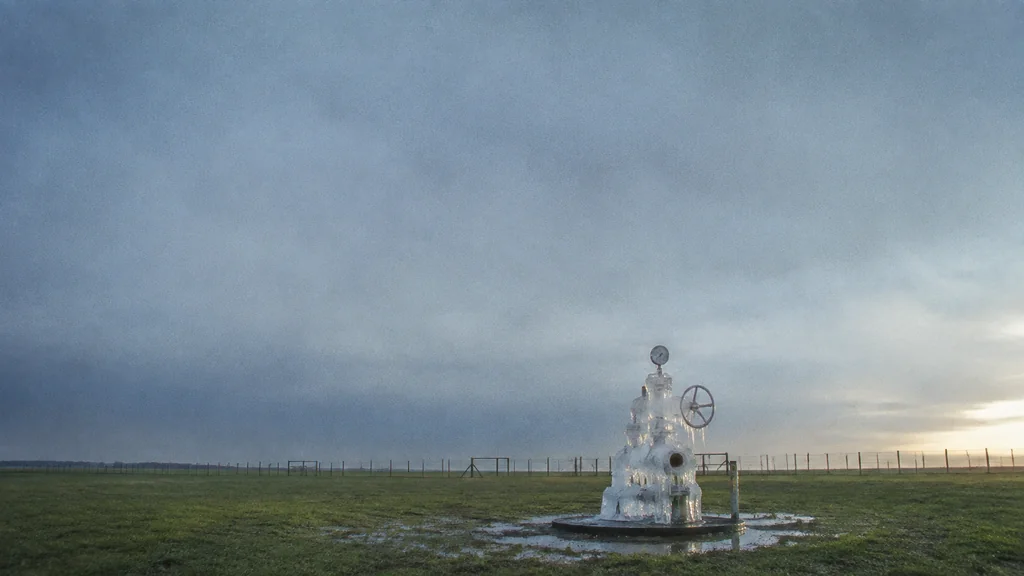
The Netherlands thins its winter buffer while the market stays hot.
Cumadóireacht íomhá · tobriefThe Dutch cabinet is weighing a choice that looks technical until the first cold week of winter arrives. It may cut its gas-storage target from 80% to about 65%, leaving roughly 21 TWh of gas out of the ground before the heating season begins (NOS). Climate minister S. van Veldhoven-Van der Meer said the European Commission had asked member states to aim lower, so they would not drive up gas prices by buying too aggressively now. The calculation is simple enough: cheaper gas in autumn, less insurance in winter.
Why filling storage can push prices up
Europe’s gas market still runs to an old seasonal pattern. Suppliers usually buy in summer, when demand is lower, inject gas into underground storage, and draw it down in winter when homes and factories need heat (Tagesschau). The trade works when summer gas is cheap enough and winter prices are expected to be higher. In 2026, that gap has narrowed sharply. Prices are already elevated, pushed by fighting near the Strait of Hormuz and by competition with Asian buyers for LNG, the liquefied natural gas shipped by tanker. A company buying now may not recover the cost when it sells in winter (Gasunie).
That is when governments enter the market. The Netherlands has authorised its state agent, EBN, to store up to 80 TWh if private companies do not fill the tanks themselves (Tweede Kamer PDF). Germany is caught in the same problem. But if several governments buy at once, they help push up the TTF, the Dutch-based Title Transfer Facility where Europe’s main wholesale gas price is set. On 31 August, the October TTF contract reached €70.85/MWh during the day, up from about €29/MWh at the start of the year (Euronews, StorageCurve).
The Commission has already built in flexibility for this bind. A 2025 amendment to the EU storage regulation keeps a 90% legal benchmark, but allows member states to go 10 percentage points lower in difficult markets, with a further five-point reduction possible by Commission decision (EUR-Lex). In July, the Commission’s Gas Coordination Group said 80% would be enough for winter (European Commission).
The 21 TWh question
Across the EU, 15 percentage points of storage equals roughly 170 TWh out of total capacity of 1,130 TWh (Global Energy Flow). That is not a marginal amount. Stored gas normally supplies 25–30% of Europe’s winter consumption (IEU Monitoring). The less gas in storage, the less room there is for a cold snap, a supply shock, or a scramble for LNG cargoes.
Germany is the country that decides how comfortable Europe’s buffer really is. It holds about a fifth of the bloc’s storage capacity, but was only 53% full in early September. Le Monde reported that German LNG terminals could cover barely 10% of customer needs on a peak winter day (Le Monde, NexusEuropa). If Germany enters winter short, it will have to bid harder for the same LNG cargoes. That pressure feeds back into the TTF price paid by Dutch households.
Who gains, who pays
Dutch households are first in line. Oxford Economics found that wholesale gas prices pass through to Dutch consumer bills almost immediately, compared with several months in France and Spain, and nearly a year in Germany (Euronews). If lower filling targets cool the TTF this autumn, families in the Netherlands feel the relief quickly. If thin storage keeps prices high through winter, they feel that quickly too.
Industry faces the slower, heavier risk. INES managing director Sebastian Heinermann warned that if German storage remains low and winter is cold, companies could be forced to cut production because gas costs rise beyond what they can carry (Tagesschau). Goldman Sachs analysts said a cold winter that forces Europe to compete with Asia for scarce LNG could push December TTF above €100/MWh, the price needed for European buyers to pull cargoes away from Asian ports (RMF24).
Gasunie, the Dutch state operator, has stated the bargain without much dressing up. Its 115 TWh target was designed for the harshest winter in 30 years, and without extra measures the Netherlands would be "insufficiently prepared" for that scenario (Gasunie). The cabinet has not made a final decision (NOS). But the politics of it are already visible: this is a price policy now, paid for with a smaller winter cushion. What voters remember will depend on the weather in January.
Details about this article
- Model:
- claude-opus-4-6
- Generated:
- 9/7/2026, 1:35:34 AM
- Pipeline run:
- eu_pipeline_20260907_005005
- Watermark:
- SynthID (Google's invisible watermark)
- Human review:
- None before publication