Dutch Wind Returns to Subsidies
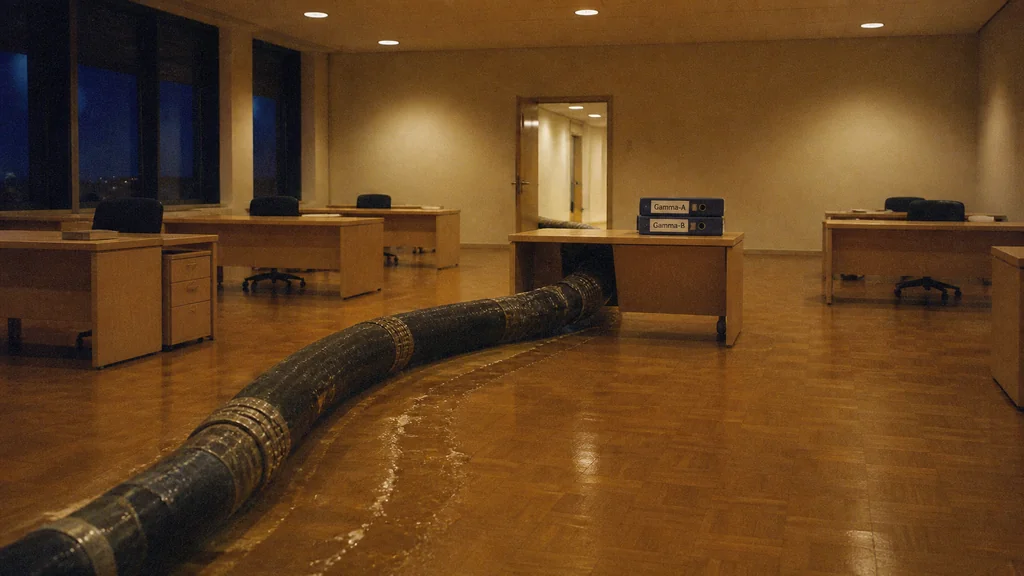
The North Sea’s revenue risk now runs through the public accounts.
Cumadóireacht íomhá · tobriefThe Netherlands has quietly put a price on the end of subsidy-free offshore wind. The government has raised the maximum support budget for two coming North Sea wind tenders to €9.456 billion, from €7.896 billion (RVO, Rijksoverheid). This is not a cheque being written today. It is the ceiling for the next tender rounds, Gamma-A and Gamma-B, which open in November.
The winning bids may land well below the maximum of about €0.117 per kilowatt-hour (RVO). That is above recent wholesale averages, but it is meant to get banks comfortable again, not to hand developers an easy return. The message is still clear enough: the Dutch state is putting public money back into offshore wind because the old bargain, in which developers built without operating subsidies, has run out of road.
Why the old model broke
Two years ago, that bargain still looked grand on paper. Two consortia won the right to build 4 gigawatts of offshore capacity at IJmuiden Ver in the North Sea without state support. That is roughly half of the offshore wind capacity the Netherlands wants to add this decade.
Noordzeker, made up of SSE Renewables and APG, which invests for the Dutch pension fund ABP, won the Alpha site. Zeevonk, a partnership between Vattenfall and Copenhagen Infrastructure Partners, won Beta (Blackridge Research, NOS). Both are now hesitating before their final investment decisions, the moment when owners and lenders commit capital and cannot sensibly turn back.
The numbers moved against them from both directions. Costs went up: Dutch law records offshore wind construction costs in 2025 at 40% above 2020 levels, pushed by inflation, higher interest rates and stretched supply chains (Staatsblad). Expected revenues went down: weaker industrial electricity demand means developers expect to sell power at lower prices (NOS).
That is a difficult combination for any energy project, but offshore wind is particularly exposed. Most of the lifetime cost is paid before a turbine produces a single unit of power. When interest rates rise, even by a modest amount, a project that once looked financeable can become one a bank will not touch (IRENA).
The Dutch cabinet is now trying to hold two lines at once. It is negotiating with ABP and Vattenfall over the stalled Alpha and Beta projects, while reopening subsidies for the next round. The Gamma tenders will use a mechanism under which the state pays developers when electricity prices fall below a set level. If power prices disappoint, the taxpayer takes part of the hit.
Denmark and Germany show the same pattern
The Netherlands is not an outlier. Denmark’s earlier offshore wind auction attracted no bids at all. Copenhagen then redesigned the tender around two-way contracts for difference, or CfDs: the state pays when market prices are too low, but takes money back when prices are high. Vattenfall bid and won, with a total support ceiling of DKK 37.6 billion (KEFM, Energistyrelsen).
France has secured European Commission approval for a €63 billion offshore wind support scheme covering up to 11.1 GW (European Commission, ESG Today). Germany’s case is blunter still. A 2.5 GW offshore tender received no bids, and the industry is now pressing Berlin to adopt CfDs (IWR). The UK has already travelled the same road: its fifth CfD round produced no offshore awards, and only after the terms changed did the sixth round bring developers back (UK Gov AR5, UK Gov AR6).
Who pays for steadier wind
The winners are easy enough to see. Developers get steadier revenues. Their lenders get projects that are easier to finance. Lower financing costs can reduce the overall price of new wind, but the risk does not disappear. It moves.
The cost falls on taxpayers and electricity users, depending on how each country has built its system. In Germany, households and businesses already pay an offshore grid surcharge of 0.941 ct/kWh (Netztransparenz). German offshore grid expansion alone is projected to cost €153 to €171 billion through 2045, with those costs feeding directly into such charges (Netzentwicklungsplan). In Belgium, chemical firms around Antwerp say they face €80 to €100 million in extra transmission tariffs linked to offshore grid investment (Made in).
For Ireland, the lesson is close to home. Offshore wind is central to the State’s energy plans, but the same questions apply here: who carries the revenue risk, who pays for the grid, and whether industrial buyers can be brought in at the scale lenders need. Without long-term electricity purchase contracts from credible buyers, governments end up filling more of the gap themselves.
That is the point made by the Dutch industrial users’ group VEMW, and it travels well beyond the Netherlands. Subsidising wind producers while neglecting the buyers risks shifting the problem rather than solving it. Industrial customers willing to sign long-term power purchase agreements help make offshore projects bankable in the first place (VEMW). Without that demand, the public cost rises and stays there.
The phrase "subsidy-free wind" was always doing a fair bit of work. Grid planning, sea-floor surveys and cable connections were public costs from the beginning. What has changed is that governments are now also taking revenue risk onto public balance sheets. Europe is not walking away from offshore wind. It is deciding that when the market will not carry the project alone, taxpayers and bill-payers will carry more of the price.
Details about this article
- Model:
- claude-opus-4-6
- Generated:
- 8/30/2026, 1:52:13 AM
- Pipeline run:
- eu_pipeline_20260830_005006
- Watermark:
- SynthID (Google's invisible watermark)
- Human review:
- None before publication