EU’s 1,600-Name Russia Sanctions Push
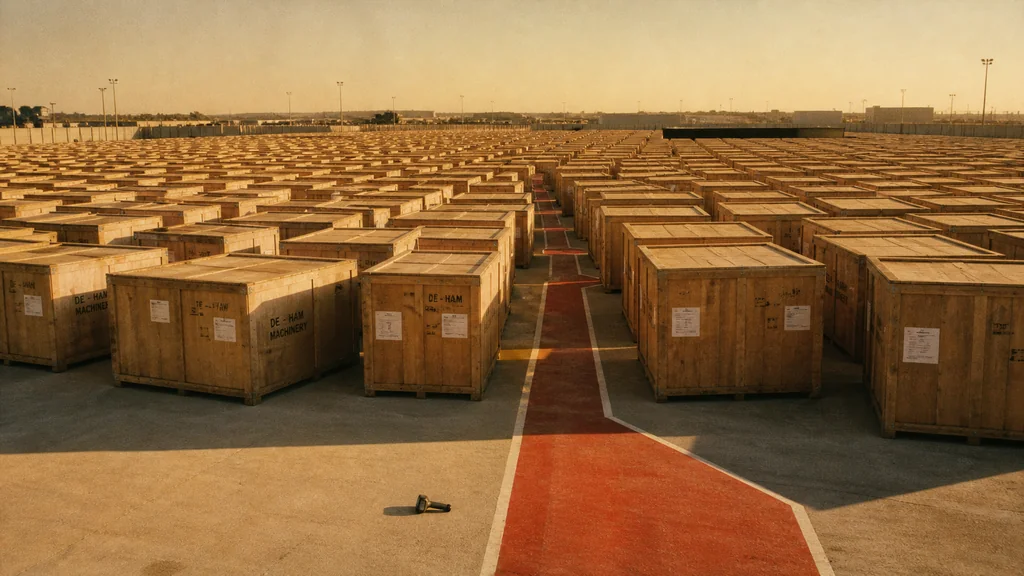
Europe expands the list faster than it can inspect the cargo.
Cumadóireacht íomhá · tobriefKaja Kallas has put a large number on the table. The EU’s foreign policy chief says the bloc will bring forward its "most far-reaching" sanctions package against Russia this autumn, aimed at roughly 1,600 people and entities linked to the Russian weapons industry (Reuters, Euronews). The list could land in early September, with adoption targeted for October (Internazionale). For now, there is no public draft, no annex of names and no Council decision.
That matters because Kallas can set the political direction, but she cannot make the sanctions law by herself. Foreign policy sanctions need unanimous agreement in the Council, where member states vote, under Article 31 TEU. The economic restrictions then become binding under Article 215 TFEU, with national authorities left to enforce them. The journey from speech to pressure runs through 27 capitals, then through customs offices, banks and company compliance teams.
Listings, Not Whole Industries
The real choice is not the size of the list, but its shape. The autumn package is not expected to impose new bans on entire industries or trade flows: no change to the oil price cap, no fresh shipping restrictions (Internazionale, Portfolio). Instead, it would freeze assets and bar dealings with Russian arms producers, procurement middlemen and brokers selling civilian goods that find their way into weapons systems.
That is a political design as much as a legal one. The EU’s 21st Russia sanctions package, adopted on 23 July (Skadden), showed what happens when sanctions touch sectors that cost member states money. Greece, with major shipping interests on the line, used its veto to secure an exemption on LNG shipping before allowing the package through (The Irish Times, Brussels Signal). Hungary’s red lines on Russian nuclear fuel and Paks II, its Russia-financed reactor project, remain in place (Portfolio). In a system built on unanimity, any government facing domestic costs can turn consent into leverage.
Keeping the package to listings avoids some of those fights. It makes passage more likely, because naming companies and individuals is easier than cutting across shipping, energy or nuclear supply chains. The weaker point is proof. A package can be "most far-reaching" by the number of names it contains and still leave open the harder question of whether Russia’s procurement networks are materially squeezed.
Enforcement Decides the Impact
The burden will fall first on firms and agencies that already sit close to sensitive supply chains. German companies selling precision machinery, electronics and aerospace components face heavier screening duties as each sanctions package expands the restricted-party lists (Skadden). The Netherlands has its own exposure through ASML, the Dutch chip-equipment maker whose export controls were tightened nationally in 2023 (Rijksoverheid). These are the businesses that will have to run 1,600 new names through their customer books.
China is the complication sitting behind much of this. After the 21st package targeted entities in China and Hong Kong (Chambers EU), Beijing put the Dutch shipbuilder Koninklijke IHC and thirteen other European firms on its own export-control list (Handelsblatt). A sanctions package built around Russian names may lower the risk of another Chinese response, but only if it avoids intermediaries Beijing is prepared to defend.
Sanctions bite when exporters screen customers, banks stop payments and customs officers intercept controlled goods. The EU made sanctions evasion a criminal offence in 2024 through Directive 2024/1226. Austrian-led investigators have already dismantled at least one network accused of routing sanctioned machine tools through Turkey, the UAE and Central Asia to Russian arms plants (n-tv). The legal tools are there. The open issue is reach.
Open-source investigators have still found Western components and unsanctioned supply links in Russian missile systems (ISANS). That does not mean enforcement is failing across the board. It does mean the rerouting business is adapting faster than Europe can always track.
Sixteen hundred names will raise the cost of supplying Russia’s war machine (Reuters). Whether they raise it enough will be decided after publication in the Official Journal, the EU’s legal gazette where sanctions become binding. Kallas has made the promise. The 27 member states still have to make the law, and their enforcement agencies have to make it matter.
Details about this article
- Model:
- claude-opus-4-6
- Generated:
- 8/18/2026, 1:48:04 AM
- Pipeline run:
- eu_pipeline_20260818_005006
- Watermark:
- SynthID (Google's invisible watermark)
- Human review:
- None before publication