Europe Guarantees Ukraine Without Terms
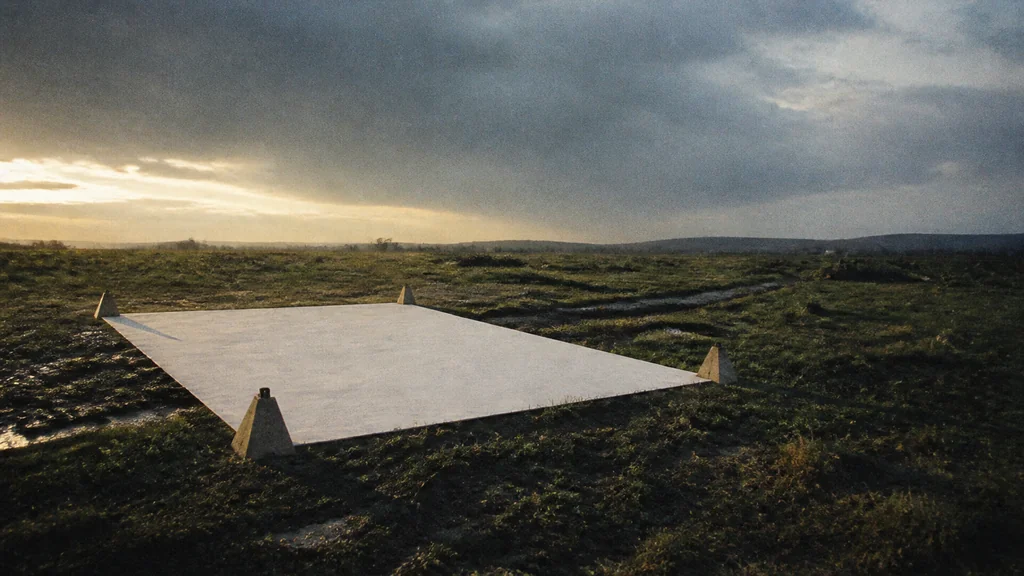
Europe prepares to guarantee a peace whose terms remain blank.
Cumadóireacht íomhá · tobriefVolodymyr Zelensky has put a shape on what an end to the war might look like: first a ceasefire, then reciprocal troop withdrawals into what he called a "free economic zone", and then a package of guarantees tied to the EU and NATO. On 23 August, he said Ukraine, the United States and European partners had put those ideas "onto one page" (RBC Ukraine, UA.News). That page has not been published. There is no White House document, no European Council text, no signed framework. Yet European capitals are already being lined up as guarantors of a settlement whose terms, map and enforcement rules remain out of sight.
The Coalition of the Willing statement issued from Kyiv a day later, co-signed by the UK, France and Germany, does not mention the free economic zone at all (gov.uk, Bundesregierung). It promises "robust politically and legally binding security guarantees", but gives no troop contributors, no rules of engagement and no ladder of response if Russia breaches the deal. As To Brief reported when France, Germany and the UK began working on a common negotiating format, Europe's anxiety has been that Washington and Moscow could shape a settlement while the governments most exposed to its consequences are left outside the room. That anxiety now has a practical form: the guarantee is being built before the peace terms exist.
A sovereignty question disguised as economics
The ceasefire part is easiest to describe and hardest to police. The Coalition statement calls for a "full, immediate and unconditional ceasefire starting from the line of contact" and says a multinational force would deploy only after a "credible cessation of hostilities" (gov.uk, Élysée). It does not say who decides that the ceasefire is credible, or what happens when a drone crosses the line.
The second element is where the proposal turns. Zelensky described the "free economic zone" as an American idea, but gave no administrator, no map and no withdrawal distance (UA.News, ANSA). The language sounds commercial. The real questions are constitutional: who runs the zone, which courts and police operate there, whether Ukraine keeps formal authority, and whether the withdrawal line locks in Russia's current gains. France and Germany, co-chairing the Coalition, have not publicly endorsed the formula (Élysée, Merkur).
Guarantees without an enforcement machine
The third element asks Europe to underwrite Ukraine's security. The money side is already moving: the Commission approved €6.1 billion in defence procurement on Ukraine's Independence Day, covering air and missile defence, ammunition and radars (Euronews, IEU Monitoring). Arms deliveries, though, are wartime support. A post-ceasefire guarantee is a different proposition: soldiers on the ground, a command structure, a bill to be divided between capitals, and mandates from national parliaments operating under different constitutional rules. For Ireland, even from outside any likely troop-leading role, that distinction matters because EU defence language always runs into the State's neutrality tradition.
The promise begins to narrow once capitals say what they are actually prepared to send. Lithuania has gone furthest: President Gitanas Nausėda said Vilnius was ready to deploy land, engineering, air-defence and naval capabilities "when conditions were in place" (Lrytas). Even that is conditional, with no parliamentary mandate found. Poland has drawn a harder line: Donald Tusk said Warsaw would not send troops to Ukraine and defined its role as logistics and support flows from Polish territory (TVN24, Bankier). Italy joined the Coalition meeting but refused the October-November exercises announced by Macron (ANSA). France is claiming the convening role, but has published no troop numbers, command structure or cost-sharing plan (Le Monde).
Russia has not accepted the three-part formula. Deputy Foreign Minister Sergey Ryabkov said Moscow would listen to new ideas only if they matched "realities on the ground", the diplomatic phrase for keeping what its forces hold (Reuters, Al Jazeera). A UN-backed enforcement force would run into Russia's veto at the Security Council. Sanctions renewal inside the EU Council still requires unanimity, meaning any single government can block.
Europe's support machinery is funded and visible. Its peace machinery has no published workings. Until Burnham, Macron, Merz and their partners put names, numbers and rules behind the guarantees they are offering, they are volunteering to enforce a concept that has not yet become a plan.
Details about this article
- Model:
- claude-opus-4-6
- Generated:
- 8/25/2026, 2:05:12 AM
- Pipeline run:
- eu_pipeline_20260825_005008
- Watermark:
- SynthID (Google's invisible watermark)
- Human review:
- None before publication