Four EU States Push Ukraine Loans
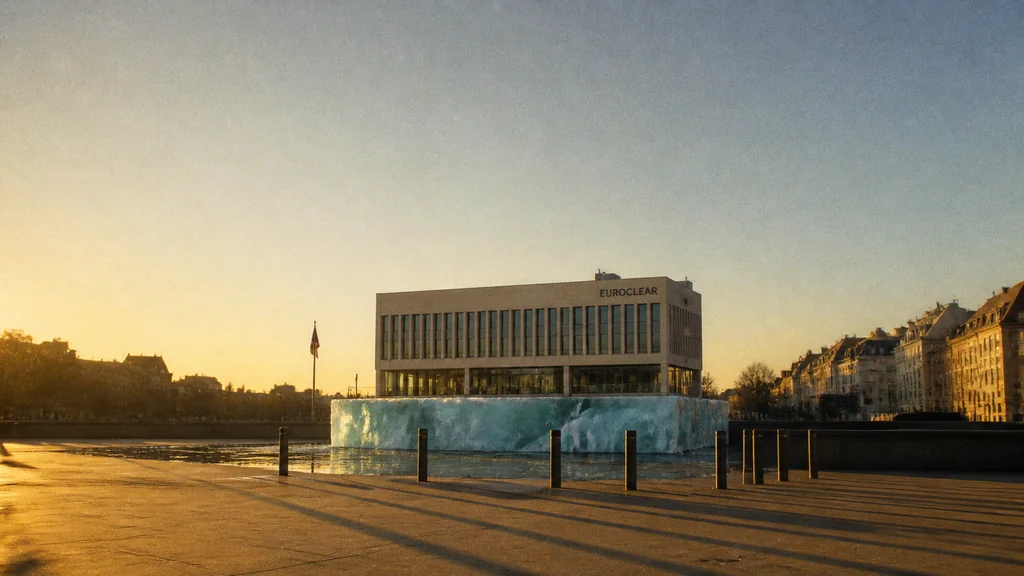
Europe tests how much risk frozen reserves can bear.
Cumadóireacht íomhá · tobriefFor two years, the EU has been sending Ukraine the profits earned on Russia's frozen sovereign assets. Sweden, the Netherlands, Spain and Poland now want to move to the harder question: whether the €210bn principal can be used as backing for new Ukraine finance (Reuters, Kyiv Independent). The difference between interest and ownership is where the politics sits.
The interest stream is already being used. The EU has transferred €8bn to Kyiv so far, including a €1.4bn tranche in August (EEAS). The reserves themselves remain frozen under EU sanctions rules, but they have not been seized as property (Eur-Lex, Council Regulation 2022/334). When the four governments ask the Commission to reopen "new options" for mobilising the assets, they are asking it to look beyond the profits. There is nowhere else for the money to come from.
The gap the profits can't close
The four governments are not calling for outright confiscation. The more careful reading is that they want a loan or collateral structure built around the frozen reserves, while leaving legal ownership formally with Russia (Euronews, El País). That may sound like a technical compromise. In Brussels, it is still a step over a line the EU has so far been careful not to cross.
The timing is driven by the numbers. Annual windfall profits are running at about €2.5bn–€3bn, according to a French Senate report, and each ECB rate cut makes that pot smaller. Ukraine's financing need through the end of 2027 is estimated by the Commission at €90bn (Tagesschau). On that scale, the interest alone is a help, not a plan. The argument from Stockholm, The Hague, Madrid and Warsaw is simple enough: Russia caused the damage, so Russia's blocked reserves should carry more of the cost before European taxpayers are asked again.
Who decides, and who carries the risk
The Commission can draw up the financial architecture, but it cannot decide this on its own. Foreign-policy decisions in the EU require unanimity, which means every capital has a veto. Belgium matters more than most because about €193bn of the frozen assets are held at Euroclear, the Brussels-based central securities depository (Trends-Tendances).
Belgium supports Ukraine, but it has no wish to become the legal shock absorber for the rest of Europe. Le Monde has reported roughly 200 legal proceedings against Euroclear and nine arbitration notifications against Belgium itself (Le Monde). Russia is already putting pressure directly on the depository (Boursorama/AFP). German legal commentary has warned that even Russian court claims with little practical enforceability can widen the risk of retaliation against European assets still held in Russia (beck-aktuell).
Sweden has said it would cover its share of Belgian guarantees (SVT). The Netherlands offered about €14bn in guarantees during December's failed attempt to agree an asset-backed structure (NOS). Belgium still blocked the plan, and the file was put back in the drawer.
Paris and Berlin set the limits
France and Germany accept the use of the profits and can see the attraction of broader financial engineering. They will not accept the formal confiscation of sovereign property. The Bundestag rejected a Green motion to make the frozen assets fully available to Ukraine (Bundestag). A French Senate committee tied any support to strict compliance with international law and to protecting investor confidence in euro-denominated assets (Sénat).
That position leaves the Commission with a narrow path. Any proposal has to keep the reserves legally in Russia's name, protect Belgium from being left alone with the lawsuits, and reassure investors that Europe is not turning foreign-held reserves into a routine political instrument. So far, no design has satisfied all three tests.
The four governments have put their finger on the weakness in the profits-only model. What they have not yet supplied, and what Belgium, France and Germany will now ask for, is the underwriting. Who indemnifies Euroclear? Who absorbs Russian retaliation? Who guarantees the structure if a future EU Council, where all member states sit, votes to lift sanctions and the reserves have to be returned? Until those answers come with signatures, the €210bn remains frozen rather than mobilised.
Details about this article
- Model:
- claude-opus-4-6
- Generated:
- 8/28/2026, 2:00:42 AM
- Pipeline run:
- eu_pipeline_20260828_005006
- Watermark:
- SynthID (Google's invisible watermark)
- Human review:
- None before publication