France and Germany abandon FCAS fighter
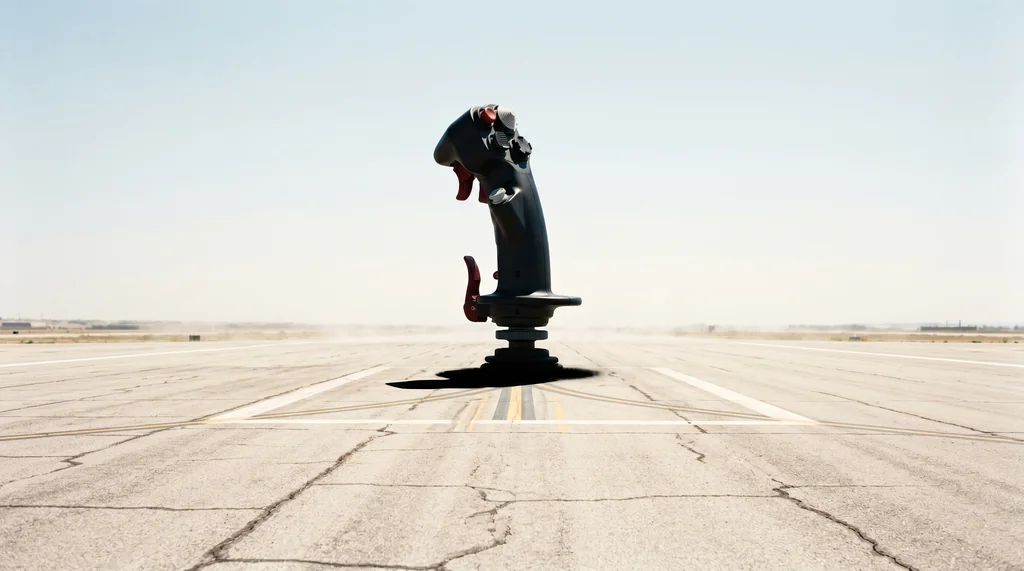
The struggle for industrial control towers over the wreckage of European defense cooperation.
Cumadóireacht íomhá · tobriefFCAS/SCAF was meant to be more than a new fighter aircraft. France, Germany and Spain were trying to build the nervous system of future European air power: a crewed New Generation Fighter linked to drones, sensors and a shared combat cloud (The Guardian, The Straits Times). It fell apart because Paris and Berlin never settled the harder question: who would own and control the technology at its core.
The fight was over control
On paper, the three governments agreed on the need. Europe wanted an air-combat system that could connect aircraft, drones, sensors and data in real time. The trouble began when that ambition had to be turned into engineering authority, patent rights, export freedom and military doctrine.
The work was divided between national governments and industrial "pillars". Dassault led the fighter. Airbus had major roles in remote carriers and the combat cloud. Spain came in through Indra and other firms (The Aviationist). It looked balanced until the aircraft itself became the hinge on which the whole system turned.
Dassault and Airbus then clashed over who would shape the New Generation Fighter: its construction, design choices, industrial workshare and intellectual property (Le Figaro, Avio Space). Once that row hardened, the political architecture had no referee strong enough to force a settlement.
France’s position was not just industrial pride. Combat aviation touches nuclear delivery, carrier operations, arms exports and the survival of Dassault as a full aircraft-design house. Germany’s case was also real. If Berlin is paying a large share of Europe’s rearmament, German industry was never going to accept a permanently junior role inside a French-led aircraft.
Brussels could fund cooperation, not command it
The European Defence Fund can support research and development, but it cannot decide who owns a fighter’s architecture or who controls exports (EU regulation). The Commission can encourage joint procurement and industrial readiness through its defence agenda, but it cannot turn Dassault and Airbus into a single chain of command (Commission defence agenda).
The same limit runs through EDIP, the proposed European Defence Industry Programme. It is designed to strengthen Europe’s defence manufacturing base and encourage common buying, but it does not allocate FCAS patents or appoint a supranational prime contractor (EDIP proposal). Parliament’s defence-readiness deal may speed up permitting and procurement procedures, but the core design authority still sits with states and companies (European Parliament).
For Ireland, which approaches EU defence through the filter of neutrality, this is the part that matters most. EU defence integration can fund cooperation and reduce friction. It cannot make the sovereign questions disappear: who designs the weapon, who sells it, who absorbs the delays, and whose air force gets priority when pressure comes.
The leverage moves elsewhere
France may now protect Dassault’s design authority and export freedom, but a more national route puts heavier pressure on the French budget. It also leaves Paris facing the operational problems already raised in French air-power debates: stealth, suppression of enemy air defences and enough aircraft for high-intensity war (Ifri).
Germany, for now, gains options rather than an aircraft. Airbus and German partners have presented Team Gen 6, a German-centred alternative built around aerospace, engine, sensor and missile firms (Deutschlandfunk). Berlin can also buy more F-35s, explore links with GCAP, the UK-Italy-Japan Global Combat Air Programme, or back an Airbus-led European track (ZEIT).
Italy and Leonardo now have a stronger pitch for GCAP because it looks structured while FCAS looks unresolved. Edgewing, GCAP’s joint industrial vehicle, already gives the existing partners a shared route for design and development (Leonardo, BAE Systems). Bringing Germany in would add weight, but it would also reopen the familiar arguments over workshare and control.
On Europe’s eastern flank, the calculation is more immediate. Poland has formally accepted its first F-35s and has built much of its procurement around systems that fit quickly into NATO operations (Euronews Poland). For Warsaw and several neighbours, capability that arrives is worth more than autonomy that gets stuck in committee rooms.
The question now is whether Europe can salvage the layers around the failed aircraft. A new Franco-German air-defence data project suggests Paris and Berlin may try to preserve some shared digital architecture (Global Banking & Finance). The combat cloud may survive in some form even after the fighter track has failed (Onet).
FCAS collapsed because Europe loaded political symbolism onto a programme before France and Germany had agreed the ownership rules. The next flagship project will face the same test. The Franco-German answer will decide whether European defence integration builds weapons, or mostly funds arguments about who gets to lead.
Details about this article
- Model:
- gpt-5.5
- Generated:
- 6/15/2026, 2:34:35 AM
- Pipeline run:
- eu_pipeline_20260615_015007
- Watermark:
- SynthID (Google's invisible watermark)
- Human review:
- None before publication