Hormuz Premiums Price Out Shipowners
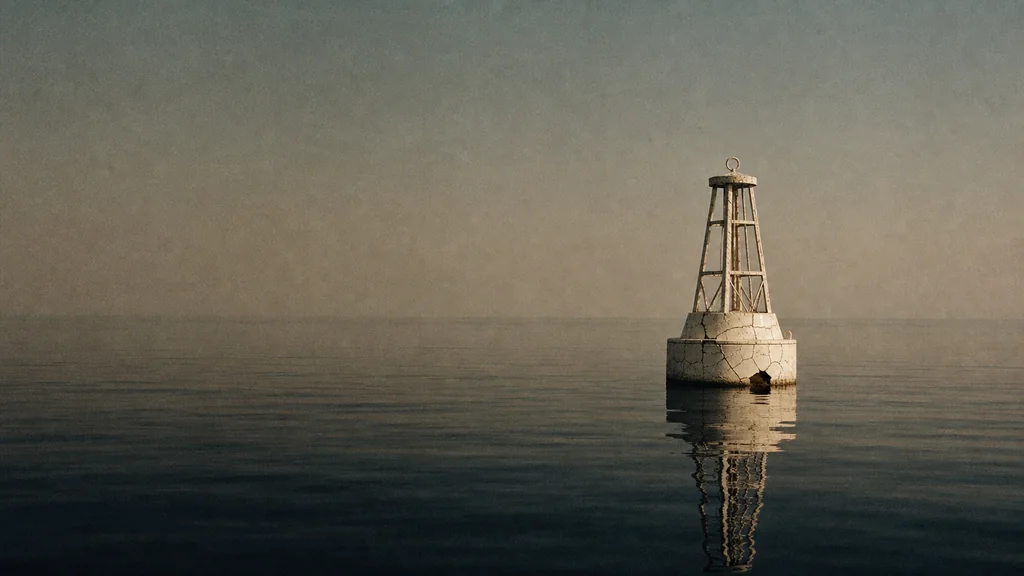
Commercial shipping lanes remain legally open while the insurance required to traverse them shatters.
Cumadóireacht íomhá · tobriefThe Strait of Hormuz remains open on paper. International law says ships have the right to pass through it. The problem is that a legal right is not much use to a shipowner if the insurer, the bank and the compliance department all decide the voyage is too dangerous to touch.
War-risk insurance for a single passage through Hormuz now costs 4%-5% of a vessel's hull value, up from about 0.25% before the conflict (S&P Global). Some quotes have reached 10% (CNN). For a large vessel, a short transit has become a multimillion-euro decision before fuel, crew or cargo are even considered.
Donald Trump dropped his proposed 20% cargo charge on July 14, but kept the US blockade on Iranian ports and continued strikes (WLRN). The fee was the visible politics. The real constraint sits elsewhere: insurers are repricing, banks are retreating and compliance teams are treating Gulf voyages as sanctions problems waiting to happen.
Cover That Vanishes Before the Ship Arrives
The IMO Council, the UN shipping authority, reaffirmed on July 10 that no state may toll or suspend transit passage through the strait (gCaptain). UNCLOS, the UN Convention on the Law of the Sea, protects that right. But voyages are made by contracts, not declarations.
Gulf war-risk policies are written in seven-day blocks, with 48-72 hour cancellation clauses (Marsh). That means cover can be repriced or withdrawn before a vessel even reaches the strait. P&I clubs, the mutual insurers that cover liability, pollution and crew claims, are no longer treating Gulf transits as routine. Each voyage is assessed on its own facts, with owners required to confirm their exposure before sailing (The Swedish Club).
By July 10, about 1,150 cargo vessels were stranded in the Gulf (CNN). The squeeze is not only about missiles or mines. It is also about paperwork, sanctions risk and the willingness of financial institutions to stand behind a cargo.
On July 7, OFAC, the US Treasury's sanctions enforcement arm, revoked General License X1, a temporary waiver that had allowed some Iranian oil transactions (A&O Shearman). Near-comprehensive restrictions on Iranian petroleum trade came back into force. Banks and charterers do not wait for courts to settle the boundary of enforcement risk. They pull back when the risk rises (Bracewell). The result is a strait that is legally open but commercially half-shut.
Who in Europe Absorbs the Cost
Europe will feel this unevenly. On July 13, the Cyprus-flagged M/V GFS Galaxy was fired on near Musandam, at the entrance to Hormuz (CNA, Cyprus Mail). Cyprus opened an investigation. As the flag state, it can regulate ships on its registry. It cannot reopen the strait or compel underwriters in London or elsewhere to write cover. A global shipping crisis had become an EU member state's direct problem.
Italy's shipowners' association Assarmatori estimated extra war-risk premiums of 1%-10% of vessel value and an 8%-10% fall in Italian port movements (Adnkronos). Italian maritime reporting has framed the issue less as an immediate oil shortage than as a financing problem for voyages themselves (Messaggero Marittimo). War-risk cover, charter terms, crew decisions and letters of credit are all pricing the same danger separately.
Poland's exposure is different. It is not mainly about direct Gulf imports. Its Swinoujscie LNG terminal imported almost entirely from the US in the second quarter, with no Qatari cargo after force majeure (24 Kurier). But Poland still buys gas on the same European market as everyone else. The Dutch TTF benchmark, Europe's main gas price reference, rose about 5% to €49 per MWh after the US-Iran deal collapsed (Sahm Capital/Reuters).
That is how the shock travels: not always through the cargo that arrives at a national terminal, but through the price at which the whole continent clears supply. Romania's energy minister warned the same transmission would reach consumers through refined products and fertiliser costs (Euronews Romania).
Europe Can Cushion. It Cannot Command.
The European Commission's Energy Union Task Force said on July 13 that there was no immediate EU gas supply crisis and that storage targets remained achievable, though prices were still above pre-conflict levels (European Commission). That is the Brussels answer, and as far as it goes, it is sound. The EU has mandatory oil stocks. It has the Blocking Statute, a regulation designed to shield EU companies from certain extraterritorial sanctions.
Neither tool can force an insurer to cover a ship, or a bank to clear a payment, or a crew to sail through a live conflict zone. Ireland, like the rest of Europe, is therefore exposed through the boring machinery that normally stays invisible: insurance committees, sanctions lawyers, credit officers and charter-party clauses. For an island economy that depends on open sea lanes, that machinery matters as much as any formal right of passage.
The Council on Foreign Relations warned there is no precedent for unwinding disruption at this scale, and that even an optimistic recovery would be partial, costlier and vulnerable to renewed setbacks (CFR). European governments can soften the price shock. They cannot command the private decisions now determining whether Gulf voyages happen at all. Those decisions are being made one cargo at a time, often only days before sailing, and no capital in Europe fully controls them.
Details about this article
- Model:
- claude-opus-4-6
- Generated:
- 7/15/2026, 2:10:48 AM
- Pipeline run:
- eu_pipeline_20260715_005006
- Watermark:
- SynthID (Google's invisible watermark)
- Human review:
- None before publication